





Good morning everyone:
Well, that was quite a week. Didn’t quite set a record for stories in one week, but came close at 17. So, it’s nothing short of a miracle that we could assemble the Sunday Reader over the weekend. Mrs. SSJ and I spent Valentine’s Day watching a college basketball doubleheader of death, first watching KU (her school) lose to Iowa State, followed by Kentucky (my school) losing to Florida. Later in the day, we went to see the latest film adaptation of “Wuthering Heights,” which was OK. I am pretty sure it was not as strange as the book. In short, the movie basically cuts the story told in the book by half. (A sequel, maybe?). Who knows. Not sure I would recommend it (not that anyone here cares about my movie preferences). That said, it’s time to move on to the significant stories we published last week plus other items you might have missed but need to know…
- A national effort to ban nondisclosure agreements in child sex abuse cases has come to Kansas. Similar laws have been enacted in five states and are now being considered in three others.
- Gov. Laura Kelly last week vetoed a bill banning transgender people from using restrooms and locker rooms in government buildings that don’t correspond with their biological sex.
- The House last week kicked off debate on a bill intended to keep down property taxes but immediately ran into fierce opposition from cities because they would be required to hold an election if they want to grow their property tax collections.
- The Kansas House is moving forward with a new plan to hold down property taxes with legislation intended to limit local government spending. Republican state Rep. Adam Smith of Weskan, chair of the House tax committee, introduced legislation that would require local governments – not counting schools – to hold elections if they want to collect more than 3% of what they took in the year before in property taxes.
- Years of battles over Kansas electric rates reached a new crescendo last week as Evergy and a group of large-volume power users clashed over a new bill overhauling how energy would be regulated in the state.
- The Legislature is considering a bill that would revamp the Kansas Prisoner Review Board after it paroled the murderer of Highway Patrol trooper Conroy O’Brien last year.
- The U.S. Senate has confirmed the former chief deputy for Kansas Attorney General Kris Kobach to be assistant attorney general for the U.S. Department of Justice’s Office of Legal Policy.
- The Kansas House last week approved a bill requiring Kansas driver’s licenses to show citizenship status, a measure supporters said was a defense against voter fraud but opponents characterized as fueling an anti-immigrant atmosphere.
- The Kansas House on Thursday agreed to expand a state program intended to encourage school choice by awarding tax credits for donations to private school scholarships. The bill also would allow the state to participate in a new program that allows individuals to claim up to $1,700 in federal tax credits for contributions to organizations that give scholarships to students to attend private schools.
- The Legislature is turning its attention to luring amateur sporting events to Kansas, putting it on a competitive level with other states that are offering similar incentives to draw soccer, volleyball, softball and basketball tournaments, among others.
- The Kansas Senate last week narrowly approved a bill that would require school districts to verify the household gross incomes for students who are classified as at-risk under the state’s school finance formula. The bill would approve legislation requiring documentation of a student household’s gross income if they’re determined to be at risk under the school finance formula and also qualify for free meals under the National School Lunch Program.
- A Senate committee last week heard a proposal that would overhaul how auto coverage for underinsured motorists would work in Kansas. Trial lawyers say the bill would give drivers more insurance coverage. Opponents say it would drive up insurance costs.
- A House committee last week agreed to give public and private elementary and secondary schools discretion about whether to ban cellphones during instructional time. A day later, the committee agreed to make the ban compulsory for public schools.
- The Kansas Chamber of Commerce’s board of directors last week named longtime lobbyist Eric Stafford as its new president and chief executive officer.
- Former longtime Rep. Owen Donohoe of Shawnee passed away last week.
Wildlife reorg called off
The Kansas Department of Wildlife and Parks has called off plans to reorganize the agency in a way that it would centralize the command structure for all law enforcement functions.
The agency announced Friday that it was scrapping the reorganization after a key lawmaker threatened to introduce a bill that would stop it from happening until the agency reported to the Legislature.
“After considering feedback from staff, the public, legislators, and partners, we will not move forward with decertifying any law enforcement officers or changing reporting lines for officers,” the agency said in its announcement Friday.
“Although the structural changes will not proceed, KDWP will continue the work to strengthen law enforcement operations across the Law Enforcement, Parks, and Public Lands divisions,” the department said.
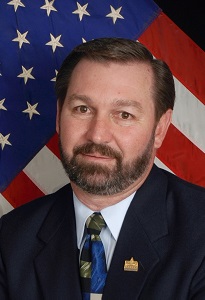
There’s been a lot of talk about a reorganization at the Kansas Department of Wildlife and Parks that started recently with a social media post by Republican state Rep. Brad Barrett of Osage City.
Barrett posted a picture of a memo on Facebook on Jan. 29 from Wildlife and Parks Secretary Chris Kennedy about restructuring the agency’s law enforcement staff.
The memo, among other things, indicated that park managers and assistant managers would be decertified as law enforcement officers with their responsibilities focused on park operations and maintenance.
The memo also said that all public lands staff with law enforcement responsibilities would be decertified with their duties focused on public lands operations and maintenance.
The agency confirmed a restructuring was in the works about a week ago and said that it would start in fiscal year 2027, which starts July 1.
“This change has been under consideration for some time and reflects our commitment to strengthening statewide law enforcement and ensuring consistent, effective coverage across Kansas,” spokesperson Laura Rose Clawson said in an email.
“As part of this transition, some positions that currently combine law enforcement duties with unrelated operational responsibilities will have those law enforcement duties removed.
“This allows those employees to focus fully on park or public lands operations and maintenance—work that is equally critical to the visitor experience and the long‑term stewardship of these resources,” she said.
In announcing Friday that the reorganization would not proceed, the agency said that “strengthening officer safety, public safety, and KDWP’s ability to provide consistent enforcement services is critical.
“The improvements already identified, and the work still ahead, will ensure that everyone benefits from a coordinated, well-supported law enforcement presence from our agency.
“KDWP looks forward to continuing to partner with the Legislature and the public on these issues, as funding limitations and the lack of available staff positions are challenges that must still be addressed.”
About a week ago, Republican state Sen. Virgil Peck of Havana, chair of the agriculture committee, warned that there would be an attempt to stop any restructuring.
He told members of the agriculture committee last week that there will likely be legislation introduced that would stop any major restructuring until a report is made to the panel.
“It’s clear that something needs be done more than what we have been doing,” Peck said.
Marshall tour
U.S. Roger Marshall last week announced he was embarking on a statewide tour, about two weeks after Democratic U.S. Rep. Sharice Davids took a roadtrip across Kansas.
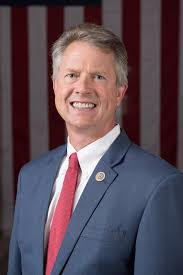
Marshall started what he called his 4 Corners, 50 Counties tour, an effort described as “highlighting his commitment to meet Kansans where they live and work…”
The first-term U.S. senator is stopping in 50 counties to visit local factories, small businesses, restaurants, senior centers and community gathering places.
At each stop, he will meet directly with workers, families and seniors to discuss how a new law is helping Kansans keep more of their hard-earned money.
He plans to tout the benefits of the Working Families Tax Cuts Act, which has been rebranded from being called the One Big Beautiful Bill.
“This is a tour about making sure every corner of Kansas is heard, and every community sees the impact of this historic tax relief,” Marshall said in a statement.
“From hardworking overtime earners and families raising children, to service workers and seniors living on Social Security, Kansans across our state are seeing the difference.
“As tax season begins, I’m traveling across the state to highlight the real, tangible wins Kansas families are seeing in their paychecks and tax bills.”
On Friday, Marshall visited Curb Roller in Brown County, Nemaha Valley Community Hospital in Nemaha County, Marshall County Extension Tax Services, and Midwest Products in Washington County.
For at least one event, the general public was not invited.
An email obtained by the Sunflower State Journal revealed that the Marshall campaign was encouraging people to share details about an event through emails and phone calls.
Davids’ tour took her well beyond the boundaries of her 3rd District, which is centered in suburban Johnson County. She made stops in Topeka, Wichita, Dodge City and Colby.
There are already six Democratic candidates running for the U.S. Senate.
They include state Sen. Patrick Schmidt of Topeka, Kansas City developer Erik Murray, retired businesswoman Sandy Spidel Neumann of Merriam, former congressional candidate Christy Davis of Cottonwood Falls, Overland Park immigration lawyer Anne Parelkar and perennial candidate Michael Soetaert.
Around-the-clock sales
bill diverted
About a week ago, things weren’t looking upbeat for a proposal to allow around-the-clock alcohol sales during the World Cup in Kansas City.
The bill had been assigned to the Senate Federal and State Affairs committee where the chair wasn’t too keen on moving the bill.
“I have real concerns about that,” said Republican state Sen. Mike Thompson of Shawnee.
“These guys want to party until 4 o’clock in the morning, but I don’t think that’s a good thing, to be honest,” he said.
Well, the bill is headed somewhere else now. Last week, it was withdrawn from the Federal and State Affairs Committee and referred to the Senate Commerce Committee.
The bill is now in the hands of Republican state Sen. Larry Alley of Winfield. It will be up to him to decide what to do with the bill. The bill’s future is unclear.
The bill, backed by the Kansas Restaurant & Hospitality Association, would allow full-service hotels and drinking establishments across Kansas, particularly within the greater Kansas City metro area, to operate 24 hours a day through the World Cup event.
The bill would be in effect from June 11 through July 19. Alcohol sales would be allowed from 6 a.m. until 5 a.m. the next day, seven days a week.
Maughan returns — again
Amid all the hustle and bustle at the Capitol, former Republican state Rep. Carl Maughan refiled to run for the House 100 District seat, which is now held by House Speaker Dan Hawkins of Wichita.
In early January, Maughan, who has been beset by legal troubles, announced that he had filed to run for the Legislature this year.
But the Kansas secretary of state’s office sent him a letter stating that voting records showed he does not live in House District 100.
The form Maughan filed to run again for the House only showed a post office box in Colwich.
The Kansas Constitution requires candidates for nomination or election to the Legislature to be a qualified elector in their district.
The requirement precluded Maughan from being a candidate for Kansas House District 100.
Maughan, who represented House District 90 when he was in the Kansas House, acknowledged that he was still in the process of moving into the new district when he filed to run for the Legislature again.
He is now listed as a House candidate for House 100 on the secretary of state’s website.
The former Colwich lawmaker is seeking to return to the Kansas Legislature despite legal troubles that included being charged twice with drunk driving within three months and being suspended from practicing law for a year.
Acknowledging that he had abused alcohol because of “major emotional upheaval” in his personal life, Maughan said he had accepted responsibility for his actions.
He pleaded no contest to driving under the influence stemming from a traffic stop in Topeka in March of 2024.
He also pleaded no contest to driving under the influence following a 2024 Memorial Day weekend crash in Colwich that left him seriously hurt.
Maughan abruptly announced on social media that he would not seek reelection following the Sedgwick County crash on May 25, 2024.
A Kansas legislative first
This may be a first for the Kansas Legislature.
The Kansas wildlife department is asking lawmakers to approve a rules change that raises more than $4 million in fees under a law passed in 2024 that gives the Legislature oversight of pricey rules and regulations adopted by state agencies.
The bill, enacted over the governor’s veto, requires the Legislature to ratify rules if the anticipated compliance costs passed on to businesses, local governments or individuals exceed $1 million for the first five years of implementation.
The Kansas Chamber of Commerce, which lobbied for the law, made a rare appearance in a House committee last week on the Wildlife and Parks bill.
Eric Stafford, the chamber’s top lobbyist, told the committee that this appeared to be the first time the rules-and-regulation process was being used under the new law.
“We are here to recognize how that process should work and applaud the Department of Wildlife and Parks for following that process and express our support for the bill to you guys, unless you have concerns with the regulations and the cost,” he said.
There’s another bill in the Senate that is seeking authorization for rules for hazardous waste monitoring and permit application fees. They would cost $1.5 million a year.
The Kansas Department of Health and Environment, which submitted the request, said the fee would by paid by generators, transporters and handlers of hazardous waste.
Each facility that generates, treats, stores or disposes of hazardous waste is required to pay the fee.
The wildlife agency said the fee increases are needed to offset mushrooming utility costs and revenue losses. The agency relies heavily on user fees for funding.
During fiscal year 2017, the total annual costs to operate all 28 state parks spanning 32,000 acres were about $11.2 million.
By fiscal year 2025, those annual costs had increased to $16.2 million. The agency said the growing gap between revenues and cost to deliver the same services is unsustainable.
The issue was compounded by rising utility costs for the state park system. They have grown to $2.6 million in 2024 from about $1.8 million in 2016, the last time rates were increased.
The agency said the proposed increased fees would bring in about $4.6 million a year.
Republican state Rep. Will Carpenter of El Dorado supported the bill raising the fees, noting the agency relies almost entirely on fees for operations.
“With that, we need to give them the resources, quite frankly, that they need to operate the parks,” Carpenter told the House Federal and State Affairs Committee.
“Our parks are a quality-of-life issue in our state,” Carpenter said.
“Sometimes we wonder why young people and people don’t stay in our state,” he said.
“A lot of the young folks and folks with families, they value parks and they value outdoor spaces,” he said.
Carpenter suggested amending the bill so the fees would be tied to inflation.
The new fees are not expected to start until Nov. 1.
The daily camping rate in Kansas is $9 compared to $15 in Nebraska and Missouri, $16 in Arkansas and Iowa, $18 in Oklahoma, and $22 in Colorado.
The Parks and Wildlife fee proposal would increase the overnight camping permit to $15.
The proposed overnight fee for a one-utility site would increase to $11 from $9, and the fee for a two-utility site would increase to $13 from $11. The fee for a three-utility site would jump to $15 from $12.
The agency also would increase the 14-night camping permit to $165 from $110, keeping the discount equal to three nights off the standard daily camping rate.
The proposal also would streamline the seasonal camping program into a single statewide tier, offering a $100 discount based on the utility site type:
- One-utility site fee of $680
- Two-utility site fee of $740
- Three-utility site fee of $800
The agency also is proposing to increase fees for vehicle permits.
It’s looking to increase the annual state park vehicle permits to $40 from $25.
It also would adjust the state park passport to $30 from $15.
The passport covers unlimited vehicle entry to all Kansas state parks. It is available only at the time of vehicle registration at the county treasurer’s office. The passport is valid until the vehicle registration expires.
The senior/disability annual state park vehicle permit would increase to $20 from $12.50.
Here’s a breakdown of the proposed fee increases presented to the committee last week.
House puts limits on third-party
voter registration sites
The Kansas House last week approved a bill that limits online voter registration to government-owned websites or sites meeting certain security standards.
The House voted 86-36 for legislation requiring someone registering to vote to use a website that has the .gov domain as part of the website’s uniform resource locator.
Or the website has to be approved by the secretary of state to accept and transmit electronic voter registration applications.
Secretary of State Scott Schwab supports the legislation, which his general counsel said was not intended to eliminate third-party voter registration websites such as ksvotes.org.
The goal, he said, was to establish minimum uniform standards for how all websites that register voters operate.
State election officials said that uncertified, unofficial websites — even those appearing to have the best of intentions — are not held to the same standards as those with a government domain.
They say that some sites may be deliberately deceptive, designed to harvest personal information or mislead voters about registration status.
When voters submit their information through unofficial sites, they often have no way to know who actually controls the data, how long it is stored, whether it is adequately protected or whether they are actually registered to vote, election officials said.
Under the bill, third-party websites that register voters — beyond government sites — would only be approved to accept and transmit electronic voter registration applications by the secretary of state under these conditions:
- They transmit voter registration information through an online system protected with encryption.
- They transmit information directly to systems owned, operated or contractually controlled by the applicable county election officer.
- They ensure applicant data is transmitted only to authorized government endpoints as designated by the secretary of state.
- They don’t sell applicant data for commercial or nonelection purposes.
- They use the applicant data collected solely for voter registration.
- They must confirm to the prospective voter that their submission has been successfully received by the applicable county election officer.
Democratic state Rep. Kirk Haskins of Topeka, the ranking minority member on the House elections committee, said the bill does not fully address concerns about election integrity and protecting sensitive voter information.
He said a .gov website doesn’t guarantee the data is secure. He also questioned whether it was appropriate to have one person — the secretary of state — involved in securing websites for transferring voter data.
“Any time you have one person, the data’s not secure,” he said.
Landlord bill advances
A Senate committee last week approved a bill barring local governments from requiring landlords to lease property to tenants based solely on the source of their income.
The bill would keep local governments from forcing landlords to lease property to renters who receive federal housing vouchers that help low-income families afford housing.
The legislation arises from an ordinance in Lawrence that prohibits landlords from denying rental applications solely because of the source of their income used to pay rent, including federal housing vouchers.
City officials say the ordinance doesn’t require landlords to lower their standards or waive screening criteria, but only ensures that lawful sources of income are accepted.
But supporters of the bill say it’s about protecting private property rights and preventing unnecessary government overreach into private housing decisions.
Stanley Weber, president of Tower Properties Co., told the committee the Lawrence ordinance requires landlords to accept housing vouchers, and as a result they must join the U.S. Department of Housing and Urban Development Section 8 program.
He said it was inappropriate for local governments to mandate landlords become entangled in federal regulations controlling how they do business. He said the HUD program will drive up costs and complicate processes that will hurt their tenants.
Tower Properties is now challenging the Lawrence ordinance in federal court, saying it’s unconstitutional.
The company said in its lawsuit that the ordinance puts landlords in a dilemma: either involuntarily comply with the federal Section 8 program requirements, or decline and risk being prosecuted by the city for violating the ordinance.
Lea Roselyn, affordable housing administrator for the city of Lawrence, opposed the bill. She said it compromises local government’s ability to address affordable housing.
Last year, the Kansas Court of Appeals found the city’s housing policy was a lawful exercise of local control. Roselyn said the legislation “would override that settled law, disrupting policies already confirmed by the courts.”
“Removing this authority,” she said, “threatens the stability of families, seniors, veterans, forcing them to navigate a rental market without protections that their community has carefully put in place.”
Kelly nominee narrowly confirmed
The Kansas Senate last week narrowly confirmed Gov. Laura Kelly’s nominee to lead the new Office of Early Childhood after questions were raised about her residency in Missouri.
The Senate voted 21-19 to confirm Christi Smith to lead the new office, which will have oversight of all funds, programs and policies related to early childhood care services in Kansas.
Republican state Rep. Caryn Tyson of Parker said it was a “grave concern” that the Legislature would put someone in charge of Kansas policy who doesn’t live in the state.

“Where would the loyalty lie: to the state of Kansas or to Missouri?” she said.
“What ties or associations would this person have with the state of Kansas in making and helping shape policy and procedures for the state of Kansas?”
“I don’t take this lightly, but I think it’s a dangerous precedent, and I will not support this nominee just because of the Missouri address,” she said.
Smith received support from Republican state Rep. Stephen Owens of Hesston, who noted that Smith’s husband has a job with the Kansas City Police Department that keeps him from moving to Kansas.
Owens said Smith’s husband is a handler for a bomb-sniffing dog that works for the Kansas City, Missouri, Police Department as well as the airport.
“That move would take him out of consideration for the position that that dog has been specifically trained for and causes a tremendous amount of problems.”
“I think that she is not only incredibly qualified for this position, but I’m also grateful for her husband’s service and the service of Barrow (the police dog) that they provide to the Kansas City airport and Kansas City PD, ” he said.
Others weren’t persuaded.
“She does sound eminently qualified,” said Republican state Sen. Joe Claeys of Maize.
“Her husband seems like a really great guy, but I feel like there are plenty of qualified applicants that could fill this position in the state of Kansas, and so I’m a no thank you,” Claeys said.

Tyson thanked Smith’s husband for his public service but still raised concerns about her out-of-state residency.
“They have made a decision, she said. “We all make decisions on employment, where to live, and they chose not to live in Kansas.
“If there is a conflict of interest, will the loyalty lie with Missouri or with Kansas and a government of the people, by the people, and we will be bringing in an out-of state person to govern over Kansas,” she said.
Smith came to Kansas from Child Care Aware of Kansas. Smith was previously the executive director of Alpha Delta Kappa, an international nonprofit professional association for female educators.
She also was the director of family preservation at DCCCA, which provides substance abuse prevention and treatment services, recruitment and training of foster homes, support for families in crisis, and other programs.
Smith received a bachelor’s in psychology, child and family development and communications from Missouri State University.
She also has a master’s in business administration in organizational leadership from the New York Institute of Technology.
She earned a certified association executive credential from the American Society of Association Executives.
Bill that could end mail balloting
moves to full Senate
A committee last week moved to the Senate floor a bill that would end advance mail balloting if the courts strike down a law that requires election officials to confirm signatures on advance ballots sent by mail.
The Senate Federal and State Affairs Committee approve a bill that potentially sets up a legal dilemma for plaintiffs in an ongoing lawsuit over signature requirements.
The plaintiffs in that case could pursue their litigation, which already has been to the Kansas Supreme Court, but risk bringing mail balloting to an end.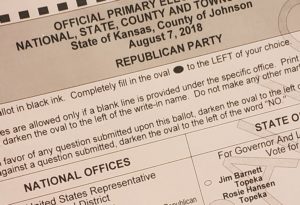
The lawsuit challenges a law that bars county election officers from accepting advance ballots sent by mail unless they verify that the signature on the envelope matches the signature on file in the county voter registration records.
The lawsuit — first filed in 2021 — contends that there is no standard for matching signatures, leaving it up to each county election official to decide how to verify the signatures.
If a court rules that the signature provision is unconstitutional or blocks that provision in a final order that can’t be appealed, the mail-balloting statute would be repealed.
The bill was backed by Kansas Secretary of State Scott Schwab.
The secretary of state’s office said the bill establishes legislative intent that signature verification is so integrated with mail balloting that it cannot be pulled out separately.
Since the regulations were adopted in 2021, and across the combined 2022 and 2024 election cycles, more than 300,000 mail ballots have been returned
The secretary of state’s officde said 224 ballots were ultimately rejected for unverified signatures after voters failed to remedy the issue.
Senate approves vaping regs
The Kansas Senate last week unanimously approved a bill that’s intended to combat an illegal and unregulated flow of Chinese electronic cigarette products into the United States.
The bill imposes new licensing requirements for electronic cigarette manufacturers that sell products in Kansas, either directly or through intermediaries.
The bill, backed by tobacco giant Altria and a large nonprofit trade association representing more than 2,000 independent fuel retailers, would require e-cigarette manufacturers to apply for a license from the state for $2,500 each year.
The Senate increased the licensing fee from the $500 that was originally proposed.
The bill also prohibits the sale of electronic cigarettes marketed to minors.
The bill would bar the sale of those products if the container packaging or advertising depicts a cartoon character or includes an image of a celebrity.
The bill also outlaws the marketing and advertising of electronic cigarettes that have
entertainment features, such as the ability to play games or music.
Attorney General Kris Kobach recently issued a consumer alert warning Kansans of dangerous vaping products from China that target children.
The attorney general said the products make it possible for kids to use games, social media, music and more while simultaneously inhaling unregulated materials.
He said the devices are deliberately designed to hook teens and conceal the true nature of the device from parents.
The overall bill was intended to address a surge of “illegal” and “unregulated” e-vapor products manufactured in China and shipped into the United States without oversight.
Food additives bill
clears committee
A proposal aimed at keeping certain chemical additives out of Kansas school lunches is headed to the full Senate.
The Senate agriculture committee last week approved a bill that would keep 12 chemical additives out of school lunches, excluding any food items bought a la carte or from vending machines.
The bill technically applies to free and reduced-price meals, but as a matter of practice it would still apply to all primary meals because federal rules don’t allow schools to serve different food to students based on income.
The committee agreed to remove from the list of banned additives the preservative butylated hydroxyanisole, also known as BHA.
The additive functions as a preservative that prevents the oxidation of food. Oxidation causes food to spoil.
While agriculture interests acknowledged during a hearing that there have been reports that BHA causes cancerous tumors in rats, they said the science was mixed.
Representing the Kansas Pork Association, lobbyist John Donley said there was other research showing that BHA can block cancer-causing carcinogens.
The U.S. Food and Drug Administration announced last week that its plans to reexamine whether BHA is safe.
The FDA issued a new request for information about BHA and will consider whether it’s “safe under its current conditions of use in food and as a food contact substance.”
The Senate committee also amended the bill so that school districts won’t face corrective actions until the 2028-29 school year although it officially starts in 2027-28.
Noncitizen data reporting
A bill requiring state agencies that provide public benefits to report noncitizen beneficiaries to the secretary of state got out of committee last week.
The House elections committee approved a bill that’s intended to give the secretary of state more information to determine if anyone is voting illegally.
The bill originally called for every state agency that provided public benefits to disclose the information to the secretary of state.
But it was amended to only apply only to state agencies that are required to give voters the opportunity to register to vote under the National Voter Registration Act, which would include the Department of Health Environment, the Department for Children and Families and possibly the Department for Aging and Disability Services.
Federal law requires state offices that provide public assistance or state-funded services to anyone with disabilities to make available voter-registration services.
The bill was further amended to broaden the information that would be sought to include someone’s date of birth, the last four digits of their Social Security number, the driver’s license number or their alien number if applicable.
The proposal originally only required state agencies to report the name and address of each noncitizen receiving benefits to the secretary of state.
Supporters of the bill said it was about further guarding against illegal voting while opponents said it fueled false conspiracy theories about noncitizen voting.
A top official from the state health department warned that the proposed law would violate a federal statute and a regulation if it had to share information from the state’s Medicaid program.
She cited a federal law and regulation that requires states to restrict using or disclosing information about applicants and beneficiaries to purposes directly connected with the administration of the state Medicaid plan
Corson public safety agenda
Democratic state Sen. Ethan Corson of Fairway unveiled his public safety agenda as he runs for governor. He faces Democratic state Sen. Cindy Holscher of Overland Park in the primary later this year.
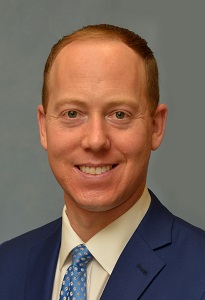
Corson’s public safety package includes five legislative efforts focused on long-term readiness and immediate operational needs. Here’s a look at them:
Increased funding for public safety improvements: Corson introduced Senate Bill 456, which would create a Law Enforcement Trust Fund through a one-time $125 million investment into an interest-bearing account. Interest earnings would provide an ongoing resource for state and local agencies to replace technology, purchase equipment and strengthen public safety capacity over time.
Tuition relief for first responders and their families: Corson introduced SB 477 to authorize a tuition waiver for eligible first responders and their dependents at Kansas public higher education institutions. The proposal is designed as a recruitment and retention incentive by linking eligibility to a minimum service requirement.
Expanded mental health and suicide prevention resources for state law enforcement: Corson introduced SB 479, which would move $350,000 from the State Highway Fund to the Kansas Highway Patrol, and $150,000 from the state general fund to the Kansas Bureau of Investigation. Corson’s idea is to match agency-identified funding for a comprehensive, statewide law enforcement wellness program.
Deterring assault against utilities and communications workers: Corson introduced SB 478, which would increase the criminal penalty for any individual who commits battery or assault against a utilities or communications worker.