


With $500,000 in insurance coverage to guard against drivers with minimal liability insurance, Duane Halsey figured he had enough financial protection in case of a wreck.
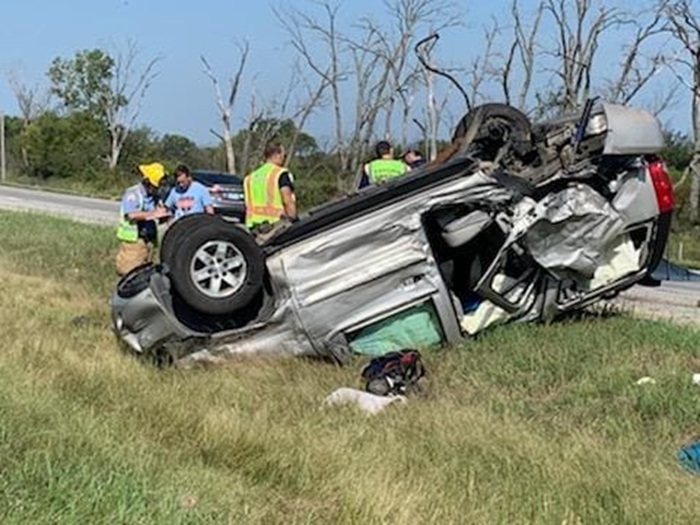
But in 1997, Halsey, his wife and others were involved in a horrific crash in Wilson County that killed three people and injured four others when the Chevy Suburban they were riding in collided with a tractor-trailer.
Halsey, who was hurt and lost his wife in the crash, could only collect about $104,000 for his share from the $1 million in liability coverage for the trucking company that was split among the seven crash victims. He was left with $176,000 in uncompensated damages.
State law barred Halsey from collecting from his own insurance policy for underinsured motorists because it only kicked in when his coverage equaled to or was more than the liability coverage of the at-fault driver.
In this case, Halsey had $500,000 in coverage, less than the $1 million in liability coverage for the trucking company, and as a result he couldn’t access his own coverage, a position that was ultimately upheld by the Kansas Supreme Court.
The court ruled that there is underinsured motorist coverage when that coverage exceeds the limits of the bodily injury coverage carried by the owner of the at-fault vehicle.
However, in cases where underinsured coverage equals or does not exceed those
limits, there is no coverage under the law.
The Halsey case — and legislation introduced to address it — focuses on underinsured motorist coverage.
Underinsured coverage is a type of auto insurance policy that pays for bodily injury and property damage when at-fault drivers have insurance, but their limits are too low to cover all the damage caused by a wreck.
Kansas trial lawyers are trying to change Kansas law in a way that would give Kansans more access to their own underinsured coverage.
The bill, heard this week by the Senate financial institutions committee, prevents insurance companies from denying underinsured payments to drivers because they have the same coverage or less than the liability of the at-fault driver.
The bill also bars insurance companies from taking what the at-fault driver’s insurance pays to cover damages and subtracting that from the victim’s underinsured motor vehicle coverage when the calculating how much coverage the victim receives.
It’s a process known in the industry as an “offset.”
For instance, if a driver has $100,000 in underinsured motorist coverage, the payout is reduced by the amount the at-fault driver’s insurance pays the victim.
So, if the at-fault driver has the minimum liability coverage of $25,000, the victim would only receive $75,000 from their own insurance.
Supporters of the bill said the offset gives the insurance beneficiaries what they purchased.
“Responsible Kansans do not expect to get something for free, but they do expect to get what they pay for,” said Wichita trial lawyer Rick James.
“It’s a tricky thing in insurance, but it impacts your constituents’ real lives and we see it every day,” he told lawmakers this week.
“Medical bills have to go somewhere. Somebody has to pay the medical bills. Underinsured coverage helps you do that,” he said.
“The Halseys were a responsible family. They purchased $500,000 in coverage. They were ready. A collision happened,” he said.
“The Halsey family got zero in underinsured motorist coverage despite paying for it.”
Opponents of the bill said it would give beneficiaries more than they’re owed.
Brad Smoot, representing the American Property Casualty Insurance Association, opposed the bill.
He said the issue has been considered before but didn’t advance. A similar bill was introduced in 2017 but died in committee.
“We think that the current system is best, and that the legislators that preceded you and looked at this issue over the decades have reached that same conclusion,” Smoot told lawmakers.
“In general, we think you’ve got a pretty good law,” he said.
“It works well for most people, and it keeps as many people insured as we possibly can by keeping our rates as low as we possibly can.”
Smoot predicted the bill could drive up car insurance costs.
“When we add more money to the system, increasing larger settlements, stacking or layering the coverages on top of one another, that money has to come from somewhere,” Smoot told the committee,
“Where do you think it comes from?” he asked. “It comes from the premiums that all of your constituents pay.
“We’d certainly all like to have enough money to pay for every injury. But on the other hand, we also want to encourage people to buy insurance.”
He said lawmakers were being asked to “flip” the current auto insurance system in Kansas “on its head.”
“We encourage you not to do that,” he said.
Marlee Carpenter represented the Kansas Association of Property and Casualty Insurance Companies, which opposed the bill.
She said in written testimony that insurance companies offset payments from other sources so that drivers making the claims recovers the full amount they are seeking, but not more than 100% of the damages.
“We believe that this bill will increase premiums and could over-compensate those injured,” Carpenter said in her written testimony.
“If companies are not allowed to offset other sources of payments the price of
underinsurance coverage will increase,” she said.
Chris Conrade, the owner of an independent insurance agency with offices in Newton and in Wichita, testified in support of the bill.
Conrade said he believes that insurance consumers don’t understand how underinsured motorist coverage works.
“When clients purchase underinsured motorist coverage, they do so with a straightforward expectation — that if they are injured by a driver who does not have enough insurance, their own (underinsured motorist coverage) will provide additional protection,” he said.
“That is how this coverage is commonly discussed, marketed and understood. Very few policyholders believe that the coverage they are paying for can disappear entirely based on the other driver’s policy limit.
“As an agency owner, I can tell you that this outcome surprises people — every time.
“When clients learn this after a serious accident, they feel misled, even though the policy complies with the law.
“That erosion of trust is not good for consumers, agents or the insurance industry.”