


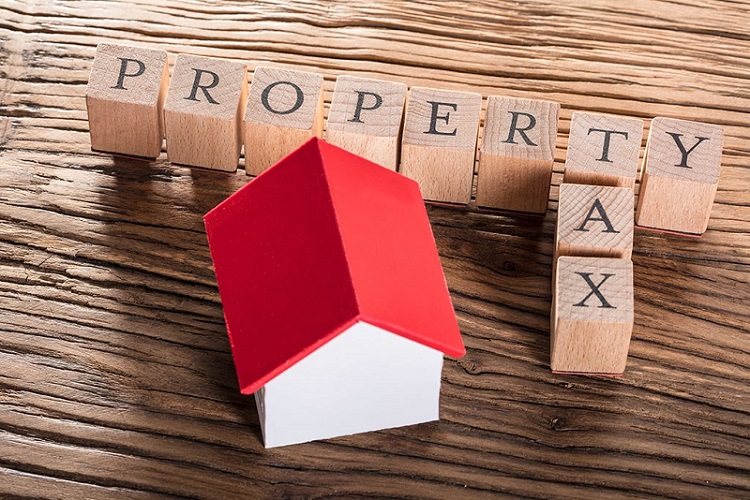
The House on Thursday kicked off debate on a bill intended to keep down property taxes but immediately ran into fierce opposition from cities because they would be required to hold an election if they want to grow their property tax collections.
Representatives from cities across the state appeared before the House tax committee, which started work on a property tax bill that is expected to be a companion to a cap on property tax assessments that’s now awaiting action in the Senate.
It is anticipated that the Senate and House will run their bills – one dealing with spending and the other property values – on the same day and find out where they eventually land.
The House bill would require local governments – cities, fire districts, sewer districts and the like – to hold an election if they want to grow their property tax collections by more than 3% from what they collected a year earlier.
Counties could decide to forego an election – and give up more than 3% in property tax revenues – but would be eligible to receive part of a $60 million fund allocated by the state to help reduce property taxes. Cities would not collect from the fund.
The bill excludes school districts.
The cities voiced a breadth of concerns, including how the elections would work, what effect the bill would have on the bond market and Wall Street, as well as how they might respond to emergency needs if they’re limited in raising new revenue.
The cities said the House bill would fundamentally change how they budget for the future, how they plan for infrastructure, how they finance new projects and how they deliver services such as police, fire and streets.

“The current bill is simply impractical, unworkable and unfair to taxpayers,” said Mike Koss, the city attorney for the city of Overland Park.
For instance, Koss said the bill, as now drafted, would require a property tax election in November of the year before the budget was adopted – in essence holding an election in 2026 for a 2028 budget if they want to exceed the 3% threshold.
“Just think about what can happen in the year between the time when a decision is made to hold that election and the time when a governing body has to adopt the budget,” Koss told the House tax committee.
“You know, million-dollar fire trucks break down, $5 million bridges fail, natural disasters hit communities,” Koss said.
“There’s a lot of talk about taxpayer fairness,” he said.
“I would submit that if you’re going to tell taxpayers that they can’t raise the revenues necessary to address these emerging issues because the Legislature forced them to take a vote a year before about their own limitations, that’s not fair to taxpayers.”
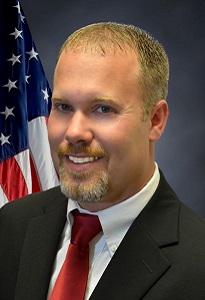
Earlier this week, Republican state Rep. Adam Smith of Weskan, chair of the House tax committee, introduced the bill addressing property taxes.
It’s a little different from last year’s property tax bill that gave voters the power to fight against spending increases they might oppose by getting to vote against local government spending that exceeded inflation.
Last year’s bill created a protest petition that – if signed by enough voters – would have automatically vetoed the budget and forced cities or counties to write a new spending plan.
Whether that provision might return to this year’s bill following Thursday’s hearing remains to be seen in the coming days.
“The bill’s structurally kind of the same as it was last year with the exception of the election piece, and that seemed to be the big point of contention today,” Smith said.
The committee chair said he didn’t plan to bring any amendments when the bill is worked Monday, although he anticipated someone else might.
Koss was joined by other city officials who shared similar reservations about the bill.
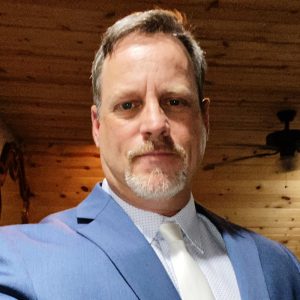
Steve Brooks is the city administrator of Seneca, the northeastern Kansas town with a population of about 2,100.
The bill, he said, “raises serious concerns” for cities across Kansas, particularly rural communities.
“I am concerned about the legislation disproportionately impacting cities while exempting the state and also the Kansas school districts,” Brooks said.
“Feels a little bit uneven in the treatment, and it feels like it places local governments in a uniquely vulnerable position, despite cities being responsible for many of the essential services that Kansans rely on every day,” he said.
“Additionally, the uncertainty created by this bill may force cities to anticipate system failures without reliable predictors,” he said.
“In practice, what this means is municipalities may divert scarce resources towards speculative risk mitigation rather than addressing known and immediate community needs,” he said.
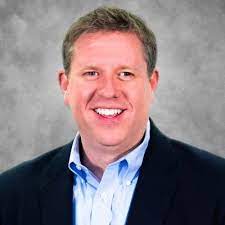
Spencer Duncan, mayor of Topeka and lobbyist for the League of Kansas Municipalities, said the issue should be more focused on controlling property values – something that has been the focus of the Kansas Senate.
“For years, legislators have expressed concern about rising valuations,” Duncan said.
“Yet valuation policy itself has not been meaningfully addressed by this body,” he said.
“If we are serious about tackling property tax concerns, we must focus on valuation reform, because that is the primary driver behind what taxpayers are experiencing.”
The Legislature is under pressure this year to approve significant property tax relief after approving a 1.5-mill property tax cut last year.
It’s an election year and seven legislators are running for statewide office, including Senate President Ty Masterson as well as Democratic Sens. Ethan Corson and Cindy Holscher, who are all running for governor.
During the hearing, Smith asked cities for examples of where they have made tough decisions to cut services.
“There seems to be a common theme… and that’s about cost of services, inflation, just the expense of providing local government services,” Smith said.
“I respect that. I was a former county commissioner. I was up here about 10 years ago fighting against a different tax lid,” he said.
“There is a lot of concern at the taxpayer level that these costs, they’re justified, and they get passed on to the taxpayers, but a taxpayer doesn’t have that same ability to go to their employer,” he said.
Enrico Villegas, city manager of Hutchinson, related how the city reduced the price of a local park from $750,000 to $100,000.
He said the city tried to balance a community’s needs for a park in an area not rich with recreational amenities along with keeping it in line with the city budget.
Nevertheless, Villegas said the city decided to preserve a historic building at a cost of about $400,000 after residents indicated they wanted to keep the structure because it was almost as old as the city of Hutchinson.
“There are many other things that we’ve done to try to cut things,” he said.
“We’re currently in a position right now. Where do we close a fire station? We have seven in the city, and obviously we can recognize closing a fire station is career suicide,” he said.
“But that’s where we’re at present day with our budget, and this would not help that situation,” he said.
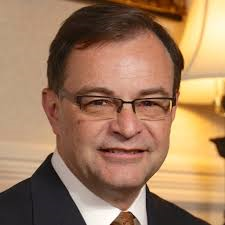
Dave Trabert, CEO of the Kansas Policy Institute, testified as neutral on the bill.
But he pointed out that the bill effectively eliminates a new process enacted in 2021 that requires local cities and counties to hold a public hearing and vote when they want to collect extra revenue from a so-called windfall that comes with increased property values.
At the Capitol and in government parlance, the process is known as “revenue neutral.”
“We very much like the concept of voters getting to have a say on the amount of a property tax revenue increase for a government entity,” Trabert said.
Last year, Trabert said there were 49 counties and 271 cities that did not raise property taxes. He said there were 21 counties that raised property taxes less than 3%.
“They went through the analysis. They worked hard. They sharpened their pencils, and they were able to do it,” he said.
“If revenue neutral goes away, everybody in these jurisdictions are going to get a tax increase, because there’s also an incentive.
“The incentive is for staying under 3%, not holding revenue neutral. ”