



Good morning everyone
Last week started with a bang and ended with a bang, but kind of ho-hum in between. We suspect the lazy, quiet days of summer will be rare between now and primary election day on Aug. 4. But like we often say here at SSJ, “No news is not good news,” even if it’s overwhelming. On a more personal note, Mrs. SSJ and I are having to make some hard decisions about our little — if not geriatric — pup Auggie. He’s getting up there, and he’s not the same little guy we adopted 12 years ago. He’s battled blindness for the last two years, and we have loved him and cared for him throughout that ordeal. Nothing is imminent but just something that’s on our minds here at SSJ as we prepare another Sunday roundup. Wish we had happier news to share this Sunday, but that’s just the ebb and flow of life. Now on to the significant stories we published last week and other news you might have missed but need to know.
- Four Republican candidates last week confronted an array of major issues facing the state, ranging from data centers to the Chiefs deal to property taxes to education, in an hourlong debate marked by spicy exchanges between Senate President Ty Masterson and businessman Philip Sarnecki.
- A federal political action committee apparently related to the Republican Attorneys General Association is prepared to spend at least $3 million on the Kansas race for attorney general, new ad data shows. This is an extraordinary sum of money — and maybe historic — considering that Attorney General Kris Kobach and Democratic attorney Chris Mann raised about $2.8 million combined in 2022.
- The filing deadline for Kansas House candidates passed at noon last Monday. There were 261 candidates who have filed for House seats, including 136 Republicans and 125 Democrats. There are 25 Republican primaries and 18 Democratic primaries. Here are capsules for each competitive House race in the state.
- An outside group that bills itself as an advocate for meat producers and farmers but is led by an established animal welfare lobbyist is dropping a half-million-dollar ad buy against Republican U.S. Sen. Roger Marshall, who is up for reelection this year.
- The Kansas social services secretary said last week that the state’s payment error rate for food-assistance benefits had dipped to 7.5% for the first four months of the current fiscal year as officials try to dodge penalties that would be levied by the federal government. Nevertheless, the state is facing $20 million in federal penalties if the rate isn’t reduced to under 6% by this September.
- The U.S. Senate last week confirmed one of President Donald Trump’s nominees to the federal bench in Kansas. The Senate voted 52-46 to confirm Great Bend lawyer Jeffrey Kuhlman to fill one of three vacancies on the federal bench in Kansas.
- Overland Park Mayor Curt Skoog surprised the Kansas political world last week when he filed to run as a Democrat in the 2026 primary for governor against state Sens. Ethan Corson and Cindy Holscher.
- Democratic Gov. Laura Kelly, who endorsed Ethan Corson in the governor’s race, didn’t seem too pleased with Curt Skoog’s entrance into the governor’s race.
- Former Kansas Gov. Jeff Colyer quietly bowed out of the governor’s race last week when he didn’t officially file for the office as the deadline lapsed at noon June 1. Colyer later issued a lengthy statement explaining his decision.
- Senate President Ty Masterson named a state senator from Leavenworth County as his running mate as he officially filed to run for governor last week.
- Johnson County businessman Philip Sarnecki last week named Wichita businesswoman and Republican rival for governor Joy Eakins as his running mate in the governor’s race.
- Fresh from securing the endorsement of President Donald Trump, Senate President Ty Masterson last week won support from Kansans for Life’s political action committee in the Republican primary for governor.
Uninsured Kansas children soaring
Kansas had one of the biggest increases nationally in the uninsured rate for children under 6 years old from 2022 to 2024, according to a new study released last week by researchers at Georgetown University.
The percentage of children under 6 without health insurance jumped 3.5 percentage points to 7.2% during that three-year period, according to the study by Georgetown’s Center for Children and Families.
The percentage point increase ranked second nationally behind North Dakota, which saw a 4.5 percentage point increase to 9.8% over that time frame.
Kansas was just ahead of Arkansas, which saw a 3.1 percentage point increase from 2022 to 2024, followed by Texas with a 2.9 percentage point increase and New Mexico with a 2.4 percentage point increase.
The issue is further exacerbated because the state has seen an 87% increase in the number of children under 6 years old who don’t have health insurance from 2022 to 2024.
The Georgetown study shows that the number of uninsured children under the age of 6 in Kansas has jumped to 14,700 in 2024 from 7,900 two years earlier.
“After years of progress ensuring most young kids have health insurance, Kansas is losing ground at a rapid pace,” said Heather Braum, senior policy adviser for Kansas Action for Children.
“Helping parents understand options for their children’s health insurance will be key to reversing this trend,” Braum said in a statement.
“That looks like the state reaching out to parents in the first month of their child’s life and executing outreach campaigns through child care centers, preschools, or other places young children may be.”
The cause of the increase is still unclear.
One possible reason could be traced to declines in Medicaid enrollment as the COVID pandemic ended.
Starting in April 2023, states across the country unwound from a continuous enrollment provision in federal law that blocked beneficiaries from being removed from the Medicaid rolls during the pandemic.
The federal government suspended yearly Medicaid eligibility reviews during the COVID-19 pandemic emergency, but they started up again under legislation passed by Congress.
As Kansans were required to redetermine their eligibility for Medicaid, children and adults lost coverage.
“The uninsured rate for infants, toddlers and preschoolers increased from 2022 to 2024 as it did for all children,” the Georgetown study said.
“This is likely due at least in part to the unwinding of the Medicaid continuous coverage protection that had been in place during the COVID-19 pandemic,” the study said.
“Young children and their families need access to affordable health care to grow and thrive, making these troubling trends a warning sign for families and policymakers.”
Nationally, the study found that from 2022 and 2024, the share of young children under 6 who were uninsured increased by a full percentage point, from 4.3% to 5.3%, reaching the highest uninsured rate for young children in nearly a decade.
“Nearly 220,000 additional babies, toddlers and preschoolers were uninsured in 2024 — a 23% increase between 2022 and 2024,” the study said.
Texas, North Dakota, Arizona, Wyoming, Idaho, Arkansas, Florida and Oklahoma had the highest rates of uninsured children under 6 nationwide in 2024.
Texas was at 10.8% followed by North Dakota at 9.8%, Arizona at 9%, Wyoming at 8.5%, Idaho at 7.9%, Arkansas at 7.6%, Florida at 7.6% and Oklahoma at 7.5%. Kansas was at 7.2%.
Also, the study found the percentage growth in the number of uninsured children under age 6 between 2022 and 2024 outpaced the growth among school-aged children in the U.S. and in nine states, including Kansas.
For example, the percentage increase in the number of uninsured children under 6 in Kansas grew by 87%, while the percentage of kids without insurance from 6 to 18 years old in Kansas grew by 22%, the study showed.
Nationally, the number of uninsured children under age 6 grew by 23% between 2022 and 2024, while the number of uninsured school-aged children grew by 17%.
Braum said the issue should be investigated in Kansas, starting with looking at policies that connect newborns with heath insurance options in their first month of life and seeing what outreach campaigns there are for environments with young children, such as child care or preschool.
‘Institutional turmoil’
stalls abortion case
A lawsuit challenging a state law that prohibits advanced practice registered nurses from prescribing abortion-inducing medications has been put on hold because of “institutional turmoil” at the Kansas State Board of Nursing.
Shawnee County District Judge Teresa Watson stayed the legal proceedings at the request of the state after the Legislature passed a law reforming the state nursing board following complaints about the agency’s heavy-handed approach to enforcement.
The state’s lawyers said the board is in such disarray — four of 11 board seats are filled and two agency officials named in the lawsuit are now gone — that it can’t defend itself currently.
The board does not have a president, vice president or treasurer.
The lawsuit, brought by Aria Medical Clinic of Wichita in April 2025, was filed against the state nursing board, the board’s president and the board’s executive president.
Watson directed the parties to contact the court to schedule a status conference to be held after July 1 to discuss whether the stay should be lifted and the case should be moved forward.
The lawsuit contests a state law and regulation that prevents advanced practice registered nurses — known as APRNs — from prescribing abortion medications.
The lawsuit says that APRNs under Kansas law are otherwise fully authorized to prescribe a wide range of medications, including controlled substances and the abortion-inducing drugs mifepristone and misoprostol, for a variety of health conditions.
Lawyers for the state filed a motion to delay all proceedings in the case, saying that the board is in “a state of institutional upheaval.”
They noted that the board has lost a majority of its members and lacks the quorum required under Kansas law to conduct official business.
They also said that two of the named defendants in the lawsuit — the board president and executive administrator — are no longer with the agency.
“In practical terms, the state defendants do not have a functioning client capable of directing this litigation,” the state’s lawyers argued.
“This situation is temporary and not of defendants’ making; legislation already enacted establishes a clear timeline for the board’s reconstitution.
The state points out that the nursing board’s membership is expected to undergo wholesale turnover in the coming months.
It is expected that by July 1, the remaining board members may term out under the bill approved by the Legislature and signed into law by the governor.
At that point, temporary board members may be appointed subject to Senate confirmation.
Those temporary members would then be removed effective Jan. 1, when the incoming governor selects a new, permanent board, the motion states.
The plaintiffs had argued against the stay, arguing the case involved multiple defendants who were capable of putting on a defense.
They said the court had issued comprehensive case management order just two months ago for a yearlong discovery period with a clear directive that parties were not to return seeking additional time.
“Defendants do not actually identify a legal barrier preventing this case from proceeding,” the plaintiffs argued.
“Defendants’ argument should not serve as a basis to override a court-ordered schedule — particularly where the court has already made clear that the case will proceed on the timeline set, and where plaintiffs endure a constitutional violation as they await their day in court.”
House leadership election heats up
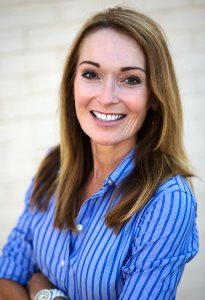
Republican state Rep. Kristey Williams of Augusta is joining the House race for speaker pro tem, the second highest ranking member of the chamber.
Republican state Rep. Nick Hoheisel of Wichita has already said he plans to run for the position now held by state Rep. Blake Carpenter, who is not seeking another term in that role because he’s prohibited by House rules.
Carpenter said he would seek another leadership position but added that he’s focused on electing Republicans to the Legislature this fall.
“After another fast-paced session and 20 successful veto overrides supporting Kansas families and businesses, I am looking carefully at new ways I can help strengthen our state, our economy and our House Republican caucus,” Williams said in a fundraising flier.
“One of the best ways I believe I can serve is by thoughtfully carrying the skills developed as majority caucus chair into seeking a new role as speaker pro tem,” she wrote.
“My vision for Kansas reflects what I hear from so many House members: More freedom for families and businesses through lower taxes and less government intrusion; more accountability and transparency from a smaller, not ever-growing government; and more freedom for Kansans to live out their faith and values without unnecessary dictates from the state,” she wrote.
“That same vision applies within our caucus,” she wrote.
“Members deserve the ability to vote their convictions, represent their districts and pursue their priorities with honesty, respect and the information they need to make sound decisions,” she wrote.
“I am less interested in being the voice in the room and more committed to making sure every member’s voice is heard. When this happens, Kansas wins,” she said.
Williams, chair of the House government oversight committee, has been in the House since 2015.
She was unopposed in the 2024 general election, although she has opposition this fall from Troy Nicks, a Democratic machinist from Rose Hill.
She won her primary in 2024 with 72% of the vote. She raised $17,747 last year and had $45,973 in cash on hand at the end of the year.
Schmidt rolls out first ad
Republican Insurance Commissioner Vicki Schmidt unveiled her first campaign ad in the Republican primary for governor last week.
The ad follows up on another one that was run by the Kansas Future Fund, which is spending about $352,000 on an ad buy separate from the candidate.
The candidate’s new ad features her career as a pharmacist, a job where Schmidt says she’s made a difference in people’s lives and that is “what public service should be about.”
“As insurance commissioner, I’ve recovered more than $200 million for Kansas families and helped lower prescription costs.
“Now I’m running for governor to make Kansas more efficient, more accessible, and less costly because Kansans deserve a governor that protects their pocketbook and works as hard as they do.”
So far, about $4.2 million has been booked or spent on broadcast ads during the Republican primary for governor, including about $1 million by Schmidt, according to ad tracking service AdImpact.
Senate President Ty Masterson just booked his first $116,000 in television spending, including about $73,000 in the Wichita/Hutchinson market, about $34,700 in Kansas City and about $8,200 in Topeka, according to data from AdImpact.
Johnson County businessman Philip Sarnecki has booked or spent about $1.15 million on broadcast adverting.
Former Gov. Jeff Colyer, who dropped out of the governor’s race last week, had spent about $540,000 on broadcasting, and a separate group formed to support his candidacy — Kansas First — had spent another $907,000.
Political players host
Masterson fundraiser
Four influential players in Kansas politics are joining up to host a fundraiser later this month for Senate President Ty Masterson in his campaign for governor.
Former House Speaker Ron Ryckman Jr., who led lobbying efforts to bring the Kansas City Chiefs to Kansas, will host a fundraiser for Senate President Ty Masterson and his running mate, Sen. Jeff Klemp, later this month.
Other hosts include real estate attorney Korb Maxwell, who represented the Chiefs before the Legislature and specializes in the tax incentives being used to finance the $3 billion stadium in Kansas City.
Chuck Caisley, another familiar face at the Capitol who is executive vice president of utility operations and chief customer officer for Evergy, also is sponsor of the fundraiser.
Another is retired Topeka businessman Mark Heitz, a frequent contributor to Republican candidates.
The event is scheduled for Ryckman’s home in Topeka in mid-June.
Democrats screen out candidates
The Johnson County Democratic Party angered some candidates last week when it announced it was withholding support because of questions about their viability.
The party is withholding support for U.S. Senate candidates Jason Hart, Kevin Latz and Anne Parelkar and from congressional candidate Sarah Preu.
County Party Chair Deann Mitchell said the decisions to withhold support were not made by any one individual but by committees that require a two-thirds majority vote.
“Our decisions are guided by a thorough evaluation process and our responsibility to advance the strongest opportunities for Democratic success,” Mitchell said in an email.
The decisions on Hart, Latz, Parelkar and Preu were made “based on campaign execution, including fundraising, that demonstrate a lack of serious effort,” she said.
Mitchell said Hart, Latz, Parelkar and Preu electronically signed a candidate media inclusion policy, which states that the county party reserves the discretion to withhold support of candidates for those reasons.
Two other Democratic U.S. Senate candidates — Michael Soetaert and Damon Anderson — will not have county party support because they didn’t sign the policy, Mitchell said.
Mitchell said the process has been used since 2023.
County party support includes voter guides, social media posts, websites office space and training sessions, among other things.
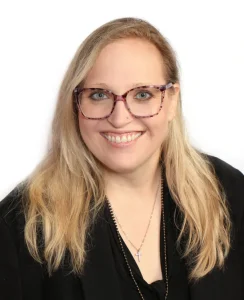
Parelkar, an Overland Park immigration lawyer, raised $2,916 for the quarter ending March 31. She’s raised about $20,000 for the cycle, including a $5,500 loan.
Hart, a former federal prosecutor, reported bringing in $10,741 during the first quarter of this year and had about $5,400 in cash on hand at the end of the reporting period.
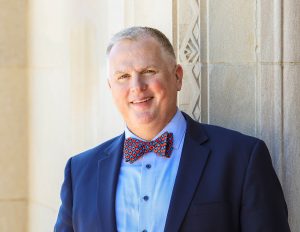
And Kevin Latz, a physician from Mission Hills, has not reported raising any money with the Federal Election Commission.
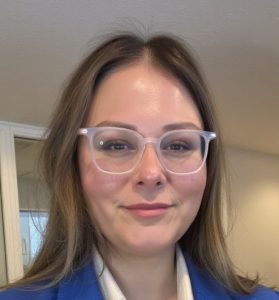
Preu, who is running in the Democratic primary against U.S. Rep.Sharice Davids, also did not report raising any money during the first quarter of this year with the FEC.
Davids, who would face a former Shawnee City Council member in the general election, had about $1.4 million in the bank at the end of March.
The amounts raised by Hart and Parelkar are generally less than what it costs to run a robust race for the Kansas House, let alone a U.S. Senate race that could cost more than $30 million.
Parelkar said she asked the party to reconsider its decision.
“I have given them the opportunity to reconsider based on the number of hours volunteers have put into this campaign, which when aggregated and given a monetary value, would far exceed the amount of funds some of my opponents have raised,” Parelkar posted on Facebook.
“I also have encouraged them to reconsider as We the People have been clear that we do not want the party to choose our candidates for us,” she wrote.
“Incidentally, I am also being excluded from meaningful participation in Demofest by the Kansas Democratic Party at this point. I would also hope that they will reconsider as well.”
Hart was similarly disappointed in the county party’s decision.
“Apparently, I need to constantly ask you for money. Nevermind that we are all talking about ‘affordability,'” he wrote on Facebook.
“For JoCo to support my candidacy, I need to do a better job at convincing you to give me money instead of paying for your gas or groceries,” he wrote.
“Apparently, the requisite ;character, judgment, and leadership qualities’ is that I talk to you about affordability, while convincing you to give me money, so JoCo Dem leadership can find it acceptable to support my candidacy.
“Aside from being profoundly personally and professionally offensive (and something that makes JoCo Dem Leadership sound like the party of Epstein and Pizzagate), the tone-deaf nature of this is stupefying,” he wrote.
“Don’t worry, I am not folding up shop or quitting. Far from it. And no, this is not some clever ploy to ask you for money (though you would certainly help out the campaign by doing so…”
“This decision is indicative of both a lack of vision and of basic integrity,” she said in a statement posted on Facebook.
“Gratefully I can say that my experience with other parties of KS-03 in Wyco, Franklin and Miami counties has been of a higher caliber,” she wrote.
“We are called to be a voice for the voiceless,” she wrote. “We are not called to do the bidding of corporate donors.
“It is my right as a registered Democrat to run in a primary against an incumbent whom I feel is no longer representing the issues closest to the hearts of the good people of this district.”
United Kansas party candidacies canceled
The secretary of state’s office last week invalidated the candidacies of two candidates who filed to run as United Kansas Party candidates.
Both candidates had filed under two parties, one as a Democrat and a United Kansas Party candidate in House District 70 and another as a Republican and a United Kansas candidate in House District 100.
Kylie Kilmer of Abilene had filed to run in the Democratic primary and as a United Kansas Party candidate in House District 70 where she will face the winner of the Republican primary pitting Republican incumbent Greg Wilson of Abilene against GOP challenger Brandon Rein.
J.C. Moore had filed to run in the Republican primary and as a United Kansas Party candidate in House District 100.
As a Republican, Moore is running in the primary against Republicans Al Jirak of Wichita and former state Rep Carl Maughan of Wichita.
The Legislature last session passed a law that would prevent a scenario that occurred in 2024 when Moore filed as a Republican and as a United Kansas Party candidate against Senate Majority Leader Chase Blasi.
Moore lost to Blasi in the primary and then ran against him that same year in the general election as a United Kansas candidate and lost again. Both times, Moore was overwhelmingly defeated.
The new law says that if a candidate has more than one viable route to the general election, they must pick one party or the secretary of state goes with the first filing.
Kilmer is still on the ballot as a Democrat in House District 70. Moore is still on the ballot as a Republican in House District 100.
The United Kansas Party was originally created to promote fusion voting in Kansas.
Fusion voting allows multiple parties to nominate the same candidate for the same office in a general election with all the votes added together for a final tally.
While the two major parties nominate different candidates, third parties may cross over and endorse one of the major party candidates and “fuse” with them.
Organizers of the effort said fusion voting could help moderate Kansas politics and drive the state more to the political center.
Fusion voting is a creature of the 19th century when it was a part of U.S. politics, particularly in the West and Midwest, according to a 2020 Idaho Law Review article exploring the issue.
The issue of fusion voting dates back more than 100 years in Kansas when the Populist Party and the Democratic Party would nominate the same individual to the same office.
After the Republicans swept the November 1900 election, in the 1901 session, they immediately enacted legislation to prohibit “fusion tickets.”
United Kansas has filed a lawsuit seeking to make fusion voting legal in Kansas.
Candidate objects to disqualification
Democratic House candidate Amy Arteaga is protesting the secretary of state’s decision not to put her on the ballot in the 122nd House District because she didn’t file by last Monday’s noon deadline.
Arteaga is seeking to run against Republican incumbent Lon Pishny of Garden City. Her objection to not being placed on the ballot will be heard by the state Objections Board this Friday.
In her objection, Arteaga’s lawyer said the secretary of state incorrectly decided she should not be on the ballot.
The lawyer said Arteaga sent her filing papers to the secretary of state by UPS Next Day Air Saver, which provided proof that the documents were delivered June 1 at 10:51 a.m. — 69 minutes before the deadline — where they were received at a dock by someone named “McGee.”
Arteaga’s lawyer, Jake Miller, says the secretary of state’s office acknowledged receiving the candidate’s declaration of intention form on June 1.
But Miller said the notice declaring Arteaga’s candidacy ineligible “does not identify the precise time the form was internally opened, logged, routed, reviewed, or otherwise processed, nor does it identify any factual basis for concluding that the (form) and fee were not received before the statutory noon deadline.
“The secretary’s determination rests on the assertion that the declaration and fee were not received by the deadline. The documents available to Ms. Arteaga show the contrary,” Miller wrote.
“The secretary’s notice does not explain why delivery to the secretary’s receiving location, accepted by an identified recipient before noon, should not constitute receipt” by the noon deadline for filing on June 1.
“Nor does the notice explain whether the package was internally transferred, opened, date-stamped, logged, or routed after delivery in a manner that delayed internal processing.”
Medicaid fraud sentencing
A Kansas woman has been sentenced to 15 months in prison for falsifying her identity as a dead relative to steal about $450,000 in federal and state welfare benefits in a scheme dating back to 2005, federal prosecutors announced last week.
Tamera Ruth Powers, 68, of Tonganoxie pleaded guilty to one count of wire fraud for stealing the identity of her relative, Minda Sue Rakestraw, who died in 1977, according to the U.S. attorney’s office.
Court records show that Powers began using Rakestraw’s identity as early as 1993.
Powers used Rakestraw’s identity to obtain a Kansas identification card and to marry a man by the last name of Landis.
Powers then started using the name Minda Sue Landis. 
Powers defrauded the federal and state governments when she received benefits under separate identities. Powers kept accounts at two different banks to receive payments under her name and the alias, Minda Sue Landis.
In April 2005, Powers applied for Social Security disability benefits under the name of Minda Sue Landis.
In August 2012, Powers applied for Social Security disability benefits in her actual name, falsely stating on the application she had not previously applied for those benefits.
In August 2013, Powers applied for Supplemental Security Income benefits using her real name.
In the application for the supplemental income benefits, she lied about her marital status and failed to disclose previously using another name and Social Security number, federal prosecutors said.
Also in August 2013, Powers applied for assistance from the federal low-income energy program and the food assistance program.
She didn’t report she was married or her spouse’s income on the application, which led to her receiving more benefits than what she was entitled to get.
In December 2013, she began receiving Medicaid benefits through the state.
She did not disclose her marriage, true household income or that she had used other names, which would have made her ineligible for any Medicaid benefits.
In June 2023, Powers applied for Retirement Insurance Benefits through Social Security. In the application, she falsely stated that she was not married, and she failed to disclose that she had used other names, prosecutors said.
Federal prosecutors said Powers’ plot cost the federal government about $138,000 and the state about $315,000.
As part of the sentence, a federal judge ordered Powers to pay approximately $452,097 in restitution.
The case was investigated by the Social Security Administration’s Office of Inspector General, the Kansas inspector general, the Kansas Department for Children and Families and the Kansas Department of Revenue.