

(Will be updated as warranted)
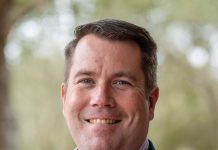
The U.S. Senate on Tuesday confirmed one of President Donald Trump’s nominees to the federal bench in Kansas.
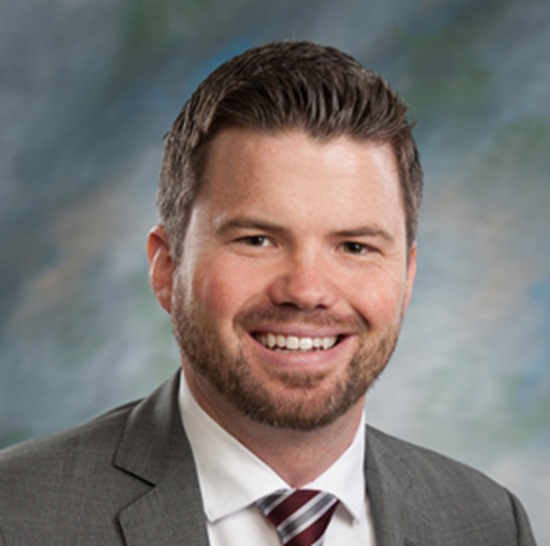
The Senate voted 52-46 to confirm Great Bend lawyer Jeffrey Kuhlman to fill one of three vacancies on the federal bench in Kansas.
The Senate will address the nominations of Kansas Bureau of Investigation Director Tony Mattivi and the state’s top appellate lawyer Anthony Powell later but there is no issue holding them up.
“Mr. Kuhlman has demonstrated a strong commitment to the rule of law, a deep respect for the Constitution and a clear dedication to serving the people of Kansas,” U.S. Sen. Jerry Moran said on the Senate floor Monday.
“His experience both inside and outside the courtroom has prepared him well for the responsibilities of the federal bench, and I’m confident in his professional competence and judicial temperament.”
Kuhlman is an attorney at the Watkins Calcara firm in Great Bend.
He was a judicial law clerk for U.S. District Court Judge Eric F. Melgren in Wichita.
He also worked as a litigation associate at the Hinkle Law Firm.
He graduated from Kansas State University in 2012 with a bachelor’s in history and a minor in political science.
He earned his law degree from the Antonin Scalia Law School at George Mason University in Arlington, Virginia.
Kuhlman was rated as “qualified” by the American Bar Association’s Standing Committee on the Judiciary.
Kuhlman was rated as “qualified” by a substantial majority of the committee and “not qualified” by a minority of the committee. There was one abstention.
He estimated he has tried approximately 35 trials to verdict, according to his questionnaire submitted to the Senate for his confirmation.
Four of those were jury trials that went to verdict, while another jury trial ended in a mistrial due to a hung jury. The rest would have been non-jury trials.
Using his third-year practice certificate at the Commonwealth Attorney’s Office in Alexandria, Virginia, he estimated that he tried 10 to 12 bench trials on criminal misdemeanor or traffic offenses in the Alexandria General District Court.
As city prosecutor for a year in the city of Great Bend, he estimated that he tried approximately 20 bench trials on criminal misdemeanors or traffic offenses in Great Bend Municipal Court.
He said he didn’t have any financial arrangements that may present potential conflicts of interest nor did he have any close relatives in the legal profession.
“If confirmed, I will recuse myself in all cases where I have played a role. I will also recuse myself from any matter in which, during private practice, I or another lawyer in my firm has participated,” he wrote in the questionnaire.
Among the significant litigation he was involved in were five separate cases arising out the execution of search warrants on the Marion County Record and two private homes in Marion, Kansas.
He represented Marion County officials, specifically the Marion County attorney and the Marion County sheriff and his employees.
He said his clients participated in mediation and were able to reach a settlement agreement with all of the plaintiffs.
He also represented the Trego County Sheriff’s Office and a deputy in an excessive force case.
He filed a motion to dismiss a claim against the sheriff and the county, which was granted.
“From there, we engaged in extensive discovery and, following mediation, the case was resolved via settlement,” he said in a statement.
He also represented five Topeka police officers in the shooting death of a suspect.
“This is an excessive force case filed against the City of Topeka and five of its officers. It arises out of an officer involved shooting that resulted in the death of a suspect. I was retained to represent the five individual officers.
“We engaged in extensive written discovery and depositions and were preparing for expert disclosures when plaintiff dismissed the suit without prejudice in June 2025,” he told the Senate.
He represented the state Department of Agriculture in defending the state’s Kansas Pet Animal Act, which was challenged as unconstitutional.
A federal judge found for the plaintiffs in the case, saying that the law authorized unreasonable warrantless searches of Covey Find Kennel in violation of the Fourth Amendment to the U.S. Constitution.
“The plaintiff prevailed because the district court found that boarding and training kennels are not closely regulated industries, and therefore, routine, warrantless inspections of those kennels was unreasonable and violated the Fourth Amendment,” Kulhman wrote.
He also represented the Satanta school district in a First Amendment retaliation and employment action brought by former teachers.
“After extensive discovery and numerous depositions, we moved for summary judgment but that motion was largely denied. The parties then participated in mediation, which was successful.
“The case was resolved by settlement agreement.”