




Thursday, June 18, 2026
Member Login
Home Elections/Voting Organized labor questions Holscher’s union bona fides

Organized labor questions Holscher’s union bona fides

0
313

Organized labor is calling out Democratic gubernatorial candidate Cindy Holscher for how it says she represents herself as a longtime union member when she just joined the Kansas National Education Association last January.

Holscher’s union membership has emerged as an issue in the Democratic primary for governor after she touted it during a debate with Ethan Corson last week when she questioned how the unions were making endorsements during the primary.

She joined the Kansas National Education Association in January 2026 – seven months after she announced she was running for governor, leading union members to question her commitment to organized labor.

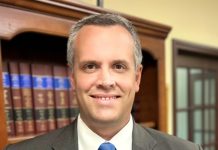
“Cindy Holscher is going around the state acting like she’s been a longtime union member,” said Ty Dragoo, chair of the Working Kansas Alliance, a coalition of 23 labor unions across the state of Kansas.

Ty Dragoo

“At the heart of the matter, she decided to become a union member six months after she announced her candidacy for governor because it was politically convenient,” Dragoo said in an interview.

“And labor across the state takes offense to that kind of misleading action,” he said.

Holscher’s campaign said she joined the KNEA as a substitute teacher member in January 2026.

Her membership – good through Aug. 31, 2026 – coincidentally was accepted the same day the Sunflower State Journal reported about the union support that Corson was getting from organized labor.

Asked if she first joined the union in 2026 or earlier, a campaign spokesperson said it was January 2026.  The state education department’s data base shows Holscher last had an emergency substitute license from July 1, 2023 until June 30, 2025. She also was licensed in 2022-23.

Holscher’s campaign said she wasn’t aware that joining a union was an option before January, and “she was glad to find out she was eligible.”

“When Kansas faced a teacher shortage in our schools, Cindy Holscher stepped up to the plate as a substitute teacher, just like she stepped up to run for office in order to end the disastrous Brownback experiment,” Holscher campaign manager Madi Ashcraft said in a statement.

“After a few years as a substitute, Cindy was invited to join the union, and she was proud to do so – following in the footsteps of her dad, a union construction worker.

“That some political insiders would try to make hay out of a substitute teacher joining the union is exactly why people are so sick and tired of politics,” Ashcraft said.

Holscher last week took subtle shots at Corson’s endorsements, including those from labor unions that she suggested were somehow done differently this year than they have been done in the past while touting the fact she’s a union member and comes from a union family.

Cindy Holscher

“This year, things were done differently in terms of those endorsements,” Holscher said at the Overland Park debate held by KCUR and moderated by “Up to Date’s” Steve Kraske.

“Normally, there’s a process, normally there’s an interview paperwork process. There wasn’t this year, and I think people should be curious about that.”

Holscher’s comments immediately set off labor unions that on Thursday wanted Holscher to answer questions about how long she had been a KNEA member, what type of membership did she have with the KNEA, and had she worked as substitute teacher while paying union dues.

The alliance on Thursday issued a fuller statement that can be read here criticizing Holscher, saying there was no “grand conspiracy” that prevented her from receiving labor’s support.

“Let’s be clear: There is no grand conspiracy preventing Senator Holscher from receiving labor’s support in her campaign for governor,” the alliance said in a statement.

“Union support is not owed to any candidate. It is earned through trust, consistency, and a demonstrated commitment to working people.”

“Unfortunately, Sen. Holscher has repeatedly shown a willingness to say one thing and do another. Time and again, she has attempted to recast, redefine, or outright reverse her own positions when it becomes politically convenient.

“Kansans deserve leaders who stand by their convictions, not politicians who treat their voting record like a weather vane that shifts with the political winds,” the group said.

The KNEA also lightly admonished Holscher in a statement issued on Thursday. It has not made an endorsement in the race yet.

The KNEA said in its statement that it believes “that union values are rooted in working together – not in using union membership or association as a political advantage over others.”

“Any candidate who seeks to elevate themselves by boasting about or leveraging their union membership status to diminish another candidate does not reflect the values of solidarity that are fundamental to our union.”

Most notably at issue in the campaign are Corson’s and Holscher’s competing positions on data centers and the Chiefs.

Corson and Holscher supported giving data centers a 20-year sales tax exemption in 2025. Holscher now supports a moratorium on data centers until guardrails are put in place.

Holscher said if she had the information about the facilities then that she has today, she would not have voted for the incentives.

“I will not dig in on a vote if the information is different later,” she said. “I will take that new information and make choices accordingly,” Holscher said in that debate.

Holscher also has been critical of the Chiefs’ deal to bring the NFL team to Kansas but voted different ways.

Last session,  she opposed a bill creating the sports authority to oversee the new Chiefs’ stadium in Kansas City, but voted for the incentives that were used to lure the NFL team from across the state line in Missouri.

“This is a deal that was struck by lobbyists and wealthy folks for a project that will benefit wealthy folks and give a massive tax break to wealthy folks. It doesn’t just feel like a deal,” Holscher said during the floor debate last session.

“It feels like a heist. Maybe we’ll just call it the Hunt heist,” Holscher said, alluding the Hunt family and the owner of the Chiefs.

“I love the Chiefs. I always have,” Holscher said,

“When I first heard the announcement, I was extremely excited to the point that I was probably living in denial,” she said.

“Very quickly, though, people started reaching out to me, indicating that this was not a good deal for the taxpayers. So, I started digging in, and the people were right. This deal is a massive giveaway to the wealthy,” she said.

Last week, Holscher characterized the Chiefs incentives bill as an approach to “explore” whether Kansas could attract a professional sports team. “I am always going to seek economic opportunity for our state,” she said.

The incentives bill, however, was very specific in how it allowed for the construction of a major sports complex, including a stadium of not less than 30,000 seats for only an NFL team or a Major League Baseball team in a state neighboring Kansas.

They would have to invest at least $1 billion in each stadium project. The bill allowed sales tax revenue, or STAR, bonds to cover up to 70% of stadium costs, up from the current level of 50% that’s now allowed for those types of projects.

The bill also extended the amount of time it would take to repay the bonds issued for the project to 30 years from 20 years. The bill also would allow for a separate location such as a practice facility to be included in the district where revenues would be funneled to pay for a stadium.

The sports authority bill was different, Holscher said, although it would have never been necessary without the incentives package.

“That bill had problems,” Holscher said of the sports authority bill. “That bill did not have protections for unions and our labor workers. That needed to be added. I had an amendment to do that.

“Once that stadium is built, there are no protections there in terms of the workers who are hired later,” she said.