

Good morning, everyone:
Great news. Mrs. SSJ and I have found new little person to bring into our home. Later today, we will picked up our little shepherd mix weighing in at about 60 pounds. She’s about 3 1/2 years old and has the energy of a puppy without requiring the time and energy required to raise a puppy. We are now debating names.
Not sure if this can really be true, but there was so much going on last week that it was impossible to get almost anything done. There’s so much flying around out there these days, and who knows whether it can all be done before Aug. 4. We’re working feverishly to get as much done as possible before then. And unlike the debate over mail ballots, there’s no grace period for me. It’s either done by Election Day or not. The deadline does not move. That said, let’s move on to the significant stories that we published last week as well as other news you might have missed but need to know…
- Democratic state Sen. Ethan Corson last week urged voters to question whether Democratic Sen. Cindy Holscher can be trusted as governor, underscoring again her shifting positions on the Chiefs’ stadium deal, data centers as well as whether she’s honest about her claims of success in Republican-leaning districts.
- Johnson County megachurch pastor Adam Hamilton outdistanced all of his rivals for the U.S. Senate in fundraising during the last quarter, hauling in $3 million more than Republican incumbent Roger Marshall and more than any of the other seven Democrats who filed their finance reports last week.
- The ads say they’re sponsored by the American Conservative Fund. They extol the values of standing against the left, supporting President Donald Trump, banning gender transition surgery, safeguarding election integrity, cutting property taxes, supporting family farms, supporting gun rights and opposing abortion. But peel back the layers a little bit and you’ll find that the ads aren’t bankrolled by a traditional conservative group but by a coalition of sports wagering platforms.
- A Douglas County judge last week issued a temporary injunction that effectively keeps in place for now a three-day grace period for mail ballots to arrive at election offices after Election Day in Kansas. Republican Attorney General Kris Kobach said he would immediately appeal the decision to the Kansas Supreme Court.
- Gov. Laura Kelly last week named Johnson County District Court Judge Christopher Jayaram to serve on the Kansas Supreme Court.
- The next governor of Kansas will have a big say in deciding how major highway projects are picked. A new multiyear transportation plan will likely be considered during the next governor’s term, and the new administration will play a key role in deciding how major highway projects will be selected for the future. Candidates running for governor explained how they would approach selecting new projects in any new plan that might be approved.
- The Kansas Chamber’s political action committee last week announced its endorsements in Kansas House races for the Aug. 4 primary election.
- Here are the recommendations from the Kansas National Education Association’s political action committee for the 2026 elections.
- The Kansas Rifle Association’s political action committee announced its legislative endorsements for the 2026 election.
Affordable Care enrollment plummets in Kansas
The number of Kansans enrolled in an insurance plan available from the Affordable Care Act plummeted by 20% this year following the expiration of enhanced tax credits intended to offset premium costs.
New numbers released last month by the Centers for Medicare and Medicaid Services show that enrollment in insurance plans available from the ACA in Kansas had fallen about 36,000 in February 2026 compared to a year earlier.
The data showed that 143,880 Kansans were enrolled in the ACA as of February 2026 compared to 179,920 in February 2025.
Data crunched by healthcare think tank KFF show that it’s the biggest numerical and percentage decrease for Kansas since the program started a decade ago.
KFF reported that the overall ACA marketplace enrollment fell 13% in a year, dropping to 19.2 million in February 2026 from a high of 22.1 million in 2025.
An analysis conducted by The Associated Press found that Ohio and Oklahoma each saw a more than 32% decline in ACA enrollment over the past year.
The AP reported that those states lost larger shares of their covered populations than any other state.
“Following closely behind, and losing more than a fourth of their enrollees, were Arizona, South Carolina, Minnesota, Indiana, Michigan, Mississippi, Louisiana and Missouri,” The AP reported.
The numbers just released at the end of June are different from the people who signed up for coverage by last January.
The new numbers reflect what’s known as “effectuated enrollment,” which describes the number of people who enrolled in coverage and also paid the premiums required for their coverage to take effect.
Last year, Kansas set a record for the number of people who signed up but didn’t necessarily pay the premium for an insurance plan available from the Affordable Care Act.
It was a 16.7% increase from the 171,376 who enrolled in the ACA in 2024 and almost 3.5 times the 57,013 who enrolled the first year the benefit was available in 2014.
But the record number of Kansans who enrolled last year was anticipated to recede with the expiration of the tax credits.
Five of the companies that provided insurance on the exchanges raised rates this year, anywhere from an average increase of 11.74% to an average increase of 33.4%.
According to KFF, expiration of the enhanced premium tax credits was estimated to increase premium payments by 114%, on average, for subsidized enrollees if they choose to stay in the same plan.
As a result, many were expected to drop their ACA coverage or maybe move to a less-expensive plan on the exchanges.
KFF has estimated that the enhanced premium tax credits saved subsidized enrollees an average of $705 a year in 2024, lowing their payment to $888.
Without the enhanced premium tax credits, annual premium payments in 2024 would have averaged $1,593, according to KFF.
“While the Trump administration attributes this drop in enrollment to their attempts to address fraud, this coverage loss happened at the same time millions of people faced steep increases in their premium payments — often in the double or even triple digits — with the expiration of enhanced tax credits,” wrote Cynthia Cox, senior vice president and director of the program on the ACA for KFF.
“While we do not yet know how many people have become uninsured, the ACA Marketplaces are often an option of last resort for people who do not have an affordable offer of coverage through their work and are ineligible for Medicare or Medicaid,” Cox wrote
The Department of Health and Human Services issued a report saying that growth in ACA enrollment was “improper” or “fraudulent” because individuals misstated their income to gain access to free plans.
“Media reports have focused narrowly on plan cancellations, a routine phenomenon that occurs primarily in the beginning of plan years as individuals are often auto-reenrolled into plans they may no longer want or need,” the HHS report said.
“Historically, 90-95 percent of enrollees who select an ACA Exchange plan during Open Enrollment ultimately effectuate coverage by paying their first premium,” the agency said.
“These reports largely ignore the broader landscape, including that an estimated 2.9 million improperly enrolled individuals have been removed due to various program integrity measures. In addition to the about 1.5 million enrollees CMS previously removed from subsidies, we estimate another 1.4 million either ended coverage or were blocked from coverage due to recent policy changes. Various policies and metrics point to these improper and phantom enrollments being pulled out of the system from late 2025 to early 2026.”
Constitutional amendment and immigration
Supporters of a constitutional amendment calling for the election of justices to the Kansas Supreme Court have introduced a new issue into the campaign: immigration.
A new ad hit the airwaves on Friday criticizing the court for “protecting illegal aliens” and warned that the state Supreme Court isn’t accountable to anyone until now. It told voters that on Aug. 4 they “can keep murderers like this off the street by voting yes on the ‘right to vote’ amendment.”
As of Saturday, the ad was targeted for Wichita and Topeka.
It’s not clear what murderers are being referenced in the ad.
The ad from the social welfare group Kansans for Democracy doesn’t go into details but cites a Topeka Capital-Journal story from March 3, 2020. That was the date the U.S. Supreme Court found that federal immigration law doesn’t override the state’s prosecution of identity theft.
Then-Kansas Attorney General Derek Schmidt had appealed a Kansas Supreme Court decision, which overturned three identity theft convictions because federal law preempted state prosecutions for using false or stolen personal information contained in federal immigration forms. The U.S. Supreme Court ruled 5-4 to reverse Kansas state Supreme Court.
“From the beginning of our country, criminal law enforcement has been primarily a responsibility of the states, and that remains true today,” Justice Samuel Alito wrote in the majority opinion.
“Our federal system would be turned upside down if we were to hold that federal criminal law pre-empts state law whenever they overlap,” Alito wrote.
“Indeed, in the vast majority of cases where federal and state laws overlap, allowing the states to prosecute is entirely consistent with federal interests.”
Three years earlier, the Kansas Supreme Court overturned the convictions of three men — Ramiro Garcia, Donaldo Morales and Guadalupe Ochoa-Lara — who could not legally work in the United States.
The three restaurant workers were convicted of identity theft and providing false information on state tax forms or private legal documents.
In a 5-2 ruling, the state Supreme Court concluded that federal immigration law prohibited Kansas from enforcing state criminal law because the information had also been submitted on a federal I-9 form used for employment verification.
The social welfare group financing the ad doesn’t have to disclose its donors under federal law. The group has booked or spent about $1.3 million on television and radio ads during the campaign, according to national ad tracker AdImpact.
Overall so far, an estimated $6.2 million has been spent or booked on broadcast ads for and against the amendment, according to AdImpact. The cost of the campaign is likely much more after campaign mailers, consultants and polling are counted.
Opponents of the amendment have spent about $3.8 million on television as they make a case that the amendment is an attempt to get around court decisions upholding the right to an abortion and provide more money for public education.
They say the amendment will put political donors in front of justices who will decide their cases.
Supporters of the amendment have spent or booked about $2.4 million, according to AdImpact.
Those numbers are fluid and can change as the campaign evolves.
Kansans for Democracy was incorporated by Brandon Smith, who was listed in public records with a Hutchinson address.
Smith is believed to be the former policy director for former Gov. Sam Brownback. He is now in private practice in Nashville, Tennessee.
Smith worked previously as chief of staff and assistant solicitor general for Tennessee Attorney General Jonathan Skrmetti, where he led multistate litigation and high-profile constitutional challenges.
He previously worked as executive director of legislative and regulatory affairs for former Kentucky Gov. Matt Bevin.
He also was deputy director of the Federalist Society and an adjunct professor at American University.
Governor’s race spending
Republican Secretary of State Scott Schwab introduced a new ad this week in the Kansas governor’s race as total overall spending on broadcast in the GOP primary has reached nearly $13 million so far.
Schwab has now booked or spent about $1.6 million on broadcast, including about $69,000 on radio, according to national ad tracking firm AdImpact.
The School Freedom Fund, an affiliate of Club for Growth, has booked or spent $2 million attacking Republican Insurance Commissioner Vicki Schmidt.
Here are the other spending amounts on broadcast so far as of last Friday, although these numbers can change quickly. These numbers are based on reporting from AdImpact:
School Freedom Fund (anti-Schmidt): $2.02 million
Johnson County businessman Philip Sarnecki: $1.77 million
Secretary of State Scott Schwab: $1.6 million
Insurance Commissioner Vicki Schmidt: $1.15 million
Defend US PAC (pro-Schmidt): $1.1 million
Kansas First PAC (pro-Jeff Colyer): $907,192
Senate President Ty Masterson: $728,863
Kansas Future Fund (pro-Schmidt): $719,347
*Former Gov. Jeff Colyer: $539,930
Take Back Kansas Action (pro-Masterson): $493,535
Kansas Comeback (pro-Sarnecki): $426,474
American Mission (no ad yet, but believed to be pro-Masterson): $407,640
Farmers First Fund: (pro-Masterson): $296,796
*Ran but did not file
Skoog ready to get ads up on TV
Overland Park Mayor Curt Skoog is about ready to get up on broadcast television in the Democratic primary for governor.
His campaign booked a small ad buy of $48,400 that is targeted for the Wichita and Hutchinson market only, according to national ad tracking service AdImpact. He has already spent about $8,100 on digital advertising.
A campaign spokesperson said an ad will be launched next week.
Democratic state Sen. Ethan Corson has already booked or spent about $485,000 on broadcast and plans to spend $1 million.
AdImpact reports no broadcast spending for Democratic state Sen. Cindy Holscher, who is focused on streaming TV ads that are not reportable because they are not regulated by the government.
Congressional fundraising
The state’s congressional incumbents will likely move into the general election with healthy campaign nest eggs compared to their Democratic and Republican challengers, new campaign finance reports show.
The state’s four members of Congress – Tracey Mann in the 1st District, Derek Schmidt in the 2nd District, Sharice Davids in the 3rd District and Ron Estes in the 4th District – each have more than $1 million in cash on hand for the quarter ending June 30.
Davids, the state’s lone Democrat in Congress, reported raising $656,845 in the second quarter.
She raised more than any of her Republican Kansas colleagues on Capitol Hill last quarter She had about $1.7 million in cash on hand at the end of the reporting period.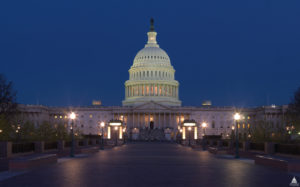
Davids has primary opposition from Sarah Preu, a technology and communications professional from Fairway.
Preu reported raising $17,439 during the last quarter and had $11,094 in cash on hand to combat an incumbent who keeps a large presence in the district.
Former Shawnee City Council member Eric Jenkins, a Republican, has filed to run against Davids. He reported raising $15,771 last quarter and had $11,227 in cash on hand.
Over in the 2nd District, Republican Derek Schmidt reported raising about $415,406 during the last quarter and had about $1 million in cash on hand at the end of the reporting period.
Meanwhile, Democratic veterinarian and veteran Don Coover raised about $209,850 and had $241,518 in cash on hand.
In the first quarter, Coover reported raising $217,991 compared to $166,324 for Schmidt.
In the 1st Congressional District, Republican incumbent Tracey Mann raised $247,084 during the quarter and had $2.7 million on hand when the reporting period ended on June 30.
Democratic challenger Colin McRoberts, who teaches at the University of Kansas, raised $64,665 during the quarter and had $22,877 in cash on hand at the end of reporting period.
McRoberts has primary opposition from Lawrence attorney Lauren Reinhold, who reported raising $16,238 and had about $3,784 in the bank when the reporting period closed.
And in the 4th District, Republican incumbent Ron Estes reported raising $339,605 and had about $1.8 million in cash on hand at the end of the reporting period.
Democratic attorney Katy Tyndell reported raising $77,158 and had $103,984 in cash on hand as of June 30.
Tyndell is a founder of Leading Kansas, which she characterized as a nonpartisan civic engagement organization “dedicated to defending democratic institutions, protecting individual freedoms, and creating space for Kansans of all political backgrounds to find common ground.”
She now manages Tallgrass Management, overseeing operations and serving as legal adviser for affiliated family companies.
Meanwhile, Democrat Chris Carmichael reported raising $23,794 last quarter and had $16,343 in cash on hand.
Carmichael characterizes himself as a veteran who served for more than 31 years in the U.S. Army and Air Force, including over two years in Afghanistan.
He retired as a colonel and earned the Bronze Star for his leadership and service.
Lawyers announce support
for judicial amendment
Fifty-eight Kansas attorneys signed onto a statement last week supporting the constitutional amendment calling for the election of justices to the Supreme Court.
The signers include current and former Republican lawmakers, the Shawnee County district attorney, the general counsel to the secretary of state, the former head of the Kansas Chamber of Commerce and a member of former Gov. Sam Brownback’s administration.
“As attorneys, we recognize that this amendment would require our profession to relinquish a privilege that attorneys have held for decades, the ability to vote for attorney members of the Kansas Supreme Court Nominating Commission,” they said. “While we respect the commission and the attorneys who have faithfully served on it, we believe the time has come to place all Kansans on equal footing in the process of selecting the state’s highest court.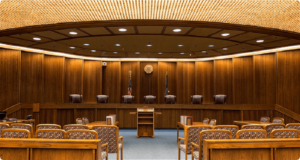
“Under the current system, attorneys are afforded a unique role in the judicial selection process that is not available to the general public. We believe every voter should have the same opportunity to participate in choosing the justices who interpret our laws and the Kansas Constitution,” they wrote.
The amendment would bring to an end a nine-member screening panel made up five lawyers elected by their peers and four other nonlawyers appointed by the governor.
It’s a process the state has used since 1958 when Kansans approved a constitutional amendment creating a special nominating commission for screening judicial candidates.
The system came about when former Kansas Gov. Fred Hall maneuvered to get himself appointed to the Supreme Court after leaving office in what is known as the “triple play.”
The controversy led voters to amend the constitution to install the current system.
The screening committee recommends three candidates to the governor, who picks one for the Supreme Court.
Here’s who signed the letter:
District Attorney Mike Kagay
Josh Ney
Mike Patton
Chris McGowne
Kent Vincent
Kirk Nystrom
Joe Patton
Cindy Patton
Michelle Egbert
Rep. Susan Humphries
Rep. Bob Lewis
Brittany Jones, president, Kansas Family Voice
Jim Holt
Former Rep. Mark Kahrs
Dan Dunbar
Former Rep. Matt Bingesser
Byron Harden
Sen. Kenny Titus
Morten Vigilus
Brad Schlozman
Corey Moomaw
Kurtis Wiard
Dean J. Gengler
Ann T. Rider
Jacob Pugh
Former Sen. Eric Rucker
Michael Duenes
Jeff Kahrs
Tye Darland
Ray Geoffroy
Logan Overman
Shane Pierce
Jessie Rosell
Sean Tarantino
Matt Vermeeren
Kristin Westgard
Steven M. Stark
Calvin Rider
Clayton Kaiser
T. Chet Compton
Gordon G. Kirsten, II
Matthew Shoger
Sarah Stula
Cameron Bernard
Alan Cobb, former top executive at Kansas Chamber of Commerce
Jeffrey Harris, Jr.
Gary Ayers
Clay Barker, general counsel for secretary of state
Tim Keck, Brownback administration cabinet secretary
Garrett Roe
Ed Pugh
Marshall Stula
Former Rep. Lance Kinzer
Thomas Witherspoon
Luke Nath
Former Rep. Charles Macheers
George Bruce
Matthew C. Hesse
Governor’s press secretary departs
You may know Grace Hoge and not even realize it.
Over the last couple of years, she’s been seen in many media photographs flanking Gov. Laura Kelly — often holding a recorder — as the governor addresses reporters.
She’s the one who gets to abruptly cut off reporters’ questions when she announces “last question.”
She’s also generally been on the front line of fielding reporters’ questions, regardless of how obscure they may seem. Her name has often been attached to quotes coming from the governor’s office.
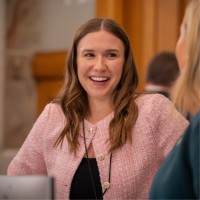
And she was always responsive. It’s not that she gave reporters everything they wanted, but questions were generally answered — one way or another — by deadline.
Now, Hoge is leaving as the governor’s term winds down, and is taking an out-of-state campaign communications role.
“Serving as Gov. Kelly’s press secretary has been a deep honor,” she said in a brief email.
“I’m grateful for Gov. Kelly, my colleagues in the Governor’s Office, and the members of the press I’ve had the privilege of working with for the last three years,” she said.
Hoge became the press secretary in 2024 after working as communications coordinator for the governor.
She served as an intern in the governor’s office in the spring of 2023 and later had an intergovernmental affairs internship with the White House in the summer of 2023.
Hoge returned to Kansas after interning at the White House to take a job in the governor’s office as communications coordinator, where she often traveled with the governor, and later became press secretary.
Kansas Chamber promotion
The Kansas Chamber of Commerce has promoted William Wilk to vice president of government affairs.
Wilk has served as the chamber’s senior director of government affairs for the past three legislative sessions, playing a central role in advocating for the organization’s policy priorities at the Capitol.
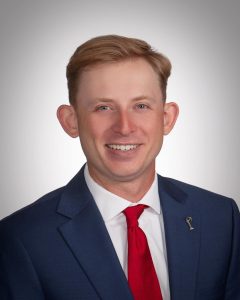
“William has proven his ability to successfully lead our advocacy team at the statehouse by earning a strong reputation among our membership, industry representatives and elected officials in how he navigates policy and effectively represents the Kansas business community in Topeka,” said Eric Stafford, the chamber’s president and CEO.
Stafford said Wilk will now lead the Kansas Chamber’s lobbying efforts in working with stakeholders to “advance a pro-growth agenda for the state of Kansas.”
“I am deeply honored and humbled to step into the role of leading the Kansas Chamber’s advocacy efforts on behalf of businesses across our state,” Wilk said in a statement. “It is a privilege to represent the Kansas business community and I look forward to working with our members, state legislators, and Kansas’ next governor to make our state the best place in the nation to live, work, start and grow a business.”
Wilk’s experience in politics includes working as a campaign consultant for U.S. Sen. Jerry Moran’s reelection campaign in 2022.
He also was an advance team member for President Donald Trump’s 2020 reelection campaign.
Wilk earned a bachelor’s degree in strategic communications and a minor in business from the University of Kansas.
Wilk’s father, Kenny, served in the Kansas House from 1993 through 2008.
Kenny Wilk is now vice president of government and community affairs for the University of Kansas Health System.
EMILYs List plays in Kansas House races
EMILYs List last week announced it was backing six Democratic candidates running for the House this fall, including five who are trying to flip Republican seats.
“This November, we have a real opportunity to break the Republican supermajority in the Kansas House of Representatives. EMILYs List is proud to stand with these bold women, and together give Kansans the leadership they deserve,” EMILYs List President Jessica Mackler said in a statement.
Here are the House races EMILYs List is targeting this year:
- It is supporting Democrat Sherry Giebler of Olathe in District 14. She faces Republican incumbent Charlotte Esau. Giebler ran for the Kansas Senate in 2024 and lost to Republican Doug Shane of Louisburg, who received 59% of the vote. Kamala Harris won 50.4% of the vote in this district while President Donald Trump won 47.9%. Democratic Gov. Laura Kelly won 56% of the vote in this district in the 2022 governor’s race, while Republican Attorney General Derek Schmidt won 42% of the vote.
- It is backing Democrat Allison Hougland of Olathe in House District 15. Hougland served in the House in 2023-24 after defeating Matt Bingesser in 2022. She lost her reelection bid to Republican Rep. Lauren Bohi in 2024 by 106 votes. President Donald Trump won House District 15 with 49.2% of the vote in 2024. Democratic Gov. Laura Kelly won the district with about 54% of the vote. Bohi had $32,770 in cash on hand at the end of the year while raising $29,816 during 2025. Hougland has reported raising $14,622 with $27,126 in cash on hand at the end of the year.
- It endorsed Democrat Emily Blanks of Bonner Springs in House District 33. Blanks sits on the Bonner Springs City Council and is executive director of the Bonner Springs Edwardsville Area Chamber of Commerce. She has primary opposition from Romona Smith of Kansas City. Smith describes herself a healthcare professional with a master’s in business administration with a concentration in healthcare management and a graduate certificate in healthcare leadership from Park University in Parkville, Missouri, where she also earned a bachelor’s in management and human resources. The primary winner faces Republican Rep. Carolyn Caiharr of Edwardsville in the general election.
- It endorsed Democratic state Rep. Nikki McDonald of Olathe in House District 49. She faces a challenge from Republican Tricia Sinclair of Olathe. McDonald raised $53,068 last year and had $31,733 in cash on hand at the end of the year. Sinclair is an assistant professor of business at MidAmerica Nazarene University. She has a bachelor’s in accounting from the University of Kansas and a master’s in business administration from MidAmerica Nazarene University. Democratic presidential candidate Kamala Harris won 51.1% of the vote in this district.
- It’s supporting Democrat Brenda Bandy of Manhattan in House District 67. Bandy is co-founder and executive director of the Kansas Breastfeeding Coalition. Republican incumbent Angel Roeser of Manhattan is not seeking reelection. There’s a Republican primary in this district between Stacy Kohlmeier of Manhattan and Kaleb James of Manhattan. Democratic presidential candidate Kamala Harris won 51.3% of the vote here. President Donald Trump received 46.1%. Democratic Gov. Laura Kelly won about 61% of the vote here in the 2022 governor’s race, while Republican Derek Schmidt won about 37% of the vote.
- It’s backing Democrat Candace Landers of Wichita in House District 88. She faces Daniel Schneider in the Democratic primary. The winner will meet Republican Rep. Sandy Pickert in the general election. Landers is a former teacher and works with the American Federation of Teachers as an organizing assistant. Democratic presidential candidate Kamala Harris won this district with 49.6% of the vote in 2024. President Donald Trump received 48.9% of the vote. Democratic Gov. Laura Kelly won 56% of the vote in this district in the 2022 governor’s race, while Republican Derek Schmidt won 42% of the vote.
Friend of rail
Last week, the president of the Northern Flyer Alliance wrote a blog post praising state senator and gubernatorial candidate Ethan Corson for his support of passenger rail in Kansas.
There’s been an ongoing effort to bring the Heartland Flyer, which runs from Oklahoma City to Fort Worth, north to Kansas where it could connect with Amtrak’s Southwest Chief, which runs from Chicago to Los Angeles.
“Sen. Corson’s commitment to passenger rail has been more than just verbal support; it has been effective legislative action,” wrote Deborah Fischer Stout, president of the Northern Flyer Alliance.
She said Corson — as a member of the Senate transportation committee — was a key advocate for a bill that created for the first time a passenger rail revolving fund.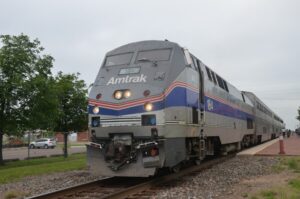
“His efforts and those of many of his Senate colleagues paid off in a powerful way, with the Senate passing the bill by an overwhelming margin of 34-6,” she wrote. “This broad bipartisan support signaled a turning point in how our legislature views the future of passenger rail,” she wrote.
She said the funding “not only secures the initial resources necessary to bring the Heartland Flyer Extension north into Kansas, it helps secure a place for passenger rail in the state’s next transportation plan…”
“Senator Corson recognizes that this is about more than just laying tracks,” she wrote. “He has consistently identified the connection to the Dallas/Fort Worth hub as an ‘economic engine’ for our state. By linking Kansas to this major metropolitan area, we aren’t just opening doors for tourism and trade; we are building a more accessible, prosperous, and connected future for every Kansan.”
The post mentions nothing about the governor’s race and doesn’t make a specific endorsement.
American Conservative Fund
on the attack
A group called the American Conservative Fund that is financed by sports wagering platforms has not only been running ads promoting the Republican candidates it favors in House races — it’s now on the offensive against their opponents.
The group has been financing primary campaigns in support of Republican state Reps. Ken Collins of Mulberry, Lance Neelly of Tonganoxie, Ken Corbet of Topeka, Avery Anderson of Newton, Kyler Sweely of Hutchinson, and Adam Smith of Weskan.
Collins, Neelly, Corbet and Anderson all supported legalization of sports wagering in 2022. Smith voted against the sports wagering bill. Sweely was not in the Legislature when sports wagering was enacted.
The group also is supporting two new Republican candidates — Tyler Coats of El Dorado and Casey Slaughter of Wichita — who were not in the Legislature when sports wagering passed.
But the group is now on the attack against their primary rivals with ads opposing former newspaper reporter Michael Stavola, who is running against Anderson; Leavenworth County Commissioner Mike Stieben, who is running against Neelly; Tyler Thrall, who is running against Sweely; and Kevin O’Brien, who is running against Slaughter.
National ad tracking service AdImpact only shows that the American Conservative Fund is spending about $53,200 on digital ads in all those races, although we have heard reports that the ads are also on TV.
It spent the most on digital ads — about $8,900 — in the House District 42 race pitting Neelly against Stieben. It spent the least — about $4,800 — on Rep. Adam Smith’s race in House District 120.
Here’s a look at the new wave of oppo ads in these races:
Anti-Thrall/House District 102
Anti-Stavola/House District 72
Anti-O’Brien/House District 101
Anti-Stieben/House District 42
Pro-Neelly/House District 42