

Good morning everyone:
Hope everyone had a great week. Generally, news was pretty steady this week. Not too much. Not too little. Enough to keep us busy but not overwhelmed. Happy to report we had a great trip to Chicago. Never had been to Wrigley Field before. It was majestic. Lovely blue skies and mid-60-degree temps. Perfect for baseball. But when two hot dogs and a bottle of water cost you $35, you might want to limit your trips. Would love to go back. Won’t waste much of your time this morning. Let’s move on to the significant stories we published last week and other news you might have missed but need to know…
- Republican state Rep. Ken Rahjes has stepped aside from his role as the director of agricultural programming for a statewide network of Kansas radio stations following a complaint brought by his Republican rival for secretary of state seeking equal access to the airwaves.
- The former top executive of the parent company of a unique type of Kansas financial institution has been found guilty on charges he set up a shell company to enrich himself with more than $150 million and pump up his lavish lifestyle.
- The Legislature’s move to overhaul the state nursing board is complicating a legal challenge to a state law prohibiting advanced practice registered nurses from prescribing abortion-inducing medications.
- Former Gov. Jeff Colyer’s campaign laid down its first television ad buy for his 2026 campaign for governor, as TV spending on the GOP side now exceeds $3 million so far. This story has been updated to reflect increased television spending during the week.
- An extended member of the Kansas legislative family died last week when state Rep. Barb Wasinger’s husband passed away unexpectedly while on a trip to Florida. Services are set for this week. He was remembered as a “gentle giant” who worked tirelessly to provide a life for his family that he did not have growing up.
- A new three-pronged property tax plan emerged last week among key Republican senators who have discussed the possibility of a special session to address an issue that has largely eluded resolution in the Legislature.
- Republican state Sen. Larry Alley of Winfield last week said he planned to count the number of senators who might be interested in calling a special session to address property taxes, but he hit a stumbling block.
- Democratic Methodist Pastor Adam Hamilton last week reported raising more than $1 million as he starts his campaign for the U.S. Senate, a much bigger haul than any of the 10 other candidates in the primary field have raised so far.
- The White House is praising Kansas lawmakers for making good on the president’s priorities, including a bill that struggled to pass that imposed certain restrictions on public assistance. The letter was sent to Senate President Ty Masterson and House Speaker Dan Hawkins on May 1 and speaks to Kansas lawmakers overall.
- The top Democrat in the Kansas House is backing Democratic state Sen. Ethan Corson of Fairway in the Kansas governor’s race.
- Republican state Rep. Angel Roeser of Manhattan last week announced she will not seek reelection in District 67, possibly opening an opportunity for Democrats to gain a seat in the House this year.
No Labels troubles
The secretary of state is refusing to recognize David Miller’s claim to represent the No Labels Party as its chairman, saying the organization as now formed is not recognized as a political party in Kansas.
The secretary of state’s general counsel sent a letter to Miller on Friday, notifying him the agency would not accept, process or recognize any political party filings submitted by him or anyone affiliated with any of three entities purporting to be on behalf of No Labels Kansas, the recognized political party.
The secretary of state made a similar ruling in 2024 after there was an attempt to nominate two candidates to run under the No Labels banner for the Kansas Senate — one against her wishes.
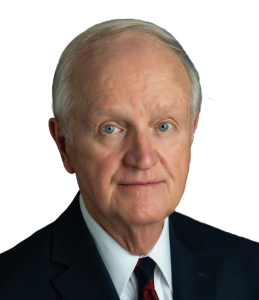
In a news release issued April 27, Miller announced he was elected chair of the No Labels Kansas Party. He also said the party elected a treasurer and a secretary.
Miller is a former state legislator and former director of the Kansans for Life political action committee as well as former chair of the Kansas Republican Party who ran against Republican Bill Graves for governor in 1998.
But the original founders of No Labels in Washington, D.C., called Miller’s announcement “another fraudulent effort to hijack the No Labels Kansas Party.”
“None of these people has any affiliation with the party. This effort is invalid and will be rejected, just like the last one,” said Ryan Clancy, chief strategist for No Labels in Washington.
Miller responded to the secretary of state’s letter in an email Saturday afternoon.
“We’ve reviewed the letter his legal counsel sent and he is essentially attempting to run the same plays we understood he attempted to run in 2024, denying that our efforts have validity,” Miller said in an email.
“He is mistaken and we are prepared to make that case in the proper forum. The letter from the secretary contains numerous misstatements and false claims.
“We fully intend to take him to task for those inaccuracies and are prepared to defend our leadership of No Labels Kansas Party,” he wrote.
A week earlier, Miller responded separately to the accusations of fraud.
Miller said in an email that his group knew of no work performed by the national group to conform to state law governing the operation of parties, post-recognition.
“Out-of-state individuals from Washington, DC claiming that their efforts have been ‘hijacked’ or that we have acted ‘fraudulently’ have no authority to speak for members of Kansas No Labels Party,” he wrote.
“Hearing such out-of-touch commentary coming from Washington is really not surprising. In our view, the individuals with whom you have spoken are uninformed and their views are irrelevant,” he said.
Two years ago, the secretary of state agreed to designate the No Labels movement in Kansas as an official political party after it submitted a petition with the legally required number of signatures to become a party.
The Kansas initiative was an outgrowth of work on a national level to form a third-party presidential ticket — called a “unity ticket” — that could bring together a moderate Republican and Democrat on a presidential ticket.
No Labels had intended to put forward a third-party ticket for president, but the effort fizzled after the national party dropped plans to run a candidate.
The secretary of state designated No Labels a political party in January 2024 after it submitted the petition, a process that required “a substantial investment of time, organization, and financial resources.”
“NLKS, the recognized political party, maintains the original certification issued by this office and remains the only entity authorized to act under that designation,” wrote Clay Barker, the secretary of state’s general counsel.
Barker said the secretary of state has records showing that Miller is affiliated with three different groups related to No Labels.
The groups are: No Labels Kansas Party Inc., No Labels Kansas Inc. and No Labels Party of Kansas Inc., each with three different business identification numbers.
“None of these corporations has applied for or been granted recognized political party status by the
secretary of state,” Barker wrote.
“Corporate registration with the Kansas secretary of state, by whatever name, does not confer, substitute for, or imply recognition as a political party under Kansas law,” he wrote.
State records show that all three of those groups were incorporated by Kris Van Meteren, a political consultant who in 2024 tried to nominate two candidates to run as No Labels candidates.
At that time, Van Meteren described himself on the nominating documents as chair, incorporator and director of No Labels Kansas Inc.
Ultimately, Secretary of State Scott Schwab removed two nominees from the ballot listed as No Labels candidates.
When the party first started, documents show that Glenda Reynolds was listed as party chair and Ernest Reynolds was a committee member.
Another committee member was Victoria Schultz of Leawood. Shane Mathis of Lecompton was listed as the secretary/treasurer of the group.
Barker said the governing rules established by No Labels Kansas — the originally recognized political party — don’t allow it to nominate, support or oppose any candidate for state or local office.
The rules authorized the party to obtain ballot access for No Labels candidates nominated for president and vice president of the United States.
As a result, No Labels may lose its status as a recognized political party, he wrote.
Former reporter launches bid
for House seat
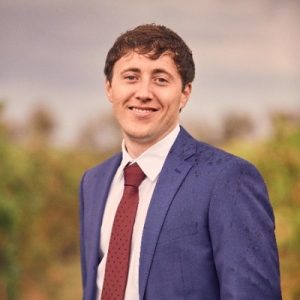
Republican state Rep. Avery Anderson of Newton is now facing a primary challenge from former Wichita Eagle reporter Michael Stavola, who launched a campaign for the Kansas House last week.
“Our state legislature is corrupt and irresponsible,” Stavola wrote in his new campaign website.
“Legislators failed on their promise for property tax relief, but succeeded in doubling their own salaries.
“As Kansans are taxed out of their homes, our legislators take more and more: state spending has climbed about 70% since 2019.
“The problems are clear, the solutions are common sense — but self-serving politicians stand in the way. If we want to change Topeka, we need to change who we send there.”
Stavola worked as the Eagle since 2019 until last month and before that was a staff writer at the Hutchinson News from 2017 to 2019. He worked for the Pittsburg Morning Sun from 2015 to 2017.
He has a bachelor’s in journalism from the University of North Florida and a master’s in business administration and management from Wichita State University.
Anderson is seeking his fourth term in the Kansas House representing District 72.
He was chair of the fundraising arm of the House Republican caucus in 2024 when the GOP picked up three seats. During the 2024 election cycle, the Republican House Campaign Committee raised more than $1.5 million.
Anderson personally raised $13,900 last year and had $14,702 in cash on hand at the end of the year.
“My record is simple: lower taxes, strong support for law enforcement, and standing up for the small businesses and families of Newton and Harvey County,” Anderson said in statement Saturday.
“I came to Topeka to fight for the people of this district, and that is exactly what I have done.
“In Topeka, I have voted against wasteful spending and fraud that takes advantage of Kansas taxpayers, and I stand firmly behind the officers who keep this community safe. I will put that record up against anyone.”
President Donald Trump won 60.3% of the vote in this district in 2024. Democratic presidential candidate Kamala Harris won 37.9% of the vote.
Republican Derek Schmidt won 49% of the vote in this district in the 2022 governor’s race, while Democratic Gov. Laura Kelly received 47%. Independent Dennis Pyle received 2.2% of the vote.
This could be one of several high-profile Republican primaries this year.
One of the hottest primaries in the state could be in House District 42, where Leavenworth County Commissioner Mike Stieben is making another run against Republican incumbent Lance Neelly.
Stieben lost to Neelly in the 2024 primary by 37 votes.
Another Republican primary worth watching will be in Olathe, where retired Air Force Brig. Gen. Thomas Palenske is in a primary against Rep. Mike Storm to see who will replace the late John Resman.
Precinct committee leaders picked Storm to fill out Resman’s term earlier this year.
Race to replace Roeser
It didn’t take very long for candidates to start lining up to replace Republican state Rep. Angel Roeser of Manhattan after she announced last week she didn’t plan to run for a second term in the House.
Brenda Bandy, co-founder and executive director of the Kansas Breastfeeding Coalition, filed as a Democrat for the House District 67 seat.
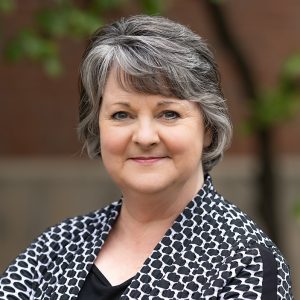
Meanwhile, Stacy Kohlmeier, a recently retired business leader from the Florence Corp., has filed to run as a Republican.
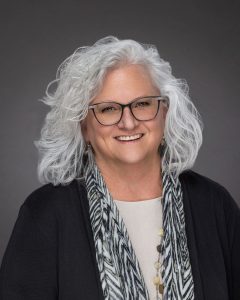
Kohlmeier had worked as the vice president of customer experience for the Florence Corp. She also was the economic development director for the Manhattan Area Chamber of Commerce.
Kohlmeier moved to Manhattan in 1984 to start her career with Kansas Power & Light Co., which is now Evergy.
Kohlmeier also was the chair of the Manhattan Area Chamber of Commerce in 2025 and now serves as a trustee of the Greater Manhattan Community Foundation and the Fort Hays State University Foundation.
She is a board member of the Midwest Dream Car Collection and the Manhattan Area Chamber of Commerce executive committee.
Kohlmeier has a bachelor’s in business administration from Fort Hays State University.
“After more than 40 years in business, I’m excited about the opportunity to step into public service and give back in a new way,” Kohlmeier said in a statement.
“This community has given so much to me and my family, and I’m ready to put my experience to work for the people, families, and businesses who call this area home.
“Throughout my career, I’ve focused on listening carefully, bringing people together, and finding practical solutions,” she said.
“Those same skills are what I would bring to the Legislature, working alongside others to make thoughtful decisions that reflect the needs of our community.”
Bandy, meanwhile, is a member of the Kansas Maternal and Child Health Council and the Early Childhood Recommendations Panel.
She has been an International Board Certified Lactation Consultant since 2010.
She is an active member and a former board member of the U.S. Breastfeeding Committee.
Bandy serves on the board of directors of the Kansas Head Start Association and is a former board member of the Kansas Association for Infant Mental Health.
Bandy earned a bachelor’s in chemistry from Kansas State University.
“For the past 15 years, I have worked with legislators at the Capitol in Topeka, advocating for policies that support families,” Bandy said in a statement.
“I’ve noticed they have less time, and for some, less interest in listening,” she said.
“Some in the majority have become emboldened to say and do things under the capitol dome that were unthinkable in years past.
“I’ve seen the poor policies that result from rushed legislative sessions with little or no discussion or input from others,” she said.
“I am committed to listening to constituents, advocates, and my legislative colleagues. I will pursue policies that address rising costs, the Kansas economy and workforce stability, and health care access and costs.”
The race for House District 67 could present one of the better chances for Democrats to gain a seat in the House given that Democratic presidential candidate Kamala Harris won 51.3% of the vote in this district while President Donald Trump received 46.1%.
Democratic Gov. Laura Kelly won 61% of the vote in this district in the 2022 governor’s race, while Republican Derek Schmidt won 37% of the vote here.
However, a Democrat hasn’t won this seat since 2008 when Tom Hawk defeated Republican Dick Miller with about 56% of the vote. Two years later, Hawk lost his reelection bid to Republican Susan Mosier.
The seat has since been held by Republicans Tom Phillips, Mike Dodson and Roeser after Mosier left the position to become the state Medicaid director at the Kansas health department.
Senate fundraiser
returns to Plaza
The Senate’s annual holiday fundraiser will return to the Country Club Plaza this year after moving around to other places in recent years.
The event — known as the Plaza Light Fundraiser — is set for Dec. 4 at the Polsinelli law firm.
In 2023, the event was held at Arrowhead Stadium, and in 2021 it was held at the Kansas Speedway.
Planners say the last time the Senate’s annual fundraiser was held at the Country Club Plaza was in 2019.
A year later, it was canceled because of the pandemic.
Lawmaker gets into
political consulting business
Republican state Sen. Stephen Owens of Hesston is teaming up with Jon Lueth at Americans for Prosperity to start a new political consulting firm called Civic Edge Advisors.
The firm was created to “bring together proven campaign experience, grassroots expertise, and modern political technology into one full-service consulting agency focused on helping conservative candidates succeed.”
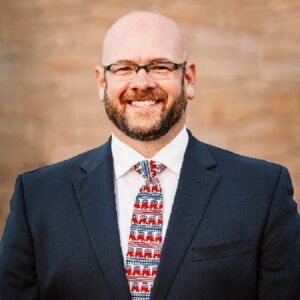
“Kansas has no shortage of talented political consultants, but very few understand what it truly means to have your own name on the ballot,” Owens said in a statement.
“That firsthand experience, combined with decades of campaign involvement and access to the best tools in the industry, creates a winning formula for Kansas conservatives.”
The firm will offer various campaign services, including campaign strategy and management, direct mail, text messaging campaigns, website development, email marketing and social media marketing.
Leuth had previously been a familiar face at the statehouse as deputy state director for AFP, an organization he’s been with 2017.
Leuth has a bachelor’s in political science, English and religion.
Governor endorses
secretary of state candidate
Democratic Gov. Laura Kelly last week endorsed former state Rep. Jennifer Day in the Democratic primary for secretary of state. Day is running against Sam Lane of Shawnee, who works in inspection and materials testing in construction.
“Jennifer Day has the experience, integrity, and commitment to public service that Kansans expect from their leaders,” Kelly said in a statement.
“She will stand up against federal election interference to ensure Kansans have their votes counted in a safe, secure and free election run by our state and local election professionals.”
The winner of the Democratic primary faces the winner of the Republican primary pitting Republican state Reps. Pat Proctor of Leavenworth against Ken Rahjes of Agra.
School cellphone bans
produce mixed results
The Kansas Legislature this year enacted a law banning cellphones in public and accredited private schools amid claims that the devices are a barrier to learning and lead to mental health issues. But a new national study out last week suggested that the gains from cellphone bans aren’t necessarily some kind of cure-all for the issues kids are facing in school these days.
The study, published by the National Bureau of Economic Research, examined lockable phone pouches. It used national data that combined large-scale surveys, GPS pings, standardized test scores, and school administrative records, along with sales records from the largest pouch provider.
The study found that in the first year after a cellphone ban was adopted using the lockable pouches, disciplinary incidents increased and student subjective well-being fell, consistent with short-term disruption. But the study also found that the effects on student well-being improved in subsequent years and disciplinary effects waned.
But for academic achievement, the study found the average effects on test scores were “consistently close to zero.” Scholars concluded that “high schools see modest positive effects, particularly in math, while middle schools see small negative effects. We find little evidence of effects on school attendance, self-reported classroom attention, or perceived online bullying.”
Here’s a link to the study released last week. And here are links to last week’s coverage of the report:
- From The Associated Press: Five things you need to know about the cellphone study. The news story boils everything down into bullet points that are easy to digest.
- From Fortune: School districts are spending millions nationally to ban cellphones in classrooms, but are the restrictions effective?
- From Scientific American: New research suggests cellphone bans aren’t a panacea.
- From U.S. News and World Report: “Restricting students’ access to cellphones in school is a popular bipartisan idea. It’s anchored in the widespread belief that the devices are a distraction at best and toxic at worst during what experts have diagnosed as a youth mental health and education crisis. But does it work?” A new study provides varying ideas about the effectiveness of a ban.
Bar Association ratings
for judicial nominees
The American Bar Association has issued it ratings for the three Kansans who are up for federal judgeships and are now awaiting Senate confirmation.
The ratings are assigned by the ABA’s Standing Committee on the Judiciary.
Kansas Bureau of Investigation Director Tony Mattivi was rated as “well qualified.”
Mattivi was appointed as KBI director in 2022 by Attorney General Kris Kobach. Mattivi came to the KBI after serving as vice president and general counsel of the health care company MedCor, although he made much more of a name for himself as a federal prosecutor in high-profile criminal cases.
Mattivi worked as an assistant U.S. attorney from 1998 to 2020. He spent more than four years as the trial counsel in the prosecution of Abd Al-Rahim Hussein Muhammed Al-Nashiri, who was charged with masterminding the attack that killed 17 on the U.S.S. Cole destroyer in 2000. Mattivi also prosecuted Terry Lee Loewen, the former U.S. Marine who pled guilty to attempting to detonate a van filled with high explosives at the Wichita airport on behalf of al-Qaeda during the Christmas travel season.
Mattivi also prosecuted John T. Booker, who pled guilty to trying to detonate a truck bomb at the base hospital on Fort Riley on behalf of the Islamic State. Mattivi also headed a team of Justice Department prosecutors who convicted three Kansas militia members for plotting to blow up an apartment building and slaughter more than a hundred Somali Muslim refugees as they worshiped. He has a bachelor’s in aviation management from Metropolitan State University in Denver and a law degree from Washburn University.
Solicitor General Anthony Powell was rated as “qualified” by a substantial majority of the committee and “well qualified” by a minority of the committee. He is now the state’s top appellate lawyer. He previously served as a judge in the 18th Judicial District in Sedgwick County from 2003 until his appointment to the Kansas Court of Appeals in 2013. He was appointed to the bench by former Republican Gov. Sam Brownback. He estimated that he has presided over more than 500 family law, criminal and civil cases that have gone to verdict or judgment.
Great Bend lawyer Jeffrey Kuhlman was rated as “qualified” by a substantial majority of the committee and “not qualified” by a minority of the committee. There was one abstention. He is an attorney at the Watkins Calcara firm in Great Bend. He was a judicial law clerk for U.S. District Court Judge Eric F. Melgren in Wichita. He also worked as a litigation associate at the Hinkle Law Firm. He graduated from Kansas State University in 2012 with a bachelor’s in history and a minor in political science. He earned his law degree from the Antonin Scalia Law School at George Mason University in Arlington, Virginia. His work included representing the Marion County attorney and the Marion County sheriff and his employees stemming from civil lawsuits resulting from the raid of the Marion County newspaper office. He also represented five Topeka police officers in an excessive force case that arose out of an officer-involved shooting that resulted in the death of a suspect. He represented the state Department of Agriculture in defending the state’s Kansas Pet Animal Act, which was challenged as unconstitutional. A federal judge found for the plaintiffs in the case, saying that the law authorized unreasonable warrantless searches of Covey Find Kennel in violation of the Fourth Amendment.
Lawsuit seeks to stop
proxy advisor law
A national firm that advises investors about how to vote their ownership stake is asking a judge to block a new state law that requires them to make certain disclosures when recommending against company management.
Institutional Shareholder Services Inc. last week filed a motion seeking a temporary injunction to stop a law it says is unconstitutional because it subjects the firm to “a stunningly broad regime of state-law mandated warnings” whenever it advises its clients to vote against the company’s wishes.
The plaintiff said it is threatened with “ruinous fines” for exercising its free speech rights.
ISS an independent, third-party firm that sophisticated institutional investors hire to provide research and recommendations to help them decide how to vote on board elections, shareholder proposals and other ballot items for publicly traded companies.
For each ballot issue, ISS analyzes relevant publicly available data, reviews voluminous proxy materials and provides its institutional investor clients with detailed reports and recommendations according to criteria its clients select or design to fit their specific needs and priorities.
During 2025, ISS said it consulted 1,400 clients in connection with voting analyses and recommendations for about 52,000 shareholder meetings in about 100 developed and emerging markets worldwide.
Institutional Shareholder Services filed a lawsuit challenging the law on April 29. The motion seeking the temporary injunction was filed last week.
The bill passed 87-36 in the House and 31-8 in the Senate.
The new law, enacted over the veto of Gov. Laura Kelly, tilts the playing field in corporate elections away from shareholders and toward corporate boards, ISS says in its motion for an injunction.
So long as ISS recommends that its clients follow the board’s preferred outcome, there is no problem.
But if ISS recommends a client vote against the company board, the law requires to ISS to issue “disparaging and misleading statements” about its business, according to legal filings.
“ISS must make these disparaging statements to its clients, to the companies that are the subject of ISS’ advice, and to the broader public.
“The statute’s theoretical exception to avoid making these statements would require ISS to undertake a ‘written financial analysis’ meeting several statutory requirements — but ISS does not, and in many cases cannot, conduct such an analysis with the specificity demanded by the law.”
ISS says in court filings that if it does not base its recommendation on a written financial analysis that falls
within the scope of the new law, it is required to issue a series of warnings.
ISS said it must tell not only its clients receiving the recommendation, but also the public and the company whose shareholder vote is involved, that it hasn’t considered the impact that its recommendation would have on its clients — “even though that statement is patently false.”
Treasurer Steve Johnson testified for the bill in written testimony submitted to the House financial institutions committee.
Johnson said he backed efforts that ensure transparency, discipline and financial responsibility in the management of public assets.
“Maximizing the financial return for the investor is the bottom line responsibility of every fiduciary,” Johnson said.
“Over the past several years, that clear standard has at times become blurred as environmental, social, and governance considerations were introduced as purported fiduciary obligations,” he said.
“Because these factors are often subjective and difficult to quantify, they have increasingly become politicized in certain contexts,” he said.
“This shift risks diverting attention from the objective, performance-based framework that was established to ensure investment decisions are made solely in the financial interest of beneficiaries.”
Moody’s upgrade for Kansas
Credit ratings agency Moody’s last week upgraded the state’s financial outlook to positive from stable, partly because of a growing rainy-day fund and increased contributions to the state’s retirement fund.
Moody’s affirmed the state’s bond rating of Aa2, because the state rainy day fund is equal to about 20% of general fund expenditures plus the state budget has substantial ending fund balances.
“Tax reduction initiatives have remained a key legislative objective, but fiscal impacts of recent policy changes should be manageable, provided the state adheres to statutory guardrails and uses its careful revenue monitoring and management to address adverse conditions when they materialize,” the agency said.
The agency cautioned that the state is at risk from any negative effects from tariffs and the war with Iran.
“With concentrations in both agriculture and manufacturing, the state’s economy has elevated exposure to two industries vulnerable to the global trade effects of US tariff hikes and military conflict.
“The industry mix, with a strong transportation equipment manufacturing sector, also provides an opportunity to bolster performance, which has lagged the nation, by capitalizing on emerging advanced manufacturing sectors such as electric vehicle batteries.”
The state now has about $1.9 billion in its rainy-day fund.
It’s expected to grow to about $2.1 billion in fiscal year 2030.
The state is now projected to have an ending balance of $2.2 billion for fiscal year for 2026, which ends June 30.
That number is expected to shrink to $686 million in fiscal year 2030 if the state continues spending more than it takes in at the same rate for the next several years.
State is now spending about $702 million more than it’s taking in for 2026, and it projects the difference to be about $407 million for fiscal year 2027.
Moody’s warned that state spending that outpaces revenue growth and accelerates depletion of reserve funds could lead to a downgrade in ratings in the future.
It also said a downgrade could result from the state backsliding from full pension contributions through contribution deferrals or contributions that fall more than 5% short of actuarial requirements.