





The state of Kansas on Monday challenged the Kansas Supreme Court’s 2019 landmark decision concluding that abortion is a protected state constitutional right while asking justices to disregard a public vote on the issue last summer.
Representing the state, Solicitor General Anthony Powell asked the court to reverse its 4-year-old decision, which drew an immediate pushback from the justices, especially after he suggested the decision was legally questionable.
“I’ve looked at the original briefs in this case, filed way back in 2017 and 2018, it’s the same points that were made then,” Justice Eric Rosen said.
“We addressed them in the original case, and you’re bringing them back up again,” Rosen said. “How were we clearly wrong, given the status of what’s before us now?”
Powell noted that the Iowa Supreme Court last year reversed its 2018 ruling that found the state constitution protected the right to an abortion, although that came after Republican Iowa Gov. Kim Reynolds appointed four of the seven justices to that court.
Powell also pointed to the U.S. Supreme Court’s decision to overturn Roe v. Wade last year even though he agreed that was a federal constitutional issue, not one involving the Kansas Constitution.
“You can’t deny the impact of that decision,” Powell said of the U.S. Supreme Court decision. “It’s changed and the landscape considerably, and we think because of that decision…”
Rosen cut him off before he could complete his sentence.
“How does it change the landscape for us in Kansas? We’re dealing with the Kansas Constitution,” Rose said.
Powell said the U.S. Supreme Court found the abortion is an issue that should be returned to the people and their elected representatives and that there is not a historical or traditional right to an abortion.
“I think that’s significant and the court should revisit the issue because of that.”
Justice Dan Biles said the U.S. Supreme Court left it to the people, and Kansans got to decide the issue last summer when 60% of voters rejected a constitutional amendment removing the right to an abortion from the state constitution.
“I think that’s the elephant in the room,” Biles said. “How do we factor that in when you’re asking us to change our interpretation of the Kansas Constitution when the people spoke so forcefully?”
Powell, a former state legislator and state appellate judge, said it’s questionable whether the public endorsed the court’s ruling last year at the ballot box.
“I’m not sure we can really say,” he said. “Sometimes the voters surprise you and you don’t always know for sure what they’re saying by the way they vote.”
But Biles pressed again, asking whether the result of last summer’s vote on the Value Them Both amendment answered that question.
He said the ballot question was clear about whether voters should leave in place the “recently recognized right to an abortion.”
“That’s a pretty plain disclosure to the people as to what’s going on here, and a whole bunch of people voted,” he said.
Powell said he would be persuaded if the campaign had been centered on whether the right to an abortion should be part of the constitution, not on whether passage would lead to a ban of the procedure.
Under questioning from Justice Caleb Stegall, Powell said the public vote should not be relevant to the state Supreme Court’s deliberation in this case.
“As a matter of law, constitutional interpretation, a public vote doesn’t matter, particularly when the constitution hasn’t changed,” Powell said.
“It might matter if the language was changed,” he said.
“The court is charged with reading the words of the constitution and interpreting according to what the words say.”
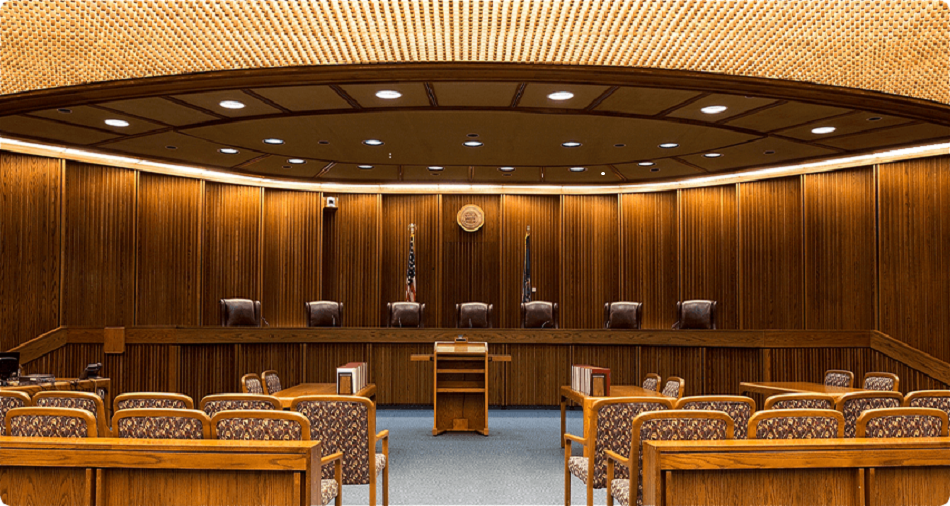
The oral arguments before the Supreme Court on Monday stemmed from its 2019 ruling that abortion was a protected right in the state constitution.
The decision involved a state law banning dilation and evacuation abortions, or what opponents call “dismemberment abortions.”
The procedure was used in about 6% of the 7,849 abortions performed in Kansas in 2021.
The Supreme Court’s decision sent the case back to the district court for further review in the context that there was a constitutional right to an abortion.
A district judge still found the ban unconstitutional under the new “strict scrutiny” standard, and former Attorney General Derek Schmidt appealed the ruling.
Newly elected Attorney General Kris Kobach picked up the case after Schmidt left office earlier this year.
Three members of the Supreme Court found in favor of a right to an abortion in 2019 and a fourth took that side when it was ruled on by the Kansas Court of Appeals.
Also Monday, the court heard Kobach’s separate appeal of a judge’s ruling permanently blocking abortion clinic regulations that were passed in 2011.
The state, under the Supreme Court’s abortion ruling from 2019, must show in that case whether there was a compelling interest for those regulations and whether they were narrowly tailored to meet those interests.
Powell suggested during the roughly 90-minute hearing – in which he faced most of the questions – that the court’s landmark decision wouldn’t stand the test of time, indicating that nothing less than the court’s legitimacy is at stake.
“This issue can’t be resolved by judicial fiat,” he said.
“We’re going to continue to see challenges. The people are going to want to express their values and they’re going to feel stymied by this court,” Powell said.
Chief Justice Marla Luckert said there is a check on the judiciary, either through legislation or constitutional amendments approved by the voters.
“That’s always there regardless what the case is,” she said.
“That was what was played out in August. I That was the opportunity, and I don’t know there was a cap on that opportunity.”
Justice Evelyn Wilson asked Powell if he really wasn’t asking the court to poll the state on its decision.
“Aren’t you just saying in a little different way that you’re asking us to take a poll of what people want?” Wilson said.
Powell said he was asking the court to rise above public opinon.
“Public opinion shifts back and forth in the short term,” he said. “But this is long term. I’m asking the court to consider its place in our constitutional government.
“There are some issues – and I think abortion is one of those – that can’t be resolved through judicial fiat. We’ve got this basic conflict between two different values.”
He said the issue is less about law than it is about a clash of values and who decides what values are controlling.
“I think if we let the people through their elected representatives do it, we’re going to have a better result at the end that’s going to take into account all the variety of interests that we’re looking at…instead of having justices of the court who aren’t elected try to make those decision,” he said.
Wilson fired back, “That may be true, but aren’t we constrained by the law? We must interpret the law. Correct?”
Powell asked by what constraint.
He said the court took the word “liberty” out of the constitution to include “personal autonomy” and out of that “plucked” abortion rights.
“People who looked at that justice say, ‘That doesn’t strike me as interpreting the constitution,'” he said.
“It looks like the values of a majority of the justices of the court saying, ‘This value we think is an important personal autonomy right so we’re going to ensure that it’s protected,'” he said. “That’s how a lot of people look at it.”
Wilson noted that the language in the constitution says Kansans have “equal and inalienable natural rights, among which are life, liberty, and the pursuit of happiness.”
“Whether you consider it a property right or a liberty right, wouldn’t you agree that bodily autonomy is a person’s inalienable natural right?” Wilson asked.
“If the government wants to restrict or interfere with personal bodily autonomy, shouldn’t that be read narrowly and defined clearly before it is allowed under the law?” she asked.
Powell didn’t strongly dispute Wilson’s point, but he offered up a rebuttal.
“That’s still not a clearly defined right that we can seek to enforce in the court,” he said.
“You still have to take the next step, and what the court did is took the next step and said abortion is one of those rights and we’re going to give it that fundamental right of protection,” he said.