







The longest running abortion case in Kansas has culminated with a Shawnee County judge permanently blocking a 10-year-old law imposing new regulations on abortion clinics.
Shawnee County District Judge Mary E. Christopher late last week found in favor of a pair of Johnson County obstetricians who challenged the abortion clinic regulations passed in 2011.
The lawsuit, brought 10 years ago last month, characterized the regulations as “irrational and burdensome” in violation of the Kansas Constitution.
Obstetricians Herbert Hodes and Traci Nauser contended that enforcement of the licensing and inspection procedures enacted by the Legislature would have shut down abortion in Kansas.
Hodes and Nauser argued the new regulations were impossible to meet by the time they took effect even though their clinic met applicable patient care standards and existing state regulations.
The regulations were first challenged in federal court in the summer of 2011 and were temporarily blocked there.
Another suit was brought against the regulations in state court later that fall, contending they violated the Bill of Rights in the Kansas Constitution.
The regulations were temporarily blocked in state court, but the case lingered for years in district court and was ultimately leap-frogged by another case challenging a separate state abortion law.
Ultimately, it was the second challenge to a ban on some dilation and evacuation abortions that led the Kansas Supreme Court to find that abortion was a right protected by the state constitution.
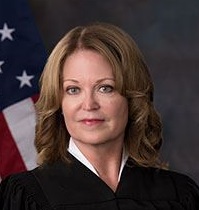
The Kansas Supreme Court case figured prominently in Christopher’s decision in permanently blocking the clinic regulations law.
Christopher was appointed to the bench in 2018 by former Gov. Sam Brownback, a staunch abortion opponent.
Christopher found in her ruling that the clinic regulations targeted “abortion providers with unnecessary, burdensome regulations that violate a woman’s fundamental right to decide whether to beget and bear children, and the right to access abortion services.”
She ruled that the law didn’t serve the government’s stated interest of providing appropriate oversight and standards to ensure patient safety.
“The evidence showed abortion procedures are safe when compared to other gynecological care, which was not being similarly regulated,” Christopher wrote.
“Further, the uncontroverted facts do not support a finding that abortion providers require enhanced regulation above and beyond that already in place as overseen by the Board of Healing Arts.”
Jeanne Gawdun, director of government relations for Kansans for Life, said the law was important for protecting women from hazardous medical practices.
“The abortion industry has proven repeatedly that it cannot police itself,” Gawdun said in a statement.
“The abortion clinic licensing and inspection law passed with strong bipartisan support in response to a whistleblower employee’s evidence showing dangerous and inhumane conditions women were exposed to in a Kansas City, Kansas, abortion clinic.
“This real-life situation put women’s lives at risk in a dirty facility using unsanitary practices.”
Christopher, however, noted that the clinic regulations haven’t been enforced for a decade and there’s been no evidence to show that women were more at risk when undergoing an abortion than another medical procedure.
“During that time, facilities at which abortions are regularly performed have continued to be regulated either as medical offices or as ambulatory surgical centers,” she wrote.
“The court has determined defendants have not provided facts demonstrating that the current licensure and regulatory requirements for physicians and medical practices overseen by the Kansas State Board of Healing Arts is inadequate,” she wrote.
“Indeed, defendants have not shown why these specific challenged laws are necessary to serve a unique health situation facing women seeking abortion care services.”
Among other things, the lawsuit cited these regulations as being too burdensome:
- Barred medical assistants from administering medication “despite the fact that medical assistants are trained and qualified” to give drugs and routinely did so in an outpatient setting.
- Required a female physician performing a pelvic exam to have another staffer in the room regardless of whether or not it was requested by the patient.
- Required the recovery area to have a nurse’s station so each patient could be observed. The lawsuit said no recovery room was needed as part of the standard of care for a first trimester abortion.
- Gave the state health department “broad access” to patient medical records, including information that would identify the patient, the lawsuit said.
- Required an abortion clinic to register with the Board of Pharmacy “despite the fact that there is no mechanism by which the board register’s physician office.”
Republican Attorney General Derek Schmidt said he was planning to appeal the ruling.
Abortion opponents immediately used the Shawnee County court decision to rally support for a constitutional amendment that would ensure abortion is not a right protected by the state constitution.

“The abortion industry’s quest to remove even the most basic regulations on clinics, through Kansas courts, continues,” said Danielle Underwood, spokeswoman for Kansans for Life.
“What kind of surgical center would complain about or fight against safety oversight?” she asked.
“No matter where you stand on the topic of abortion, we should all agree that women should not be subjected to third-world medical standards,” Underwood said in a statement.
In an earlier interview about the case, Underwood said the litigation over clinic regulations underscored why Kansas voters need to pass the constitutional amendment on abortion.
“The clinic inspection law is a one of the best examples of why Kansans need to pass the Value Them Both Amendment to help defend the right of Kansans to keep commonsense protections for health and safety of women,” Underwood said.
“Without the Value Them Both Amendment, Kansans will have their hands tied and be unable to maintain the regulations passed to provide state oversight of this industry that refuses to police itself.”
Teresa Woody, the lawyer for the obstetricians, said in an earlier interview about the case that the regulations would have shut down abortion clinics in Kansas.
“The statutes they tried to enforce would have put Hodes and Nauser and a lot of other abortion providers out of business because they were extraordinary requirements that they couldn’t meet,” she said.

Woody said she said didn’t believe the ruling handed down in the regulations case would rest on the constitutional amendment on abortion being rejected.
“The are other arguments that we have, other claims that we’ve made that the courts haven’t ruled on because of the decision about the Kansas Constitution protecting abortion,” she said.
“We have equal protection arguments, we have all kinds of claims that the courts never got to because they didn’t need to.”