




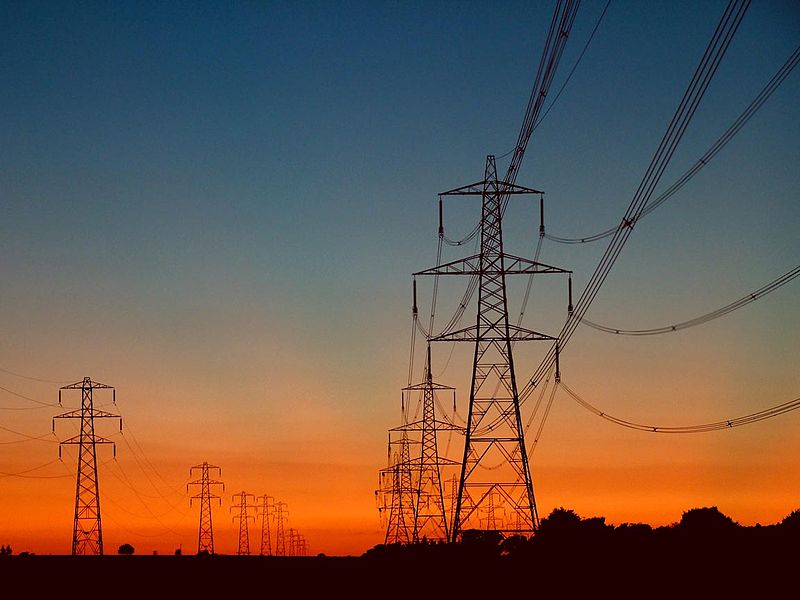
A proposal that gives local utility companies the first shot at building transmission lines that connect to their facilities cleared its first legislative hurdle Monday over objections that it would give existing utility companies a monopoly.
A split Senate utilities committee approved a bill that gives local utilities the right of first refusal to build certain regional transmission lines, similar to laws already passed in Iowa, Nebraska, Oklahoma, Minnesota and Texas.
The committee spent four days hearing testimony on the legislation, a rare occurrence in the Capitol where hearings on complicated matters can sometimes take less than an hour.
Supporters backing the bill say it ensures oversight of local utility companies that best understand the topography, usage, weather conditions and what designs and materials provide reliable service for their customers.
They say the bill does not prevent new companies from acquiring, operating and maintaining existing transmission lines from utilities in the state.
They also say it does not prevent developers from partnering with Kansas utilities to build, own and operate new transmission lines.
Opponents say the bill would give local utility companies a monopoly and end competition that will hurt ratepayers who have to subsidize the cost of new transmission lines.
“I think competition is a good thing for Kansas ratepayers,” said Republican state Sen. Kellie Warren of Leawood.
“I hear all the time knocking doors in my Senate district that Kansans are concerned about high electric rates that they are paying,” Warren said.
“I think that opening up competition is a good thing for Kansas ratepayers rather than providing monopolies for one business or industry in the state,” she said.
The bill — and others like it nationally — is a response to Order No. 1000 issued by the Federal Energy Regulatory Commission in 2011 that sought to open the building of new transmission lines to competition.
The order ended the federal right of first refusal for building transmission lines, prompting states across the country to enact their own right-of-first-refusal laws giving utilities under their jurisdiction the first option to build in-state power lines.
Critics of Order 1000 — who also support the right-of-first-refusal bill — say the initiative failed to achieve its objective of fostering competition.
They cite studies showing that the attempt to introduce more competition into the utility industry failed to benefit electric consumers — a point opponents of the legislation dispute with evidence of a transmission line being constructed in Kansas.
“Order 1000 was an attempt by federal government regulators to require competitive bidding for such projects in order to assure the lowest initial cost for regionally beneficial projects,” Evergy said in its written testimony.
“As we have now seen in our region, and nationally, it has been a race to the bottom based on misguided incentives and superficial and ineffective price caps,” the company said.
The Federal Energy Regulatory Commission is now revisiting the merits of Order 1000, and the Biden administration has urged the agency not to revoke the directive saying it would hurt competition.
While competitors are likely to submit designs to regulators that will construct transmission lines to minimum standards, Evergy said it builds to standards that exceed those minimums.
Evergy argues the bill places utility companies under the direct oversight of state regulators to “affordably and reliably” meet the electric needs of Kansans as new transmission lines are constructed.
Republican state Sen. Rob Olson, chair of the Senate utilities company, supports the bill.
He doesn’t necessarily think that paying the least for utility service is in the public’s interest. He compared it to going to space with a ship built from the lowest bidder.
“The challenge you have is if you want to go for the lowest cost to the moon, you might be going there on a ship that might not be quite as good as one that’s built a little better,” Olson said.
Supporters of the bill cite a consulting report that examined transmission projects undertaken after the federal regulators issued Order 1000.
The study showed six projects in which the final cost — or the current estimate at the time of the report — came in higher than the initial bid.
“The results from key projects are now clear,” the study said.
“In some cases, competitive project costs have escalated significantly against initial estimates… as developers utilize exceptions to cost caps and guarantees to recover higher than expected costs.
“In other cases, final project costs for competitive projects appear in line with cost proposals from other submitted bids and initial planning estimates,” the study said.