





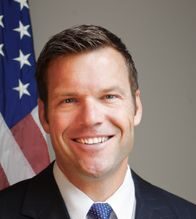
It may have been one of Kris Kobach’s more colorful promises in more than two decades of Kansas politics.
During a debate in the Republican primary for attorney general in 2022, Kobach offered this vow if he was elected as the state’s top lawyer.
“I’ll wake up every morning having my breakfast, thinking about what our next lawsuit against Joe Biden is going to be,” Kobach said during the debate in Pittsburg.
Kobach took office in 2023, and since then he’s been either leading lawsuits or joining lawsuits against the Biden administration at a rate of more than one a month.
He’s either filed or joined in at least 29 lawsuits against the Biden administration, covering areas ranging from guns and immigration to abortion and gender discrimination.
Of those lawsuits, Kobach’s office has led seven, including a challenge to Biden’s student loan program and a rule that prohibits discrimination based on gender identity and sexual orientation at federally funded schools.
He’s also led a challenge to a federal rule that expands required background checks to a broader array of firearms purchasers.
Kobach has had successes in nine of those lawsuits so far and has been dealt setbacks in five others.
It is difficult to apply a win-loss record because many of the cases are still winding their way through the appellate courts.
There have been some cases already lost in district court only to be reversed by an appeals court.
Most of the Kansas lawsuits against the Biden administration have related to the environment, including coal-fired power plants, vehicle emissions and clean water protections.
Fourteen of the 29 lawsuits are environmentally related. Five are related to immigration, three are related to gender identity, two involve abortion and two involve guns.
Seven lawsuits, mostly related to the environment, have been filed with the U.S. Court of Appeals in the District of Columbia.
Four have been filed in the federal district of North Dakota, and five have been filed in multiple federal districts in Texas. And three have been filed in Kansas.
For a point of reference, the Topeka Capital Journal reported in June 2021 that former Attorney Derek Schmidt had joined 17 multistate lawsuits against either President Barack Obama’s administration or the Biden administration.
“When I ran for office, I said I would defend the constitution and Kansans from the Biden-Harris administration. I am keeping my campaign promise,” Kobach said in a statement.
“Kansas has sued the Biden-Harris administration so many times since I have taken office for one reason: they continue to violate federal law and violate the constitution in multiple ways,” Kobach said in a statement.
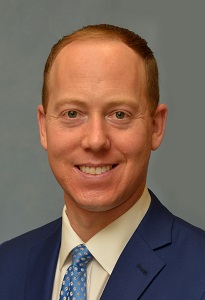
Kobach has formed a special unit that’s been focused on bringing litigation against the Biden administration. They are:
Abhishek Kambli, deputy attorney general: Served as an assistant U.S. attorney in Indianapolis from 2019 to 2023. He also served in the U.S. Air Force for about six years where he worked as a prosecutor and a defense lawyer. He
Erin Gaide, assistant attorney general: A 2022 graduate of the William & Mary Law School in Williamsburg, Virginia. She also has a bachelor’s in international relations and affairs from The Ohio State University. She worked as a law clerk for the U.S. 10th Circuit Court of Appeals.
Jay Rodriguez, assistant attorney general: Earned a bachelor’s from Augustana College in 2010 and a law degree from New York University School of Law in 2015. From 2015-2017, he was an Excelsior Fellow at the New York State Department of Agriculture & Markets. From 2017 to 2023, Rodriguez worked for the New York State Insurance Fund, where he was counsel for labor relations and the agency’s ethics officer. He joined the attorney general’s office in February 2023 in the legal oversight and government counsel section. He advised several state agencies, including the Water Office, the Governmental Ethics Commission and the Board of Cosmetology. He moved to special litigation earlier this year.
Kobach has been committing staff to suing the Biden administration as his office has come under scrutiny for trying to fill job openings.
The attorney general’s office recently put out a request for a proposal seeking a firm to help the agency hire lawyers.
The attorney general now has 10 vacancies for attorneys, including one part-time position.
“Attorneys aren’t interchangeable widgets. All of the attorney jobs in our office are specialized,” said Danedri Herbert, spokesperson for Kobach.
“The special litigation Unit has attracted a small group of top attorneys to Kansas from across the country who specifically came to Kansas because they would have the opportunity to litigate constitutional issues against the Biden Administration.
“If they did not have that opportunity, they would not have come to Kansas,” she said in a text message.
“It’s important to understand that attorneys are specialists, much like doctors.
“Some come to the office of the attorney general to prosecute crime, and they are hired because they have experience in that area,” she said.
But some Democrats question whether Kobach should be staffing up a special litigation unit when there are vacancies that need to be filled in the office.
They see the attorney general’s effort as self-serving.
“This is sort of one of the things that I was worried about with him becoming attorney general,” said Democratic state Sen. Ethan Corson, a member of the Senate Judiciary Committee.
“I don’t think that he’s really focused on Kansas. I don’t think he’s ever been focused on Kansas,” Corson said.
“I think his deal is making himself into a national right-wing celebrity and has nothing to do with protecting public safety in Kansas,” he said.
“I don’t think that he’s focused on the blocking and tackling and the basics of the job, and I don’t think he’s interested in really representing Kansas, Kansas businesses, Kansans and keeping Kansans safe,” Corson said.
Here’s a look at a vast majority of the cases that Kansas has been involved in during Kobach’s term in office, starting with his successful challenge to a new federal rule that prohibits discrimination based on gender identity and sexual orientation at federally funded schools.
The case is now on appeal, but Kobach is likely to win after the U.S. Supreme Court agreed to leave similar injunctions in place that were handed down in Louisiana and Kentucky.
Here’s a roundup of the other cases that have been brought:
Student loans
Kobach persuaded a federal judge in Kansas to keep the U.S. Department of Education from implementing part of a program that would cancel student loan debt for 153,000 borrowers enrolled in the Saving on a Valuable Education – or SAVE – repayment plan.
The federal lawsuit was very similar to claims raised in a case that successfully challenged Biden’s plan to forgive up to $20,000 in federal student loans last year. The states say the president overstepped his authority in creating the SAVE plan.
U.S. District Judge Daniel Crabtree stopped the government from moving ahead with a portion of the student loan program.
Crabtree ruled the Biden administration couldn’t move forward with parts of the program intended to help students with larger loans and could have reduced their monthly payments and cut their required payment period from 25 years to 20 years.
But Crabtree allowed other parts of the program to continue, including sections giving students who borrowed $12,000 or less to have the rest of their loans forgiven if they made 10 years’ worth of payments, instead of 25.
There is now a nationwide injunction stopping most of the program that was imposed by the 8th Circuit Court of Appeals in St. Louis stemming from a separate lawsuit challenging the program brought by Missouri and six other states.
The 10th Circuit U.S. Court of Appeals, which includes Kansas, agreed to stay part of Crabtree’s ruling. However, that ruling is nullified by the order issued in the 8th Circuit.
At the end of August, the U.S. Supreme Court upheld the 8th Circuit’s injunction.
Emissions
In a case led by Kentucky, Kobach won a battle against a Biden administration rule requiring states to reduce tail-pipe emissions on the federal highway system.
The attorneys general from the 21-state coalition argued that Congress had not given the Department of Transportation the authority to regulate greenhouse gas emissions.
If the administration was “allowed to shove national greenhouse-gas policy into the
mouths of uncooperative state Departments of Transportation, this would corrupt the separation of sovereigns central to our lasting and vibrant system of federalism,” U.S. District Judge Benjamin Beaton wrote.
“Neither the Constitution nor the Administrative Procedure Act authorizes administrative ventriloquism,” he wrote.
The Biden administration is now appealing the ruling.
Guns
Kanas joined a successful lawsuit in North Dakota challenging a federal rule that imposes federal regulations on stabilizing braces for firearms, an accessory that’s been used in several mass shootings in the United States over the last decade.
The rule requires anyone who has a gun with an arm-stabilizing brace to register the weapon with the federal government and pay a fee, or remove the brace from their weapon.
The lawsuit, led by West Virginia and North Dakota, claimed the rule would require millions of Americans to choose between the loss of their “lawful” firearms, the loss of their privacy and the risk of criminal penalties.
The lawsuit, which included 25 states, claimed that the rule exceeded the government’s authority under the National Firearms Act of 1934 and the Gun Control Act of 1968.
A federal judge first ruled against the lawsuit and denied a preliminary injunction, but was reversed in early August by the 8th U.S. Circuit Court of Appeals.
The case was sent back to district court for further review.
ESG investing
What started out as an unsuccessful lawsuit against the Biden administration’s ESG investing rule may go the other way.
Kansas was part of an initially unsuccessful lawsuit challenging a U.S. Department of Labor rule allowing employee retirement plans to consider environmental, social and governance issues in guiding investment decisions.
The lawsuit, brought by Texas Attorney General Ken Paxton, claimed that the rule overstepped the Labor Department’s statutory authority and undermined key protections for retirement savings of 152 million workers.
A federal judge dismissed the state’s motion for summary judgment. The case was appealed but was later returned to the lower court for more consideration after a U.S. Supreme Court decision this summer.
The case could now be a test for the Supreme Court’s decision reversing the so-called Chevron doctrine requiring judges to defer to reasonable interpretations by federal agencies when a law is ambiguous.
Abortion rule
Kansas came up on the short end of a lawsuit led by attorneys general in Arkansas and Tennessee fighting a federal rule giving workers time off and other accommodations to get an abortion.
The complaint argued that a 2022 law called the Pregnant Workers Fairness Act was passed to help ensure that women received workplace accommodations to protect their pregnancies.
However, the lawsuit says a new rule adopted on a 3-2 vote by the Equal Employment Opportunity Commission expands that law, requiring employers to accommodate workers’ abortions, something Congress didn’t authorize.
A federal judge in Arkansas rejected the states’ request for a nationwide preliminary injunction to stop the rule. The case is now on appeal.
However, the U.S. Conference of Catholic Bishops and other religious groups filed a similar lawsuit in Louisiana, successfully blocking the federal government from enforcing the abortion mandate adopted by the Equal Opportunity Commission.
The ministries argued that the government “hijacked a law that was intended to protect women and their unborn children and weaponized it against more than 130 million Americans to turn their workplaces into pro-abortion zones.“
A federal judge in Louisiana has temporarily stopped the government from enforcing the law in Louisiana and Mississippi as well as the bishop plaintiffs pending the outcome of the case.
Immigration
Kobach joined a lawsuit with 20 other states claiming the Biden administration enacted a new program that unlawfully creates a “de facto pathway to citizenship” for hundreds of thousands of immigrants.
The lawsuit brought by Texas Attorney General Ken Paxton says the program created by the Department of Homeland Security would establish a new visa system allowing for up to 360,000 immigrants from Cuba, Haiti, Nicaragua and Venezuela to be “paroled” into the United States every year.
A federal judge found that the plaintiffs had not shown that Texas had suffered any injury from the program and didn’t have standing to bring the lawsuit.
The case is now on appeal.
The lawsuit claimed that Congress has authorized “parole” only for foreign aliens who meet very specific standards that have not been met in this instance.
“Yet, contrary to existing law, the program creates a pathway for program participants to apply from their home country and gain lawful status to enter and stay in the U.S. for up to two years, or even longer,” Paxton argued.
Here’s a summary of many of the other cases that Kobach is either leading or joined in against the Biden administration.
Topic: Gender discrimination
Lead agencies: Tennessee and Mississippi attorneys general.
Where filed: Southern District of Mississippi – Southern Division.
Case: Challenged federal rule that redefines the Affordable Care Act’s prohibition against discrimination on the basis of “sex” to include “gender identity.” The rule would have barred insurers and medical professionals from denying hormone therapy, gender transition surgeries for transgender people.
Status: Preliminary injunction issued.
States involved: Alabama, Georgia, Indiana, Kansas, Kentucky, Louisiana, Mississippi, Nebraska, Ohio, Oklahoma, South Carolina, South Dakota, Tennessee, Virginia and West Virginia.
Topic: Gender discrimination
Lead agency: Tennessee attorney general
Where filed: Eastern District of Tennessee – Knoxville Division.
Case: Challenges a ruling by the Equal Employment Opportunity Commission that extends Title VII civil rights protections against sex-based discrimination in the workplace to cover gender identity. The states argue that under the EEOC’s guidance, an employer may be liable under Title VII if they or another employee use a name or pronoun inconsistent with an employee’s preferred gender identity. They also say employers can be liable if it limits access to a bathroom or other sex-segregated facility, such as a shower or locker room, based on biological sex and not on gender identity.
Status: Motion for preliminary injunction pending.
States involved: Alabama, Alaska, Arkansas, Georgia, Indiana, Iowa, Kansas, Kentucky, Mississippi, Missouri, Nebraska, Ohio, South Carolina, South Dakota, Utah, Virginia and West Virginia.
Topic: Farm worker unions
Lead agency: Kansas attorney general
Where filed: Southern District of Georgia – Brunswick Division.
Case: Challenges a Biden administration rule that allows temporary farm workers in the country on H-2A visas to unionize. The attorney general said that under federal law, American farm workers are prohibited from collective bargaining.
Status: Preliminary injunction issued.
States involved: Georgia, South Carolina, Arkansas, Florida, Idaho, Indiana, Iowa, Louisiana, Missouri, Montana, Nebraska, North Dakota, Oklahoma, Tennessee, Texas and Virginia.
Topic: Lesser prairie chicken
Lead agency: Texas attorney general
Where filed: Western District of Texas – Midland Division.
Case: Challenges the U.S. Fish and Wildlife Service decision to designate the lesser prairie chicken as a threatened or endangered species in five states, including Kansas under the Endangered Species Act.
Status: Ongoing.
States involved: Texas, Oklahoma and Kansas.
Topic: Guns
Lead agency: Kansas
Where filed: Initially filed in Eastern District of Arkansas, but moved to Kansas.
Case: Challenges a new federal rule requiring anyone who sells firearms through the mail, at flea markets and gun shows as well as on the internet to get licensed and undergo background checks. The states argue that the consequence of the rule is that it expands required background checks to a broader array of firearms purchasers.
Status: A federal judge in Kansas has denied a motion for an temporary restraining order and preliminary injunction, questioning whether the plaintiffs had standing and whether they demonstrated that they were substantially likely to succeed on the merits. The case is still ongoing, and the judge’s ruling has been appealed.
States involved: Iowa, Montana, Alabama, Alaska, Arkansas, Georgia, Indiana, Idaho, Missouri, Nebraska, New Hampshire, North Dakota, Oklahoma, South Carolina, South Dakota, Tennessee, Virginia, West Virginia and Wyoming.
Topic: Abortion
Lead agency: Missouri attorney general
Where filed: Northern District of Texas – Amarillo
Case: Intervention in a case challenging national access to mifepristone, one of two medications frequently used in drug-induced abortions. The U.S. Supreme Court recently rejected a legal challenge to access of the drug, ruling that the group of doctors who brought the litigation didn’t have legal standing in the case. Kansas and the other states involved in the case now have to show they have legal standing to bring a lawsuit.
Status: Ongoing. States have been allowed to intervene.
States involved: Kansas, Missouri and Idaho.
Topic: National Environmental Policy Act
Lead agency: Attorneys general in Iowa and North Dakota
Where filed: District of North Dakota
Case: Kansas is among 20 states challenging a ruling made by the White House Council on Environmental Quality intended to expedite permitting for renewable energy and other infrastructure projects. The lawsuit says the council is imposing “stringent, unworkable regulations with the effect — if not the goal — of styming development of certain projects and resources” across the country.
Status: Case is ongoing.
States involved: Kansas, Iowa, North Dakota, Alaska, Arkansas, Florida, Georgia, Idaho, Kentucky, Louisiana, Missouri, Montana, Nebraska, South Carolina, South Dakota, Tennessee, Utah, Texas, West Virginia and Wyoming.
Topic: Immigration
Lead agency: Kansas attorney general
Where filed: The U.S. District Court for the District of Columbia and the U.S. Ninth Circuit Court of Appeals.
Case: States sought to intervene in two lawsuits between the Biden administration and immigrants’ rights groups. In both cases – one before the U.S. District Court for the District of Columbia and the other at 9th U.S. Circuit Court of Appeals – immigrants’ rights groups wanted the courts to throw out a Biden administration rule allowing the U.S. Department of Homeland Security to turn away some asylum seekers. The rule bars asylum for anyone who passes through one or more other countries en route to the U.S. border and does not apply for protection in at least one of those countries first. There are some exceptions to the rule that immigrant advocates say are rare. Kobach’s office said the coalition filed motions to intervene because the Biden administration entered settlement negotiations instead of defending its rule. The coalition of states attorneys general say they don’t believe the Biden administration will adequately represent their interests related to illegal immigration in the negotiations.
Status: The 9th Circuit denied the states’ request to intervene. Kansas has appealed the 9th Circuit’s ruling to the U.S. Supreme Court. The state’s request to intervene in the D.C. District Court is still pending.
States involved: Kansas Alabama, Georgia, Louisiana and West Virginia.
Topic: Coal plants
Lead agency: Attorneys general in North Dakota and West Virginia.
Where: U.S. Court of Appeals – D.C. Circuit
Case: States are challenging a federal rule they say will undermine energy produced by coal. They say the rule would require certain air toxin emission levels from coal-fired plants to be reduced with no corresponding health benefits and at the expense of industry. They say the rule will reduce mercury and air toxic standards for coal-fired power plants by 66% to 70%. They say the costs will be substantial, and power plants may be forced into early retirement and the power grid reliability will be threatened.
Status: The plaintiffs sought to delay the rule, but the court denied the request. The appellate court’s decision has been appealed to the U.S. Supreme Court. The case continues forward.
States involved: Kansas, North Dakota, West Virginia, Alaska, Arkansas, Georgia, Idaho, Indiana, Iowa, Kentucky, Louisiana, Mississippi, Missouri, Montana, Nebraska, Oklahoma, South Carolina, South Dakota, Tennessee, Texas, Utah, Virginia and Wyoming.
Topic: Clean water protection
Lead agency: Attorneys general for West Virginia, North Dakota, Georgia and Iowa.
Where filed: District of North Dakota
Case: States asked a federal court to set aside a new rule redefining Waters of the United States and declare it unlawful. They argued that the rule redefines “navigable waters” to extend environment protections to ponds, certain streams, ditches and other bodies of water as determined by the Environmental Protection Act and the U.S. Army Corps of Engineers. They said the rule would adversely affect farmers who may need to get permission from the EPA and the Corps of Engineers to fill or dredge wetlands or waterways, depending on whether those features fall under the federal government’s purview. Developers, miners and other property owners wishing to make use of their land will face implications, too.
Status: A federal judge blocked the water rule, but the U.S. Supreme Court has since handed down a decision in a different case limiting the power of federal regulators to oversee the country’s wetlands and waterways. The Supreme Court ruling narrowed the scope of the Clean Water Act and sidetracked a version of the water rule the Biden administration introduced earlier in the year that was challenged in court. The Biden administration authored a new rule in response to the U.S. Supreme Court ruling. The states have filed a new complaint over the revised water rule imposed by the federal government for protecting streams and wetlands. The case is ongoing.
States involved: Kansas, West Virginia, Georgia, Iowa, North Dakota, Alabama, Alaska, Arkansas, Florida, Indiana, Louisiana, Mississippi, Missouri, Montana, Nebraska, New Hampshire, Ohio, Oklahoma, South Carolina, South Dakota, Tennessee, Utah, Virginia and Wyoming.
Topic: Heavy truck emissions
Leading agencies: Nebraska attorney general
Where filed: U.S. Court of Appeals – D.C. Circuit
Case: Kansas joined a lawsuit to stop the Biden administration from imposing new tailpipe restrictions on heavy truck owners. The states say the rules imposes “stringent tailpipe emissions standards for heavy-duty vehicles that effectively force manufacturers to produce more electric trucks and fewer internal-combustion trucks.” The states argue the Biden administration has exceeded its constitutional and statutory authority in attempting to force the entire country to transition to electric trucks.
Status: Case is ongoing.
States involved: Nebraska, Kansas, Alabama, Alaska, Arkansas, Florida, Georgia, Idaho, Indiana, Iowa, Kentucky, Louisiana, Mississippi, Missouri, Montana, Oklahoma, South Carolina, South Dakota, Tennessee, Texas, Utah, Virginia, West Virginia and Wyoming.
Topic: California truck ban
Lead agency: Iowa attorney general
Where filed: U.S. Court of Appeals – D.C. Circuit
Case: Kansas joined a coalition of 19 states challenging the Environmental Protection Agency’s decision to allow California to ban the sale of new big rigs and buses that run on diesel fuel starting in 2036. The state argue in their brief that giving California a waiver from the Clean Air Act is unconstitutional because it unlawfully gives California sovereign authority that no other state has. Secondly, the states say the EPA’s action violates the Clean Air Act by granting California a waiver for a program that fails to meet the law’s lead-time requirements for heavy-duty vehicles and engines.
Status: A federal appeals court is holding the case in abeyance pending resolution of two other court proceedings that raise identical or overlapping issues.
States involved: Kansas, Iowa, Alabama, Arkansas, Georgia, Kentucky, Indiana, Louisiana, Mississippi, Missouri, Montana, Nebraska, North Dakota, Oklahoma, Ohio, South Carolina, Utah, West Virginia and Wyoming.
Topic: Electric vehicle standards
Lead agency: Iowa attorney general
Where filed: U.S. 8th Circuit Court of Appeals
Case: Kansas joined a lawsuit led by Iowa that claims a new federal rule that seeks to incentivize the production of electric vehicles “overstates” their fuel efficiency. The states say ethanol producers would be hurt by the final rule that revises the petroleum-equivalency factor for electric vehicles. The Iowa attorney general said in statement that the “rule manipulates a more than 30-year-old incentive for car manufacturers that design cars that run on gasoline, ethanol, biodiesel, or compressed natural gas. … This rule favoring electric vehicles hurts car-owners, roads, and carbon emissions across the country.”
Status: Case ongoing
States involved: Kansas, Iowa, Arkansas, Florida, Idaho, Mississippi, Missouri, Montana, Nebraska, Ohio, Oklahoma, Texas and Utah.
Topic: Air quality standards
Lead agency: Attorneys general in Kentucky and West Virginia
Where filed: U.S. Court of Appeals – D.C. Circuit
Case: Kansas joined a lawsuit with 23 states trying to block a new air quality rule that it says will increase costs for manufacturers, utilities and families. The new rule was intended to strengthen limits on fine industrial particles, which regulators say is one of the most common and deadliest forms of air pollution. The Biden administration said the rule would prevent an estimated 4,500 premature deaths every year, as well as 290,000 lost workdays because of illness. The Environmental Protection Agency also said the rule would lead to $46 billion in net health benefits in the first year the standards were fully implemented. The Kentucky attorney general said in a statement that making air quality standards more stringent wouldn’t improve public health, but it would put as many as 30% of all U.S. counties out of compliance under federal law, leading to “aggressive new permitting requirements that could effectively block new economic activity or job creation.”
Status: Case ongoing
States involved: Kansas, West Virginia, Kentucky, Alabama, Alaska, Arkansas, Florida, Georgia, Idaho, Indiana, Iowa, Louisiana, Mississippi, Missouri, Montana, Nebraska, North Dakota, Ohio, Oklahoma, South Carolina, South Dakota, Tennessee, Utah and Wyoming.
Topic: Fuel efficiency standards
Lead agency: Attorneys general in Alabama, Kentucky and West Virginia
Where filed: U.S. Sixth Circuit Court of Appeals
Case: Kansas joined a 26-state coalition challenging a new federal fuel economy rule, claiming the Biden administration is trying to force auto manufacturers to produce more electric vehicles. The states are battling a rules adopted by the National Highway Traffic Safety Administration that would require fuel economy to increase for passenger car and light trucks as well as heavy-duty pickups and vans.
Status: Case ongoing
States involved: Kansas, Alabama, Kentucky, West Virginia, Alaska, Arkansas, Florida, Georgia, Idaho, Indiana, Iowa, Louisiana, Mississippi, Missouri, Montana, Nebraska, New Hampshire, North Dakota, Ohio, Oklahoma, South Carolina, South Dakota, Texas, Utah, Virginia and Wyoming.
Topic: EPA Risk Management Program
Lead agency: Oklahoma attorney general
Where filed: U.S. Court of Appeals – D.C. Circuit
Case: Kansas is part of a 14-state coalition challenging an Environmental Protection rule amending its Risk Management Program under the Clean Air Act. The states say the rule places “onerous” accident prevention program requirements on certain facilities that hold more than a threshold quantity of certain regulated substances. “The industries that will be adversely impacted include agricultural chemical distributors and wholesalers, chemical manufacturers and wholesalers, food and beverage manufacturers, oil and gas extraction operations, petroleum and coal products manufacturers, petroleum wholesalers, water and wastewater utilities and more,” the Oklahoma attorney general said in a statement the lawsuit was filed.
Case status: The case is now being held in abeyance while the EPA reviews a request to reconsider its final rule.
States involved: Kansas, Oklahoma, Alabama, Arkansas, Georgia, Kansas, Kentucky, Missouri, Mississippi, Montana, Nebraska, South Carolina, Texas and Utah, as well as the Arizona Legislature.
Topic: Affordable Care Act coverage
Lead agency: Kansas attorney general
Where filed: District of North Dakota
Case: Kansas and 14 other attorneys general filed a lawsuit seeking to stop the federal government from extending Affordable Care Act coverage to immigrants brought to the U.S. illegally as children. The law is set to start Nov. 1. The lawsuit says the rule would extend health care coverage to 200,000 DACA recipients, including 4,350 in Kansas. “Illegal aliens shouldn’t get a free pass into our country. They shouldn’t receive taxpayer benefits when they arrive, and the Biden-Harris administration shouldn’t get a free pass to violate federal law,” Kobach said in a statement when announcing the lawsuit.
Status: Case ongoing. The plaintiffs are seeking summary judgment in their favor. The case is now pending before the court. A group that has intervened in the case as defendants also is seeking a summary judgment. The intervening defendants include the Center for Biological Diversity, Center for Environmental Health and the Environmental Law and Policy Center.
States involved: Kansas, Alabama, Idaho, Indiana, Iowa, Missouri, Montana, Nebraska, New Hampshire, North Dakota, Ohio, South Carolina, South Dakota, Tennessee, Virginia, Arkansas, Florida, Kentucky and Texas.
Topic: Biden executive order
Lead agency: Montana attorney general
Where filed: District of Kansas
Case: Kansas joined a lawsuit with eight other states challenging the constitutionality of a 3-year-old executive order issued by the Biden administration intended to expand access to voting. The lawsuit claims the executive order infringes on the rights of states to make decisions about how voting is conducted. Issued in 2021, the executive order directs federal agencies to consider ways to expand voter registration opportunities and foster participation in the electoral process. It directed the head of each agency to evaluate ways to promote voter registration and voter participation.
Status: Case ongoing
States involved: Kansas, Montana, Iowa, Mississippi, Nebraska, North Dakota, Oklahoma, South Carolina and South Dakota.
Topic: Immigration
Lead agency: Texas attorney general
Where filed: Eastern District of Texas – Tyler Division
Case: Kansas joined with 15 other states in a lawsuit over a new federal rule that provides an easier path to citizenship to undocumented spouses of U.S. citizens. The lawsuit challenges what is known as “parole in place,” which would cover an estimated 500,000 immigrants who came into the country without authorization but who, as spouses of U.S. citizens, now qualify for legal permanent residency. The lawsuit says federal law prohibits immigrants who entered the United States unlawfully from obtaining most immigration benefits, including lawful permanent resident status without first leaving the United States and waiting while their green card is processed.
Status: A federal judge has temporarily stopped the program.
States involved: Kansas, Texas, Idaho, Alabama, Arkansas, Florida, Georgia, Iowa, Louisiana, Missouri, North Dakota, Ohio, South Carolina, South Dakota, Tennessee and Wyoming.