

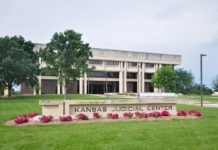



State appeals court judges expressed skepticism about whether civic engagement groups would be prosecuted under a state law making it illegal for someone to falsely give the appearance of acting as an election official.
Four groups – the League of Women Voters of Kansas, Loud Light, the Kansas Appleseed Center for Law and Justice and the Topeka Independent Living Resource Center – are asking the appeals court to issue a temporary injunction stopping the law.
They said the statute has a chilling effect on their efforts to educate and register new voters for fear that they could be prosecuted if someone wrongly perceived them as acting as an election official.
Loud Light and the League Women Voters have already shut down their voter registration efforts while the lawsuit plays out in court.
They argued that the law is keeping them from engaging voters at an important time, especially with the governor’s race and the constitutional amendment on abortion on the ballot in August.
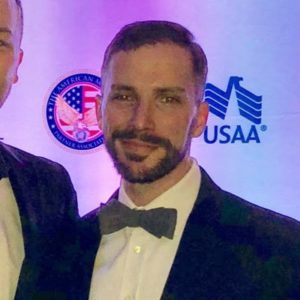
“This law is extremely dangerous,” said Hal Brewster, the lawyer representing the groups challenging the law.
“I don’t need to tell any of you right now that this year is a very consequential year in Kansas elections,” Brewster said.
“If my clients aren’t allowed to go out and organize and register and engage, this state is going to suffer,” he said.
However, a couple of the judges seemed skeptical of the claim, since the law says the groups must “knowingly” give the appearance of misrepresenting an election official.
Judge Lesley Isherwood was the first to raise questions, asking whether the groups’ intent protected them from prosecution.
“Doesn’t the mental state that is required for this provision necessarily insulate your clients from prosecution?” Isherwood said.
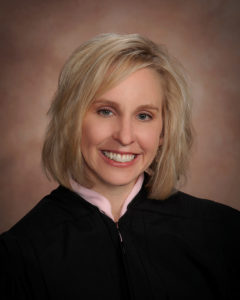
“A person acts knowingly when they are reasonably certain to cause a result,” she said.
“There is calculated culpability there, and you have said that is not your clients’ intent,” she said.
“I’m struggling to see how it is your clients are at direct risk of prosecution when that is not their intent,” she said.
“I am really struggling to get to that point that you are specifically at risk of prosecution under the plain language of this provision.”
A second judge, Kathryn Gardner, pressed Brewster to show evidence of a “substantial” threat of prosecution.
Brewster directed the judges to a press release issued by Attorney General Derek Schmidt last August promising to prosecute any election crimes that were reported to his office.
Schmidt issued the news release after Douglas County District Attorney Suzanne Valdez announced she would not make cases under the new election law.
Schmidt said any law enforcement agencies that obtained evidence of election crimes may present the results of an investigation to his office for review.
Gardner noted that the news release said the attorney general would make “a prosecution decision based on the facts and law applicable to any individual case.”
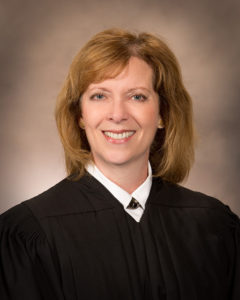
“Are you saying that is a substantial threat to prosecute your clients for doing their normal activities?” she asked.
Brewster said it did pose a threat.
But Gardner still seemed to struggle with how they would be prosecuted if the state would have to show they intentionally misrepresented themselves as an election official.
“How does the government prove that your clients acted knowingly when they’re not an individual in a criminal case?” she asked.
“We’re talking about an association of people,” she said. “Is it done through collective knowledge? How would they prove your clients guilty under this statute?”
Brewster said he believed cases would be prosecuted against individual members of the organization.
The state’s attorney, Bradley Schlozman, says the plaintiffs are asking permission for an activity where none is needed.
“What the plaintiffs are essentially asking here is an advisory opinion because they won’t take ‘yes’ for an answer,” Schlozman said.
“They want the court to say – what the defendants have already said – which is what they’re doing is not illegal,” he said.
But Judge Stephen Hill said he thought the idea that someone could go to jail for 17 months and be fined up to $100,000 for a violation could be a deterrent.
“I don’t want to do anything that would put me into jeopardy like that,” Hill said. “That seems to have a chilling effect on me.”
Hill noted that the plaintiffs argued in their briefs that the public thinks they are election officials every time they hold a voting drive.
“It seems to me an admission, right now in front of all of us, that they’re in violation of this statute, aren’t they?”
Schlozman disagreed, once again pointing to the language that says they must knowingly hold themselves out falsely as an election officials.
“What they are doing does not violate the statute,” he said.
“What they are proposing is to interpret the statute that would require a defendant charged under it to be a mind reader and to channel the thoughts of the least sophisticated amongst us,” he said.
The case before the appeals court is part of a larger case now pending in Shawnee County District Court.
The four groups not only challenged the false election official provision, but also a section of the law that caps the number of ballots third parties can collect and deliver to election offices on behalf of someone else.
They also are challenging a prohibition on county election officers from accepting an advance voting ballot sent by mail unless they verify that the signature on an advance voting ballot envelope matches the signature on file in the county voter registration records.