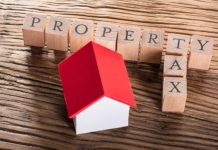




The Kansas House on Thursday dealt a setback to a constitutional amendment that would have capped property tax assessments.
The proposal, which already passed the Senate, failed to make it to final action on the House floor on a voice vote, something that rarely happens even for controversial bills.
The bill is not dead. It will sit on the House calendar and could be brought back at any time, possibly with some type of compromise plan that might be reached with the Senate.
The House speaker didn’t comment through a spokesperson after the vote.
The bill needed support from two-thirds of the Legislature to pass. Voters would then have to ratify the measure, either during the primary election in August or the general election in November.
Last year, the House killed a similar proposal on a 37-88 vote.
The vote came hours before the Senate was set to consider a House bill that would allow taxpayers to use a protest petition to stop local governments from spending more in property taxes than they did the year before.
The Senate didn’t act on the House bill.
“I’m extremely disappointed the House blocked the people’s ability to vote on real property tax relief after it passed the Senate,” said Senate President Ty Masterson.
“Property taxes are squeezing Kansas families, seniors on fixed incomes, and farmers. Kansans expect action, not excuses,” he said “I will keep fighting to deliver real relief and I urge the House to put taxpayers first.”
The bill considered by the House on Thursday would have capped the taxable assessed property value at 3% with several limited exceptions, including new construction or improvements and if there is an error calculating the tax assessment.
The cap would remain with the property if it’s sold or transferred.
For tax year 2027, the final taxable assessed value of the property would not increase by more than 3% compared to the assessed value of the property for 2022.
Opponents of the amendment said it held out a false promise of reducing property taxes when it would only limit the increase in assessed value.
They said local governments would only be inclined to raise property taxes to compensate for a cap placed on the assessed value.
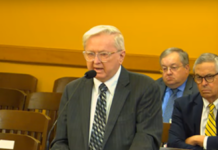
“This is not the right approach to take to providing property tax relief,” said Democratic state Rep. Tom Sawyer of Wichita and the top Democrat on the House tax committee.
Sawyer compared the bill to giving a consumer a coupon for 10% off on a purchase only to find that a retailer increased the price of goods by 10%.
Sawyer said local governments would have to raise their local property taxes by an average of 31 mills to bring their property tax revenue up to where it was if the voters approve the amendment.
“The mill levy goes up and instead of getting a tax cut, you’re still paying more taxes,” he said.
He estimated that vehicle taxes would increase by 27% if the amendment became law and put more pressure on local governments to raise property taxes.
Sawyer said data from Sedgwick County showed that out of 161,000 residential properties, 86,000 would see their property taxes increase and 75,000 would see their property values decline if the amendment passed.
“We do need property tax relief, this is not the right approach to take,” he said.
Republican state Rep. Sean Tarwater of suburban Johnson County implored the House to support the bill.
“It’s time to wake up,” Tarwater said.
“This is our opportunity to help,” he said. “It’s our opportunity to make an important decision. It’s time to let our constituents weigh on their No. 1 issue. We need to give them that opportunity.
“This is up to them. They can choose,” Tarwater said.
“They can choose if they wanted a bloated budget or if they want overinflated services, unnecessary services, or if they want to pay lower property taxes.”
Republican state Rep. Ken Corbet of Topeka couched the debate in the context of a baseball game in the late innings. There are about two weeks left in the legislative session.
“We’re here at the bottom of the ninth,” Corbet said.
“Everybody that’s talked against this bill does not have a plan any better or one at all,” he said.
“This bill wasn’t conceived for local government,” he said.
“It was put together for constituents who are sick and tired of having no say in watching their taxes go up,” he said.
“I don’t know how you go home and tell your constituents you had a chance to lower their taxes, had no other plan, but just voted ‘no’ for no reason at all.”