




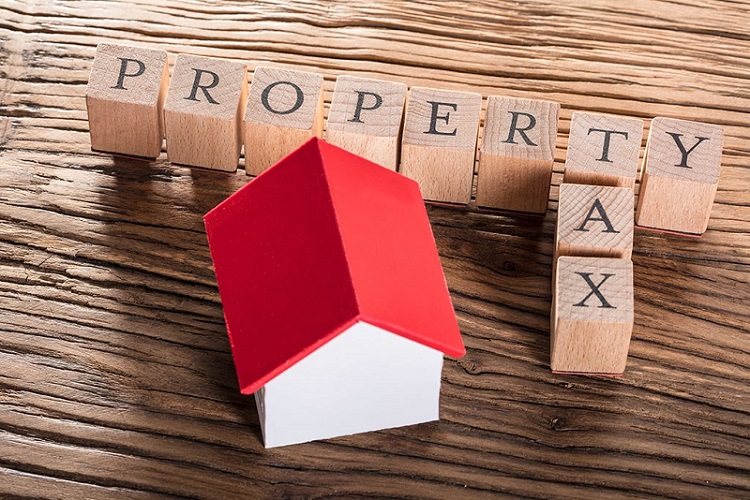
The Kansas Senate passed its version of a property tax plan Wednesday, approving a constitutional amendment capping property tax assessments.
The amendment, which passed on a 30-10 vote, would cap the taxable assessed property value at 3% with several limited exceptions, including new construction or improvements and if there is an error calculating the tax assessment.
The cap would remain with the property if it’s sold or transferred.
For tax year 2027, the final taxable assessed value of the property would not increase by more than 3% compared to the assessed value of the property for 2022.
The amendment, if approved by two-thirds of the Legislature, would have to be ratified by Kansas voters during this year’s primary election on Aug. 4.
The amendment now goes to the House, which has preliminarily approved a separate plan giving voters a chance to stop increased local government spending.
The two chambers are expected to run each other’s property tax bills with the goal of resolving their impasse over how to best address property taxes.
“In Kansas, we know we have a longstanding tradition that a person’s home is their castle,” said Republican state Sen. Caryn Tyson of Parker, chair of the Senate tax committee.
“It is the foundation of the American dream and the reward for a lifetime of hard work, but today that foundation is cracking. In fact, on some, it is actually falling in,” she said.
“Kansans are being hit hard by phantom wealth taxes, bills not based on their income or their ability to pay but on their neighbors’ record-high home sales on unrealized gains,” Tyson told the Senate chamber.
She said Kansans are forced to pay “market surge rent” because the government “just keeps raising valuations.”
She said the amendment, if approved, would provide predictability and transparency for in their property valuations.
The Senate passed the bill on the same day that Johnson County government announced it mailed out more than 222,000 appraisal notices.
The county said the total appraised and assessed values across all markets show an increase of about 6% for 2026 compared to 2025.
The county said that about 68% of residential property values either increased by 7% or less or experienced a reduction in value.
The county reported that apartment appraised values increased approximately 11%, while office appraised values decreased by 1.6%. It said retail properties were up 1.25%
This year, the average value of a home in Johnson County is $536,000 and the average selling price of new and existing homes in 2025 was $583,000.
Dinah Sykes, the top Democrat in the Senate from Lenexa, said the amendment sends a false narrative that property taxes will go down.
“This is how local governments fund those core services,” Sykes said of property taxes.
Sykes said surveys taken by cities that she represents show that 90% of their residents are highly satisfied with the services they get for what they pay.
“Local governments don’t look at my house value and what that assessment is, they’re looking at how they fund those services that their residents are expecting,” she said.
“This is a false promise. I wish it was a solution. It’s not a solution,” she said.
Republican state Rep. Craig Bowser of Holton saw the amendment differently.
“Property taxes are not just numbers on a statement,” Bowser said.
“They’re grocery money. They’re car payments. They’re retirement savings. And they’re the difference between potentially staying in your home or being forced to sell,” he said.
Even when local property tax rates remain flat, he said, rising property values mean higher tax bills.
“For homeowners on fixed incomes, for young families trying to build a life, for farmers and ranchers whose incomes fluctuate with markets and weather, this unpredictability creates real franchise,” he said.
The amendment, he said, does not cut funding for local governments but rather provides stability, predictability and protection from sudden spikes in tax bills outside their control that they may not be able to afford.
“A cap provides guardrails,” he said.
“We have an opportunity here to provide lasting property tax stability for families, for farmers, for small businesses and for retirees across our state,” he said.
The amendment ensures that government growth reflects residents’ ability to pay, he said.
Democratic state Sen. Pat Pettey of Kansas City, a former county commissioner, said the bill takes something that’s complicated and makes it sound simplistic.
“This bill does not lower property taxes,” she said. “Only mill levies can do that.”
Echoing Sykes, Pettey said that local governments will try to find ways to keep their residents satisfied with quality-of-life services.
“They have very few options, so they will be looking at raising the levy,” she said.
Pettey noted that during the committee hearing, the amendment was opposed by the cities of Mission, Overland Park, the Kansas Realtors Association, the Kansas Livestock Association and the Kansas Farm Bureau.
“A vast diverse group of organizations came out in opposition because they believe, and I do, that this does not reduce or limit property tax increases and could more than likely result in a shift in property tax burdens across taxpayers,” she said.
“I think we need to be honest with our taxpayers,” she said.