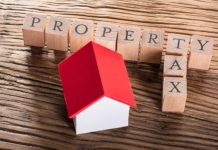



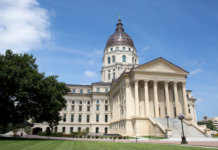
The Kansas House overwhelmingly voted down a constitutional amendment capping property appraisals at 4% for tax purposes.
The House voted 37-88 to reject the amendment, which a day earlier failed to make it out of the Senate until it was reconsidered again Thursday.
On a second vote to reconsider the measure in the House, the amendment lost 59-66.
A fiscal note on the bill showed that capping the statewide 20-mill school tax levy would cost the state nearly $1 billion over five years.
Democratic state Rep. Tom Sawyer of Wichita was the leading opponent of the bill in the House, saying it would do nothing to control property tax increases.
“They’re not really property tax relief,” Sawyer said of property appraisal caps.
“When you put a cap on all the value, then what happens is local governments are forced to raise their mill levies…to make up for that valuation loss,” Sawyer said.
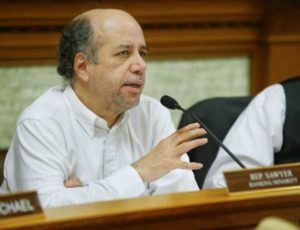
“It’s kind of fool’s gold,” he said.
He also predicted that the property tax cap would lead to increases in motor vehicle taxes as the cap drives up countywide mill levies.
“People don’t like paying higher motor vehicle taxes,” he said. “This will cause motor vehicle taxes to go up.”
Sawyer said the amendment introduced instability to a system that was based on fair market value and the free market. “These valuation caps screw all that up.”
Sawyer said the cap would treat properties differently for tax purposes based on to what extent they were over or under the cap imposed by the amendment.
“If we go down this path, each year as that discrepancy grows, those taxpayers will get angry because our tax system isn’t fair any more,” he said.
“Some people will pay much more for property taxes than other people,” he said.
Republican state Rep. Pat Proctor of Leavenworth advocated for the amendment.
Proctor said the amendment would prevent local governments from playing a “shell game” where they can blame the local appraiser for raising property taxes.
He said the amendment would hold local governments accountable for keeping their property taxes level even as they collect additional revenue from rising property values.
“Property tax, quite frankly, is a racket,” Proctor said.
“My house goes up 15% every year, and all I do is mow the lawn,” he said.

“It was built in 1886, it’s nothing special. It’s a wood-construction house. It’s in a lower-income neighborhood, and it goes up 15%.
“If that’s fair market value, I’m selling and I’m moving to Platte City because I’m going to make a mint on that house,” he said.
“It is not fair market value.”
The amendment appeared dead Wednesday when it came up one vote short of the two-thirds majority needed for passage.
But Republican state Sen. Brenda Dietrich of Topeka, who voted against the amendment Wednesday, changed her mind and moved for the Senate to reconsider the amendment.
“I’ve often believed that consistency is the way that we build trust with our constituents and with each of our members in this caucus,” Dietrich said.
“I have voted twice on the constitutional amendment regarding property tax valuations and I voted ‘aye,'” she said.
“Yesterday, I voted ‘no’ and I have heard from some my constituents about that lack of consistency,” she said.
“For me I think that has caused me to reflect on my actions,” she aid.
The Senate voted 27-13 for the amendment, giving it the two-thirds majority needed for passage and to send it the House.
On Wednesday, the Senate had voted 26-14 to pass the amendment, meaning it came up one vote short of the two-thirds majority needed to pass the amendment.
The amendment is one of four major tax bills that are still in play as the regular session nears an end, including one that is intended to encourage local governments to hold down spending and has run into fierce opposition from cities and counties.
The House has already passed a bill eliminating a 1.5-mill tax levy that funds maintenance and renovations of some state buildings. It awaits action in the Senate.
It also passed a bill gradually moving the state to a single tax rate as income tax revenues beat inflation. It, too, awaits action in the Senate.
Senate Republicans – Mike Argabright of Olpe, Tory Blew of Great Bend, Mike Fagg of El Dorado, and Stephen Owens of Hesston – opposed the amendment.
Supporters of the amendment said it was a step toward reining in property tax increases by bringing property tax appraisals under control.
They said the bill was needed to wrest control away from little-known and unelected appraisers who contribute to property tax increases.
It would have limited the final taxable appraised property value to an increase of 4%
relative to the 2022 appraised value of the property with some exceptions.
Democratic state Sen. Ethan Corson of Fairway led the charge against the amendment, asking why the conference committee moved the dates of the election from November 2025 to August 2026.
“If this bill is truly real property tax relief, why are we delaying it?” Corson asked. “Why would we delay from the citizens of Kansas true property tax relief?”
Corson added that he didn’t think the bill did much to reduce property taxes, but if it did the election should be held this year, not next.
“We just finished a yearlong campaign. We heard from Kansans in every corner of the state about the desperate need for property tax relief.
“We heard from seniors, we heard from veterans who are being force out of their homes because of sky-high property taxes,” he said.
“We heard from our leadership that this was a day-one priority,” he said.
“Now we’re here one day from first adjournment, we have done nothing meaningful on property tax relief,” he said.
Republican state Sen. Jeff Klemp of Lansing said the amendment would ensure that property taxes remain predictable and manageable without stepping on local control.
He called it a “thoughtful solution that benefits both residents and public institutions.”
“The property tax cap introduces a vital light of transparency on decision making and budgeting within local governments,” he said.
“This heightened clarity can also act as a disinfectant, encouraging more responsible and thoughtful financial planning at the local level,” he said.
“The cap may foster necessary conversations on ways to reduce spending and prioritize efficiently, ensuring fiscal responsibility,” he said.