






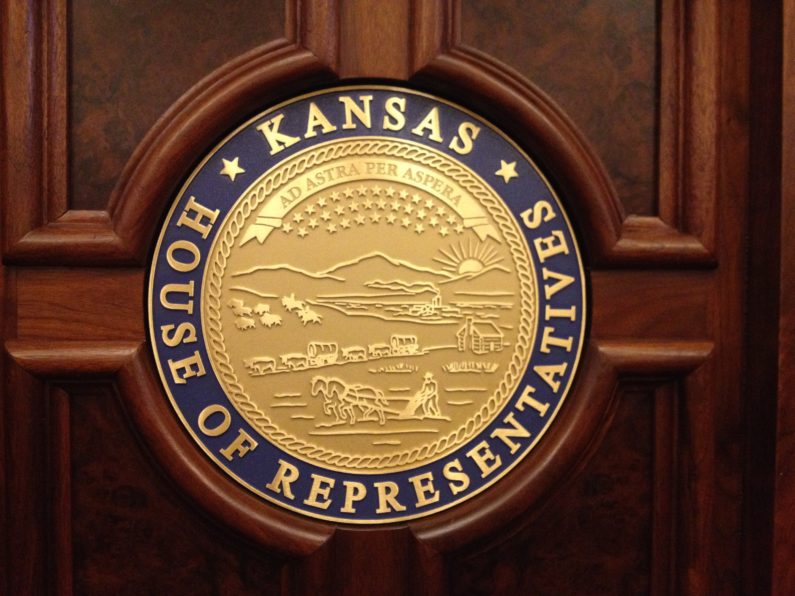
The Kansas House on Wednesday approved a bill eliminating the state’s 1.5-mill property tax levy that funds maintenance and renovations of some state buildings.
The chamber voted 96-26 for a bill that eliminates one mill of a tax that goes to state universities and the half mill that goes to state hospitals, veterans homes and the schools for the deaf and blind.
The bill now goes to the Senate as the legislative session nears an end and Republican lawmakers are racing to deliver property tax cuts that they promised after last year’s election in which the GOP expanded its supermajority.
The bill passed with bipartisan support in the House even as Democrats criticized the legislation for not doing enough to provide substantive tax relief.
Brandon Woodard, the top Democrat in the House, noted that the 1.5-mill property tax cut would save the owner of a $150,000 home $25.88 and the owner of $230,000 home $39.68.
He said it would save the owner of a $500,000 home $86.25 and the owner of an $800,000 home $138, and for a $1.5 million home it would save $258.75.
Woodard was one of several Democrats to support the bill, but added that Kansas still needs “real meaningful” property tax relief.
Democratic state Rep. John Carmichael of Wichita opposed the bill, saying he favored property tax relief for his constituents but wanted it to be “significant” and “meaningful.”
He called the savings of $25.88 on a $150,000 home an “insult” to his constituents and that he would not participate in this “farce.”
The bill eliminating the property tax for state buildings is broken down two ways.
One mill of that tax goes to state universities, and the half mill goes to state hospitals, veterans homes and the schools for the deaf and blind.
The bill calls for transferring $56 million from the state general fund starting July 1, 2026, to cover the revenue loss attributable to cutting the 1-mill property tax.
The amount related to the 1 mill would be adjusted in future years to reflect the average percentage change in taxable value of all property in the state for the preceding 10 years.
Meanwhile, the state would take $25 million from the state general fund to offset the revenue loss from cutting the half mill tax.
The amount related to the half mill would increase by 2% in each future year.