






If Democrats are going to dissolve the Republican supermajority in the Legislature, they’ll be under pressure to win in areas where they don’t typically enjoy great success.
Needing only to flip three seats in the Senate and two in the House, the path to taking out the GOP’s supermajority is made easier if Democrats can hold on in districts carried by former President Donald Trump, something that has proven difficult.
Only a handful of Democrats have won in districts carried by Trump in 2020 and 2022, and several of those candidates are in hotly contested races this year where thousands of dollars are being spent in campaigns that will decide the direction of the Legislature.
A review of election data from 2018, 2020 and 2022 – using data compiled by Wichita State political scientist Brian Amos – reveals Republicans are more likely to win in legislative districts carried by Democratic Gov. Laura Kelly than Democrats are likely to win in Trump districts.
In 2022, Kelly won 61 House districts and Republicans won in 21 of them. And in 2018, the governor carried 63 House districts and GOP candidates won in 22 of them.
Meanwhile in 2020, Trump carried 27 districts in the Senate, and just three were won by Democrats. On the House side in 2020, Trump won in 82 House districts and just one was carried by a Democrat.
There are differing reasons offered for the disparity, ranging from Democrats’ inability to recreate the governor’s campaign on a local level to the fact that Republicans simply have a sheer voter registration advantage. Others say it’s more issue driven.
Republican strategist David Kensinger credited Kelly’s gubernatorial campaign for its ability to win in Trump areas two years ago.
But he questioned whether targeting districts she won would help Democrats win down-ballot races this year where the supermajority will be decided.
The governor’s PAC is clearly getting behind candidates in districts where she won in 2022 with a focus on Johnson County, which she won with 59% of the vote.
Overall, the governor endorsed 63 Democrats in contested House and Senate races on Nov. 5 as she seeks to break the supermajority in both chambers.
She endorsed in 47 contested races in the House and 16 in the Senate.
For the most part, Kelly’s PAC focused on districts where the governor won two years ago, although in some cases former President Trump won them four years ago.
The governor’s PAC has put money into 12 legislative races, five in the Senate and seven in the House.
The governor won in all those district in 2022, and Trump won in two of them in 2020.
In some of those races, Republicans are latching on to Kelly, saying they have worked with or helped the governor on school funding and child care.
It was a tactic that infuriated the governor, leading the PAC to make a series of ads targeting Republican Senate candidates rebuking the claim as false.
Kelly threw her support to Democratic Senate candidates Andrew Mall and Karen Thurlow, who are in two of the hottest Senate races in the state.
Mall is trying to upend Republican Sen. Mike Thompson of Shawnee, while Thurlow is trying to defeat Republican Sen. Kellie Warren of Leawood.
Trump barely lost both of those Senate districts in 2020, and Kelly won both.
Kensinger said Kelly had a tremendous fundraising advantage two years ago that may not be present in the legislative races she’s trying to win this year.
“If a Democratic down-ballot candidate doesn’t have a similar spending advantage, they could underperform what Laura Kelly did,” Kensinger said.
“You only replicate the Kelly campaign’s performance if you replicate the Kelly campaign’s assets, which included a financial advantage,” he said.
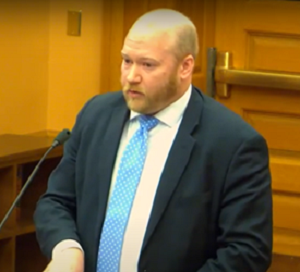
Will Lawrence, the governor’s chief of staff and adviser to the governor’s PAC, said it was “unremarkable” that Republicans win in districts carried by Kelly.
“Republicans have a clear voter registration advantage across the state and in the bulk of these Laura Kelly districts,” Lawrence said in an email.
“For years, Republican operatives have been able to buy elections because of this advantage,” Lawrence said.
“The challenge now is that Republican legislators have become far more extreme leaving Republican voters without elected officials that represent their values,” he said.
“This has created room for middle-of-the-road Democrats to reach across party lines and put extremism on the defensive,” he said.
Democratic state Rep. Jason Probst of Hutchinson was the only House Democrat to win in a Trump district in 2020 and just one of two House Democrats who prevailed in a Trump district in 2022.
After squeaking out wins in 2020 and 2022, Probst is now engaged in a tough reelection fight against Republican challenger Kyler Sweely, who is getting help from at least five outside groups spending money in the race.
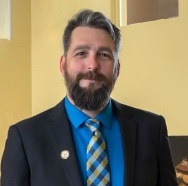
However, Sweely has been defending against a broadly circulated video showing him jumping on a clothed and apparently unconscious woman lying in a bed. He’s also had to answer questions about if he lives in the district.
Police examined the video, made a year ago, and said no charges would be filed stemming from a report filed with authorities.
The video controversy and the outside money aside, Probst said there wasn’t necessarily a special recipe to winning in a Trump district.
“Whether you’re a Trump voter or whether you’re a Democrat in my area, we’re all facing the same problems,” Probst said.
“We’ve been kind of left behind by traditional economic growth in the state and in the country,” Probst said.
“We have some unique struggles in being a midsized community,” he said.
“I think if you can speak to that and speak to the experiences people in these districts have rather than frame it in terms of political differences, to me that’s what I try to do,” he said.
“Being a Trump voter doesn’t mean you can’t vote for me,” he said. “There’s a lot of policies that overlap there in terms of job creation and tax policy for working people.”
The situation is flipped for some Republicans who are trying to win in Kelly districts such as Republican state Rep. Robyn Essex of Olathe, who is trying to win in a district that the governor won with 53% of the vote in 2022 but Trump won in 2020.
About 44% of her district is made up of Republicans and 28% are Democratic voters. Another 26% of voters here are unaffiliated.
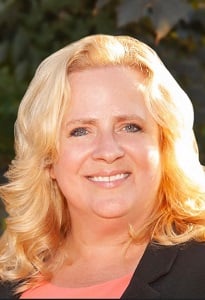
“When I talk to constituents, they’re just so tired of the fighting, the divisiveness, the Democrat vs. Republican,” Essex said. “They’re tired of politics.”
Based on her experiences, Essex said voters at the door seemed to be more interested in what she can do for them in Topeka than her political background.
“They just want to be heard. They don’t care who is listening,” she said. “It’s relationship more than party. It’s actions more than talk.”
Republicans say that Democrats struggle to win in Trump districts because they’re running on the wrong issues.
“Regardless of the type of district Kansas voters are feeling the strain of record inflation,” said Christie Kriegshauser, vice president of political affairs for the Kansas Chamber of Commerce.
“What matters right now are solutions to easing inflation and getting our economy back on track. And those solutions are found with pro-jobs, pro-growth, pro-tax cut candidates that will win on Nov. 5th,” she said.
Cory Sheedy, chief of staff for Senate Minority Leader Dinah Sykes, put the issue back on Republicans.
“Perhaps the real question here is why are there so many districts where Republicans have a clear registration advantage and yet these districts have voted for Gov. Kelly not once but twice,” Sheedy said.
“At the end of the day, Kansas voters are fairly moderate and when they have a clear choice between a middle-of-the-road message and an extreme one, they choose the middle,” Sheedy said.
“When Democrats don’t do well in these districts at the legislative level it’s typically because their message wasn’t made clear to the voters, and that is something we have been extremely focused on not repeating this cycle.”
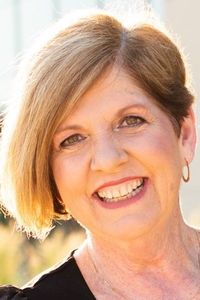
Democratic state Rep. Allison Hougland of Olathe is trying to win a second term in a district that was redrawn in a way during redistricting that favored Trump but was still carried by Kelly with about 54% of the vote. She is one of two House members to win in a district where Trump received a majority of the vote.
Hougland said her community connections matter as much as anything as she campaigns this year. She said she has signs in three yards with Trump flags. Like other Democrats, Hougland said there are issue she supports that should appeal to Trump voters.
As a longtime salesperson in the community, Hougland said she’s been able to build and foster relationships that help her in a district where Trump won 49% of the vote in 2020.
“I think what has helped me a lot is just building relationships and caring about what people say,” she said.
Meanwhile, Republican state Rep. John Resman of Olathe is trying to win again in a House District won by Kelly in 2022 but also by Trump in 2020.
Like Hougland, Resman pointed to his community ties, especially since he worked for the Johnson County Sheriff’s Office for many years.
After election boundaries were redrawn in 2022, Resman said he was given a House district that is more rural in nature.
“I don’t know if that has anything to do with it or not,” he said. “I kind of thought it would help mainly because of my background.”
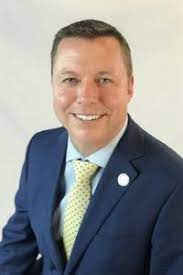
In Leavenworth County, Democratic state Sen. Jeff Pittman is fighting off a challenge from Republican businessman Jeff Klemp.
Pittman was one of just three Senate Democrats to win in a Trump district in 2020, although it was carried by Kelly two years later.
He sounded a theme similar to Probst, saying he believes there are issues where Democrats can reach out and connect to Trump voters.
Pittman said he believes there’s a bloc of Trump voters who are frustrated with government and politics but still receptive to his message.
“I think people respect my integrity and my community involvement and how I approach the issues,” Pittman said.
“I don’t think everybody who is a Trump voter is a solid Republican Party person,” Pittman said.
“I don’t think every Republican is a Trump supporter. You can’t paint them all with the same brush,” Pittman said.
Four years ago, Democratic state Rep. Tobias Schlingensiepen of Topeka ran for the Senate in a district carried by Trump with about 64% vote.
Schlingensiepen lost that race with about 41% of the vote even though the Democratic governor won that district in 2018 with about 53% of vote.
Schlingensiepen said he was at a disadvantage since he was still relatively unknown in areas while running against overwhelming support for Trump in that district.
He points out that Kelly had represented that district for 14 years before she was elected governor and was well known with voters there.
She had spent years talking to constituents and cultivating support, so it made sense she would win the district in the 2018 governor’s race.
Then came 2020.
“In 2020, that district went Trump on steroids,” Schlingensiepen said.
“It was so decisive in fact that I don’t think I would be amiss in saying that Laura Kelly even possibly would have lost that seat,” he said.
Schlingensiepen said he had plenty of funding to run a robust campaign – he raised about $170,000 that year – but it “all got buried in an enthusiasm for Donald Trump that simply crushed everything down ballot.”
He now is running for reelection in district where Kelly won with 70% of the vote.
And that may point back to one of the simplest explanations of all offered by Mike Pirner, a top aide to Senate President Ty Masterson and a veteran GOP campaign operative.
“The Republican voter who shows up only to vote in presidential elections for Donald Trump is highly likely to vote a straight ticket,” he said.
“Simple as that.”