





Good morning everyone:
Hope you didn’t forget to turn your clock back an hour this morning. The good — or bad — thing about that is it gives us more time to get the weekly roundup done. A heads-up for next week: The Reader is taking the weekend off so Mrs. SSJ and I can go to Vegas, where we have tickets to see “The Wizard of Oz” at the Sphere. We plan to see the Eagles as well. Of course, we’re banking on no special session, but it didn’t matter anyway since we were going on our weekend jaunt regardless. Sometimes, life takes precedence over news. And I would like to stay happily married, too. So there’s that. All that aside, here are the significant stories we published last week as well as other curious news snippets you might have missed but need to know…
- Gov. Laura Kelly last week took Attorney General Kris Kobach to court to prevent him from stepping on the governor’s executive powers to join litigation that she says protects Kansas from overreach of the Trump administration. Kobach’s office calls it an attempted “courtroom coup.”
- Candidates for Kansas governor started weighing in on the lawsuit against the attorney general given that the fallout will likely affect the executive powers of whoever is elected to succeed Laura Kelly in 2027.
- Authorities last week announced the arrest of a third suspect in the shooting death of an intern in U.S. Rep. Ron Estes’ office.
- Gov. Laura Kelly’s administration is asking a judge to sanction the attorney general for trying to delay lifting of an injunction that barred transgender Kansans from changing gender markers on their driver’s licenses. Kobach issued a statement responding to the request that was not in the original version of the story.
- A new lawsuit filed in federal court challenges a state law allowing judges to extend probation beyond an established ceiling if someone can’t pay restitution. The lawsuit says judges have relied on the language in Kansas law to extend probation beyond the standard five-year probation ceiling, and even beyond recommended terms of imprisonment.
- Senate President Ty Masterson said last week he’s collected enough signatures in his chamber to call a special session to draw new election boundaries for members of Congress.
- Former Gov. Jeff Colyer and Secretary of State Scott Schwab were the most recognized Republicans running for governor in 2026 with the campaigns still in their early stages before large sums of money are dropped on television ads, a new poll shows.
- While most of the attention has been focused on statewide races for Kansas governor, secretary of state and attorney general, there’s been some action down ballot for the 2026 elections that is quietly unfolding. Already there are some notable seats to watch.
- Former Kansas Republican Party Chairman Mike Brown announced last week that he’s taken a job with President Donald Trump’s administration.
- Gov. Laura Kelly on Tuesday joined with 22 attorneys general and two governors to force the U.S. Department of Agriculture to provide food-assistance benefits during the government shutdown. Kansas prevailed in the case last week.
RNC & three-day grace period
The Republican National Committee is running into opposition to join in defense of a law that repealed the state’s three-day grace period for mail ballots to arrive at election offices after Election Day.
The plaintiffs challenging the reversal of the three-day grace period in Douglas County District Court are opposing efforts by the RNC to intervene in the case.
The plaintiffs — Kansas Appleseed Center for Law and Justice, Loud Light and the Disability Rights Center of Kansas — argue in a new brief that the RNC can’t show an interest that will be negatively affected if the grace period is reinstated.
They also say that the RNC can’t show that the secretary of state is unable to defend the party’s interest in the case.
“The RNC’s involvement would only complicate this matter, would likely lead to additional delays, and would inject partisan politics into this case, which is simply not warranted by the facts or the issues before this court,” the plaintiffs argue in their brief.
They said that any further delay in the case will hamper their efforts to stop the law before it starts in January.
The plaintiffs say the case was already delayed for several months when the secretary of state unsuccessfully tried to move the case to federal court.
“Any additional delay will further frustrate plaintiffs’ ability to achieve relief before (the law) goes into effect,” the plaintiffs argued in their brief opposing RNC intervention.
“Nor will it benefit the Court for one of the major national political parties to inject partisan issues into what should be a nonpartisan dispute,” they wrote.
Last summer, the RNC filed a motion seeking to intervene in the case, saying that the fight over the Kansas law is part of what it said was a broader “fight to safeguard commonsense election laws and uphold integrity in elections.”
The RNC argues in its brief that it should be allowed to intervene in the case because it has an interest in ensuring that “Kansas elections are conducted in a safe and secure manner and in accordance with law.”
It notes that Kansas will have a Republican on the 2026 midterm election ballot for one of Kansas’ seats in the U.S. Senate and for each of Kansas’ four House seats.
Additionally, Kansas will hold an election for governor in November 2026, and numerous state legislative seats will be up for election with Republicans running in many of them.
“In short, the RNC has strong interests — its own and those of its members — in how Kansas elections are structured and ballots are counted,” the RNC argues.
The RNC say that a decision in the plaintiffs’ favor could lead to an injunction barring the implementation of provisions that the GOP argues are beneficial to its members’ ability to compete in federal elections.
“Sudden, court-ordered changes to Kansas’s election deadlines affect the electoral prospects of Republican candidates and will require the Republican Party to adjust its electoral strategy for upcoming state and federal elections,” the national GOP contends in its brief.
The plaintiffs say the RNC can’t rely on a “purported interest” in protecting its supporters’ voting rights, because the law will cause ballots of voters who support Republicans — as well as those of other voters — to be thrown out.
“Therefore, the RNC tiptoes around an implied hope that (the law) will cause more ballots cast for Democrats to be rejected, but the possibility of making it harder for others to vote is not a legitimate basis to intervene.”
Food-assistance benefits
A federal judge on Friday ordered the Trump administration to use emergency funds to provide food-assistance benefits during the government shutdown.
U.S District Judge John McConnell in Rhode Island ordered the U.S. Department of Agriculture to fund food-assistance benefits through the Supplemental Nutrition Assistance Program, known as SNAP.
Meanwhile, a federal judge ruled in a separate case in Massachusetts — one joined by Kansas Gov. Laura Kelly — that the Trump administration’s attempt to halt food-assistance funding was “unlawful” but didn’t immediately order that the program be funded.
She gave the Trump administration until Monday to decide whether to pay at least partial food-assistance food benefits.
Meanwhile, Trump addressed the issue on social media late Friday.
“Our Government lawyers do not think we have the legal authority to pay SNAP with certain monies we have available, and now two Courts have issued conflicting opinions on what we can and cannot do,” Trump said in a post on his social media platform.
“If we are given the appropriate legal direction by the Court, it will BE MY HONOR to provide the funding, just like I did with Military and Law Enforcement Pay,” Trump said.
The Kansas governor last week joined with 22 other Democratic attorneys general and two governors to force the USDA to provide food-assistance benefits during the government shutdown.
“The court’s decision today makes clear that the Trump Administration has acted unlawfully in its attempt to withhold November SNAP benefits from millions of Americans, including nearly 188,000 Kansans,” Kelly said in a statement Friday evening.
“The federal government has a legal and moral responsibility to fund this program so Kansans can continue to feed themselves and their families.
“While this ruling is a step forward, I urge the USDA to act swiftly to comply with this order and issue November benefits to prevent 42 million Americans from going hungry.”
Meanwhile, U.S. Rep. Derek Schmidt thanked Trump for his public statements indicating that he would try to get the program funded.
“I’m grateful for President Trump’s work tonight to figure out how to keep people in need fed until Senator Schumer releases his Senate Democrats to do what many of them know is right — vote with the bipartisan majority, as the House did more than a month ago, to fund the government and end this unnecessary and harmful shutdown,” Schmidt posted on Facebook.
“Thank you, Mr. President — this is very important for many Kansans,” he wrote.
Judge McConnell on Saturday issued an order prescribing how the funds should be paid and required the government to show by Monday at noon what it’s doing to comply with the order. In a footnote, the judge acknowledged Trump’s social media response.
“The court greatly appreciates the president’s quick and definitive response to this court’s order and his desire to provide the necessary SNAP funding,” he wrote.
Here’s other national coverage on Friday’s rulings:
- From The Associated Press: Two federal judges ruled nearly simultaneously on Friday that President Donald Trump’s administration must continue to fund food assistance.
- From NBC News: A federal judge in Rhode Island ordered funding of food assistance.
- From ABC News: President Donald Trump seeks clarification from the courts on funding food assistance given there are conflicting opinions from separate judges.
- From Roll Call: A federal judge in Rhode Island agreed to compel the Trump administration to distribute food assistance.
- From Fox News: Judges ordered the Trump administration to continue funding food assistance during the government shutdown.
ACA coverage costs
Open enrollment started Saturday for Kansans who want to sign up for health insurance coverage under the Affordable Care Act.
Kansans can sign up for coverage, although at this point an enhanced premium tax credit that helped cover those costs has not been extended by Congress.
Last week, the Insurance Department released how much premiums would increase for the companies that write insurance on the Affordable Care Act exchanges.
The final rate increases are similar to the proposed increases that The Sunflower State Journal reported back in August that also gave insight into why rates increased for each company. Here’s a look at the final increases released last week:
Blue Cross and Blue Shield of Kansas: Average increase of 16.65% with the rate change per plan varying from 13.3% to 20.44%. Last year, the average increase was 12.45%
Celtic Insurance (owned by Centene): Average increase 33.66% with the rate change per plan varying from 30.37% to 39.38%. Last year, the average increased was 2.07%
Medica Insurance: Average increase 30.76% with the rate change per plan varying from 28.04% to 37.11%. Last year, the average increase was 5.96%.
Oscar Insurance: Average increase 14.44% with the rate change per plan varying from 12.76% to 17.88%. Last year, the average increase was 4.55%
UnitedHealthcare: Average increase 11.74% with the rate change per plan varying from 6.81% to 17.72%. Last year, the average increase was 14.51%
Blue Cross and Blue Shield of Kansas City: An average rate cut of 6.14% with the rate change per plan ranging from -11.55% to a 1.84% increase. Last year, the average increase was 24.4%.
Health care think tank KFF reports that health insurance coverage on the ACA Marketplaces is rising 26% on average nationally.
If the enhanced premium tax credits expire at the end of this year, KFF estimates that currently subsidized enrollees will see their monthly premium payments more than double, with an average increase of 114%.
Many consumers who are covered by a plan available through the ACA exchanges get a monthly tax credit that reduces their insurance premiums.
When Congress approved the $1.9 trillion COVID stimulus bill in 2021, the legislation included a measure with an enhanced tax credit that increased their value and expanded their eligibility.
The enhanced premium tax credits were originally set to expire at the end of 2022 but were then extended as part of the Inflation Reduction Act until the end of 2025.
Since the enhanced tax credits were approved, enrollment in the ACA exchanges has skyrocketed.
Last year, Kansas set a record for the number of people enrolled in an insurance plan available from the Affordable Care Act.
The Centers for Medicare & Medicaid Services reported that 200,046 Kansans signed up for a health insurance plan offered by the ACA for 2025.
It’s a 16.7% increase from the 171,376 who enrolled in the ACA last year and almost 3 1/2 times more than the 57,013 who enrolled the first year the benefit was available in 2014.
A recent analysis conducted by the Kansas Health Institute showed that the heaviest concentrations of Kansans enrolled in the ACA plans were in parts of Olathe, Salina, Kansas City and Wichita.
Highest number of enrollees by zip code in Kansas according to KHI were:
66062, Olathe, 5,338
66061, Olathe, 4,930
67401, Salina, 3,386
66102, Kansas City, 3,155
66104, Kansas City, 2,933
67212, Wichita, 2,867
67217, Wichita, 2,838
67203, Wichita, 2,752
66212, Overland Park, 2,676
67211, Wichita, 2,570
Redistricting news
With each passing day, it’s getting less and less likely there will be a special session to draw new election boundaries for members of Congress.
There’s been no announcement about a special session, which has been planned for this Friday, Nov. 7.
The Senate has signatures from two-thirds of its members to call a special session, while the House has been struggling for weeks.
For what it’s worth, there is no deadline set in state law for getting the signatures.
It’s generally believed that the House is in the neighborhood of six to eight signatures short and it could be hard to overcome that number.
But politics can be fluid and things can change quickly depending on behind-the-scenes negotiations. So never say never.
And even if there isn’t a special session, the issue will likely come up during the regular session in January.
While Kansas struggles to get a special session, here’s what’s happening elsewhere:
- Nationally: Politico reports that Republicans across the country, including in Kansas, are impeding efforts by the White House to draw new election districts for members of Congress. Here’s a nifty state-by-state summary from The Associated Press detailing where each of 16 states are in the mid-decade redistricting debate.
- Ohio: Politico reports that Ohio’s bipartisan redistricting commission approved a new set of congressional districts that give Republicans better odds at taking two seats now held by Democrats.
- Virginia: Last week, the Virginia Senate approved a constitutional amendment allowing the state to temporarily draw new congressional lines ahead of the next U.S. Census. The amendment would enable state legislators to undertake mid-decade redistricting if another state redraws their House districts first before the end of the decade. The amendment already passed the House earlier in the week.
- Indiana: A special session called by the governor to start Monday, Nov. 3, to draw new congressional districts won’t begin then, the Indianapolis Star reported. The newspaper reported that the start date announced by the governor begins a 40-day window when lawmakers must convene. Once they meet, the session can’t go any longer than 30 working days. Indianapolis television station WFYI reports that support for drawing a new map now is causing some apprehension in the Hoosier state.
Eakins ads
Republican gubernatorial candidate Joy Eakins has been running ads you could have missed. They are running on streaming services, YouTube and digital outlets. Here’s a look at the three ads she’s running:
Eakins’ education platform
Here’s a quick look at Joy Eakins’ education platform in her campaign for governor. She’s been open about her support for school choice and that Kansans aren’t getting their money’s worth for what the state spends on public education. “Nobody thinks they’re getting their money’s worth. Everybody’s concerned about education for their kids and what’s happening,” the former Wichita school board member said at a recent forum.
Here’s a quick look at her education platform, which she describes as “pro-child, pro-parent and pro-teacher.” This is what she is proposing:
- Pass school choice legislation
- “Improve civics education so that our kids learn to love our nation”
- “Focus on improving outcomes, especially in reading and math”
- “Repeal the law mandating that school districts have to negotiate with teachers’ unions”
- “Pass a new school finance formula that promotes student outcomes and getting money into the pockets of classroom teachers”
- “Provide training for school board members — and get conservatives elected”
- “Deliver robust training to teachers focused on improving student outcomes, especially in reading and math”
Sarnecki visits Trump resort
Republican Johnson County businessman Philip Sarnecki posted pictures from his visit to President Donald Trump’s resort at Mar-a-Lago. Sarnecki said he visited with the president’s daughter-in-law, Lara Trump, to discuss his run for governor. Lara Trump previously was co-chair of the Republican National Committee. Her husband is Eric Trump.
“It was AWESOME to be at Mar a Lago this week and chat with LARA TRUMP about my run for governor,” he posted on the social media platform X last Thursday. “LETS MAKE KANSAS GREAT AGAIN AND ELECT A CONSERVATIVE REPUBLICAN AS GOVERNOR.”
The event Sarnecki attended was the American Hindu Jewish Congress first annual gala at Mar-a-Lago. The group fight anti-semitism and anti-Hindu prejudice.
Meanwhile back in Kansas, Sarnecki held a fundraiser in Wichita that was hosted by Sheila Tigert, the campaign manager for Wichita Mayor Lily Wu. The other sponsors were Cathie and Joe Hayes. The fundraiser was held last Wednesday at the Wichita Country Club.
Travel expenses questioned
Last week, Politico revealed the U.S. Sen. Roger Marshall’s chief of staff, Brent Robertson, has been paid $44,000 during the last two years for his commute between Washington, D.C., and his home in Lynchburg, Virginia. It was reported that the travel reimbursements were legal and adhered to congressional rules for those type of expenses but others thought it was unusual.
Marshall’s spokesperson, Payton Fuller, told Politico that the Senate rules allow Marshall to designate a remote duty station for his employees, which allows them to expense work trips to Washington.
Marshall’s office showed Politico documents demonstrating that Robertson changed his duty station to Lynchburg before he was reimbursed for the trips. Politico also noted Robertson continued to own a Washington condominium that he claimed as his primary residence until it was sold in May.
Former Kansas lawmaker
enters New York politics
Former Democratic state Rep. Raj Goyle of Wichita is running for New York comptroller.
He’s challenging Democratic incumbent Thomas P. DiNapoli, who is up for reelection next year and has held the office since 2007.
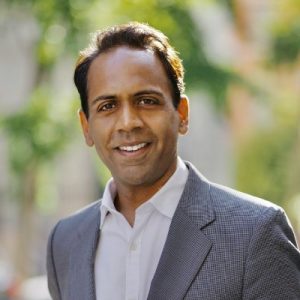
Also running in that race is Democrat Drew Warshaw, a housing nonprofit executive. It has been reported that DiNapoli is facing his most serious challenge since he was first elected 18 years ago.
Goyle served in the Kansas House from 2007 to 2011, representing District 87. He ran for Congress in 2010 and lost for former Congressman Mike Pompeo. Goyle earned a bachelor’s from Duke University and law degree from Harvard.
He has worked with the NAACP Legal Defense Fund, Public Citizen, the ACLU and the Center for American Progress.
In 2014, Goyle co-founded a legal technology company to make the legal market more efficient and transparent, according to his campaign website.
He sold the business in 2021 and stepped aside to take care of his sick father and father-in-law.
Goyle said on his campaign site that he has since launched new ventures in legal technology while continuing to be involved in civic issues.
Former U.S. attorney
aides governor
Gov. Laura Kelly has enlisted the assistance of former U.S. Attorney Stephen McAllister in her new lawsuit against Attorney General Kris Kobach.
McAllister, who previously served as the state’s top federal prosecutor from 2018 to 2021, is counsel in the litigation and dispute resolution practice at the Dentons law firm.
He is listed as one of the lawyers on the lawsuit filed Friday.
Formerly the state’s top appellate lawyer from 2007 to 2018, McAllister has represented the state in a number of lawsuits, including defense of its school finance law and abortion statutes, among many other cases.
He’s argued nine cases before the U.S. Supreme Court and has clerked for the late Supreme Court Justice Byron White and current Justice Clarence Thomas.
In 2022, McAllister came out in support of Democratic Gov. Laura Kelly for reelection while also helping conservative state Sen. Dennis Pyle get on the ballot in the governor’s race.
City fined for
open meetings violation
Bucklin City Council members will pay $100 in civil penalties for violating the state’s open meetings law. Under the terms of a consent order, council members are required to pay the civil penalty and attend additional training on the Kansas Open Meetings Act.
“Most governmental business must be conducted in view of the public in order to comply with KOMA,” David Van Parys, the first assistant attorney general for open government enforcement, said in a statement.
“To the city council’s credit, they remained cooperative throughout our investigation and have promptly undertaken steps to ensure this type of violation does not reoccur.”
After an investigation, the Kansas attorney general’s office determined that Bucklin City Council members violated the law by voting to approve a financial commitment of the city in a meeting conducted via text messages.
Former senator draws scrutiny
in City Council race
The Kansas City Star last week raised questions about how former Republican state Sen. Rob Olson — now a candidate for the Olathe City Council — paid $260,000 out of his campaign account for more than 20 years to a top aide who worked in his Senate office.
The Star story focused on consultant Michael Welton, who was also paid by the state to work as Olson’s office assistant and as an assistant on legislative committees that the Republican senator chaired during legislative sessions. Campaign finance experts told The Star that the payments did not violate any laws, but former lawmakers interviewed by the newspaper raised concerns.
Olson told The Star that Welton did a lot of constituent work for him. He told the newspaper that Welton managed databases, compiled surveys and dealt with constituent outreach.
He told The Star that old statehouse enemies were drumming up attention about the payments. “This is the problem with America right here,” Olson told The Star. “Good people who work hard for the people just get picked on.”