



Good morning, everyone:
You’re getting this early so we don’t have to get up at day break to send this. Plus, this Reader is a little bit more newsy than usual. Thanks to everyone who took a few minutes last week to give your input into our reader survey, the first since 2021. Generally, the scores were very positive and for that we are very grateful. About 86% of you thought we had no bias. Nine percent thought we leaned left, and 5% thought we leaned right. It would be fun to get that group of readers together in a room to hear what they have to say. In all seriousness, we do our earnest best to walk a middle line, although I suppose it’s inevitable that line is likely to be crossed in someone’s viewpoint at some time or another. We admittedly come up short at times. We thank all of you for holding us accountable over the years and letting us know where we fall short. We don’t always want to hear criticism. No one does. But it does make you better. So for that, we are thankful. Now, onto the significant stories we published last week as well as other news you might have missed but need to know…
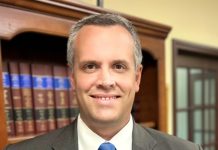
- As he enters the heart of the general election campaign for governor, Republican Senate President Ty Masterson said last week he would take a leave of absence from GoCreate, a creative community workspace at Wichita State University that was funded by Koch Industries and the Koch Family Foundation.
- Within two months, the thunder of pounding hoof beats on a dirt track will return to Kansas after state regulators have given approval for the oldest surviving racetrack west of the Mississippi at Eureka Downs to start racing this October.
- A new poll out last week that was commissioned by a Democratic super PAC shows the race for the U.S. Senate between Republican incumbent Roger Marshall and Democratic pastor Adam Hamilton is neck and neck.
- A coalition of Johnson County school districts has hired a legal expert who once represented the state on school finance issues as it explores whether to take the state to court for not fully funding special education in Kansas.
- For the second time in four years, Republicans are trying to figure out what went wrong. In 2022, a constitutional amendment that would have removed the right to an abortion from the Kansas Constitution was overwhelmingly defeated in a primary election marked by historic voter turnout. Four years later in a primary that touched on the abortion debate again, Kansas overwhelmingly defeated another constitutional amendment that called for electing Supreme Court justices. Now, the conservatives who pushed this year’s amendment — seen as an attempt to reverse a 2019 Supreme Court decision affirming the right to an abortion in the state constitution — are looking back on what happened this year.
- A state appeals court last week upheld state laws that ban fusion voting where candidates represent more than one party on the ballot, ruling they comply with the Kansas Constitution and play a central role in ensuring orderly elections.
- The executive director of the Mainstream Coalition is stepping down from the position at the end of the month following the death of his sister.
Labor union backs Masterson
in governor’s race
Four years after backing Democratic Gov. Laura Kelly’s reelection effort, the state’s transportation workers union has come out in support of Republican Ty Masterson in the Kansas governor’s race.
The transportation division of the International Association of Sheet Metal, Air, Rail and Transportation Workers — known as SMART TD — endorsed the Senate president over Democratic state Sen. Cindy Holscher of Overland Park.
The union supported Kelly in 2022 and 2018. The endorsement is seen as a potential bellwether for other unions making endorsement decisions in the coming days and weeks.
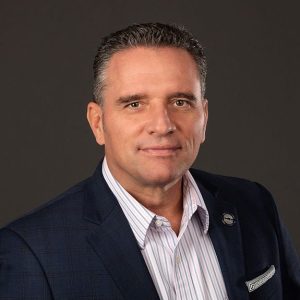
“Sen. Masterson and I don’t agree on everything, and I don’t expect that we ever will,” said Ty Dragoo, the union’s state legislative director, in a statement.
“What matters to us is that when an issue affecting working people comes before the Kansas Senate, Ty has been willing to sit down, put everyone at the table, hear us out, and work through the issue,” Dragoo said.
“You don’t have to agree with labor 100% of the time to respect labor, and there is a big difference between disagreement and disrespect,” he said.
“When other candidates choose to advocate a full-on stoppage of job-creator projects and double down and backtrack all in the same breath, that makes this conversation much easier.”
Dragoo was alluding to Holscher’s opposition to data centers after she voted for incentives to lure them to Kansas as well as her opposition to the Chiefs stadium after she initially supported those incentives as well.
She has proposed a moratorium on data centers, while Masterson has said decisions about data centers should be left to local governments.
Masterson said he wants to write state regulations — plus some other measures — into law that would keep data centers from passing their costs on to Kansas consumers.
The transportation union’s endorsement of Masterson potentially could open the door to more endorsements from other labor unions and potentially complicate Holscher’s ability to raise money for the general election.
He already had the support of the Kansas State Council of Fire Fighters during the primary.
Holscher was outgunned financially in the primary, but in the general election she will likely need more money to defend herself against attacks from Republicans.
Holscher faced criticism late in the Democratic primary, mostly from the governor and her chief of staff, as well as a dark money group called Heartland Priorities that surfaced toward the end of the election and received some union funding.
But national Republicans have already booked nearly $7.5 million in general election television advertising.
There has been no public indication so far about what national Democrats are ready to spend on TV in this race and to what extent Democratic Gov. Laura Kelly will help Holscher raise money nationally.
Following the primary election, Kelly was asked whether she would encourage her donors to help Holscher.
“I think that the Holscher campaign is perfectly capable of making those kinds of calls and garnering that kind of support,” said Kelly, who has a political action committee that recently raised $250,000 from Illinois Gov. J.B. Pritzker.
“I am committed to doing everything that I can to elect a Democratic governor, but also let’s not forget that we’ve got an attorney general race, an insurance commissioner race and state treasurer race and secretary of state,” the governor told reporters following the primary election.
“We got some other races that we’ll also be focused on.”
Dragoo said labor’s relationship with the Democratic Party has produced important victories for labor, and that many Democratic elected officials in Kansas remain strong allies of transportation workers.
But he said that history cannot become an obligation to provide unquestioned political support.
“We have tremendous friends in the Democratic Party, and we’re proud to stand beside them,” he said.
“We also have tremendous friends in the Republican Party who have stood up for our members when it mattered. That’s what this endorsement process is supposed to recognize,” Dragoo said.
“Our members aren’t political property. They are railroaders, tradespeople, parents and taxpayers. They expect us to fight for them, not for a party.”
He acknowledged in a statement the union’s endorsement of Masterson might catch some off guard.
“This may surprise people. It may make some people uncomfortable. But our responsibility isn’t to preserve political comfort,” Dragoo said.

“Our responsibility is to protect the men and women we represent. On that responsibility, we will never compromise.”
Holscher has stood firm in her support for labor even as that relationship started to sour during the primary when she questioned how unions decided on endorsements for her primary opponent, state Sen. Ethan Corson.
Last week, Holscher posted on social media that she has a 100% voting record with the AFL-CIO. By comparison, Holscher noted that Masterson had 6% on that scorecard.
“When it comes to defending working Kansans, my record speaks for itself,” Holscher posted on X last week.
“Last session, 60 bills affecting workers’ rights, wage and work place safety came before the Kansas Legislature,” she wrote.
“I stood with working families every single time. Ty didn’t,” she wrote. “As governor I will fight to keep workers safe, defend their wages and stand with union workers.”
A campaign spokesperson – political director Riley Osen – said early Saturday evening that Masterson had voted against workplace safety rules, raising the minimum wage and the right to organize.
“And that’s just this legislative session,” Osen said in text message. “Their records speak for themselves.”
Early last week, the Kansas Association of Public Employees Committee on Political Education announced it was backing Holscher in the general election.
“Our members want sensible policy that strengthens Kansas communities,” said Mike Harris, president of the American Federation of Teachers-Kansas, in a statement.
“That means fair wages for public employees, strong public schools, access to healthcare, respect for workers, and economic development that creates good jobs while protecting taxpayers, ratepayers, public services, natural resources, and local communities.
“Whether the issue is school finance, healthcare, public employee pay, or major projects like data centers, Kansas needs leaders who can bring people together, ask the right questions, and insist on accountability, fairness, and real community benefit.”
Dragoo said Masterson has worked with labor previously.
Three years ago, Masterson supported a bill in the Senate that would have forced railroads to run shorter trains in an effort to enhance rail safety. The bill passed 27-13 in the Senate but ultimately died in the House.
The bill would have barred railroads from operating any train exceeding 8,500 feet in length. The bill also would have required rolling stock be stored on sidings to be at least 250 feet from a railroad crossing if the crossing didn’t have electronic warning signals.
“For decades, labor has told our members that we support the people who support working families,” Dragoo said.
“If we’re going to say that, then we have to mean it — even when following that principle takes us somewhere politically unexpected,” he said.
“There comes a point when voting records, actions and the way candidates treat working people have to matter more than the letter next to someone’s name.”
Thee SMART Transportation Division represents more than 6,000 railroad workers, tradespeople, transit and transportation workers across Kansas.
Special-ed case legal fees
The four school districts considering a lawsuit against the state Kansas for not fully funding special education will pay the law firm representing them $450 an hour, according to school records.
The legal services agreement with Lathrop GPM calls for paying all lawyers $450 an hour in 2026 with an increase of up to 5% on Aug. 1, 2027 and each calendar year thereafter.
The joint clients will be given at least 30 days’ advance notice of any billing rate increase before it starts.
In addition to the attorneys’ fees, the clients — Blue Valley, De Soto, Olathe and Shawnee Mission school districts — will reimburse the firm for expenses, including travel, court costs, filing fees, photocopying and electronic research, among other things.
All legal fees will be proportioned to each participating school district based on student enrollment.
The coalition is responsible for ensuring that the appropriate billing formula is applied to each participating school district, which will then be responsible for payment.
The firm’s responsibilities could include monitoring legislative and budget developments; evaluating the timing, structure, and viability of potential litigation; advising on plaintiff strategy; and developing a targeted litigation approach to improve funding outcomes.
In addition to Lathrop, there were two other law firms that submitted proposals for the legal services.
The Morris Laing firm, with offices in Topeka, Wichita, Garden City and Augusta, submitted a proposal.
Education law is one of its practice areas, including special education, collective bargaining, school finance, student due process and discipline and teacher rights and licensing.
The other firm to submit a proposal was Dentons, which has a practice area in education including special education, school funding, education regulation and school desegregation.
Minority leader names
sports authority member
The top House Democrat last week named his appointment to the 11-member sports authority that will oversee the Chiefs Stadium that will be built in Kansas City, Kansas.
Rep. Brandon Woodard of Lenexa named Alise Martiny, vice president of the Operative Plasterers’ and Cement Masons’ International Association to the Kansas Sports Facilities Authority.
“Alise has always been a leading force in everything she has done. Her more than four decades of industry experience and her leadership as vice [resident of the OPCMIA demonstrate her deep commitment to service,” he said in a statement.
“Alise is a trailblazer whose leadership, experience, and ability to work alongside others will be a tremendous asset to the Sports Facilities Authority,” he said.
The other members appointed so far are:
Gov. Laura Kelly last week appointed Secretary of Administration Adam Proffitt, who also serves as the governor’s budget director. Proffitt has served as budget director since 2020 after a short stint as operations finance manager at Amazon. Before joining Amazon, Proffitt had been at the Kansas Department of Health and Environment since December 2017 when he went to work as director of finance and informatics for the agency’s Division of Health Care Finance. He became state Medicaid director in 2019. Proffitt has a long history of working in finance in the private sector. In addition to Amazon, Proffitt worked as manager of financial planning and distribution for Payless ShoeSource. He had been at Payless for more than 10 years. He also worked as a financial analyst for Capital Federal Savings Bank.
House Speaker Dan Hawkins has appointed John Barker: He is a former Republican House member from Abilene. He served in the House from 2013 to 2023. He chaired the House Federal and
Senate Majority Leader Chase Blasi appointed Kurt Eck of Andale. He is the president of CFM Corp., which is a gray iron and ductile iron foundry specializing in custom iron castings. He previously worked as a controller for Kice Industries and as a financial analyst for Learjet. Eck has a bachelor’s degree in accounting from Wichita State.
House Majority Leader Chris Croft appointed Jack Brier: He was the Kansas secretary of state from 1978 to 1987 and was president of the Kansas Development Finance Authority, from 1990 to 1993. He’s also the founder of USAlliance Life and Security Company. He’s chair of the company’s board of directors as well as president and chief executive officer. He has a bachelor’s in business administration and management from Washburn University and a master’s in public administration from the University of Kansas.
Senate Minority Leader Dinah Sykes appointed Ty Dragoo. He is the Kansas state legislative director for the transportation division of The Sheet Metal, Air, Rail, and Transportation Workers Union. He also is chair of the Working Kansas Alliance, a coalition of 23 labor unions across the state of Kansas. He also is national chair of SMART-TD state legislative directors. Dragoo began his railroad career with Union Pacific in 2005 as a switchman, continuing a family tradition in the railroad industry spanning five generations.
Senate President Ty Masterson has not yet announced his appointment.
Other members of the authority include a representative of the Chiefs and the commerce secretary.
It also includes representatives from Kansas City, Kansas, and Olathe, which have a place on the authority if their cities don’t put conditions on their pledge to share the extra sales taxes generated by the project in a way that would limit the state’s ability to implement the project.
Planned Parenthood backs Holscher
After first endorsing state Sen. Ethan Corson in the Democratic primary for governor, Planned Parentood Great Plains Votes is now giving its support to Democratic nominee, state Sen. Cindy Holscher.
“Sen. Holscher ran an impressive primary campaign that energized grassroots supporters across Kansas and demonstrated a strong understanding of what’s at stake this fall,” said Emily Wales, president and CEO of Planned Parenthood Great Plains Votes.
“We’ve seen firsthand how Ty Masterson has prioritized attacks on reproductive freedom and personal autonomy in the legislature, despite Kansans’ clear message at the polls that they want government to stay out of their medical decisions.
“The choice could not be more clear: Senator Holscher has a proven record of fighting for reproductive freedom and access to quality, affordable health care. She has made fighting for Kansans’ priorities a hallmark of her public service, and we know she’ll continue that work as governor.”
Prairie Progress hits Marshall
in new TV ad
Prairie Progress Civic Action, a nonprofit social welfare group that is not required to disclose its donors, hit the airwaves last week with a new ad on connected television attacking Republican U.S. Sen. Roger Marshall on healthcare.
Prairie Progress Civic Action and its sister group Prairie Progress have been hounding Marshall either with billboards calling him out for his house in Florida (now up for sale) and not holding town halls.
There was a truck with signage carrying a similar theme at the Republican Party Convention earlier this year.
Prairie Progress Civic Action delivered thousands of signed petitions to Marshall’s offices in Overland Park and Wichita calling for him to participate in town meetings with constituents.
Now, there’s a new ad that’s running on streaming services, otherwise known as as connected TV. It is only running in the Joplin/Pittsburg market, according to national ad tracking service AdImpact.
Prairie Progress Civic Action is the social welfare group. Its directors are Democratic state Rep. Rui Xu of Westwood, Democratic state House candidate Reed Krewson and Andrew Le.
The group was incorporated by Democratic lawyer Jake Miller.
Prairie Progress Inc. is a nonprofit with the stated mission of educating voters on issues affecting Kansas. Its directors are Overland Park City Council member Logan Heley, Prairie Village City Council member Ian Graves and Mission City Council member Trent Boultinghouse.
Electric Cooperatives lobbyist departing
Reagan McCloud is leaving Kansas Electric Cooperatives as director of government relations to take a similar job in Arizona.
McCloud has been named director of government relations and advocacy for the Grand Canyon State Electric Cooperative Association, Inc. in Tempe, Arizona.

McCloud will start his new role in early September.
McCloud joined Kansas Electric Cooperatives in August 2022 as manager of government relations, and was promoted to director in August 2024.
He led the association’s government relations initiatives, engaged in advocacy efforts at the state and federal levels, managed KEC’s grassroots program to increase member engagement, and served as executive director for the Kansas Committee for Rural Electrification political action committee.
“Reagan’s work strengthened KEC’s advocacy efforts and advanced the priorities of Kansas electric cooperatives. We appreciate his service to our members and wish him the best in this next chapter,” said Lee Tafanelli, CEO of KEC.
McCloud earned his law degree from Washburn University in May 2022. He earned a bachelor’s from Tabor College.
KEC is the Kansas statewide service organization for 26 electric distribution cooperatives and three generation and transmission cooperatives.
Based in Topeka, KEC represents the interests of and provides needed services and programs to electric cooperatives that serve member-consumers within the state.
Emporia State lobbyist heads
out on his own
Emporia State lobbyist Greg Schneider retired from the school last week after 28 years as a professor of history and executive director of government relations.
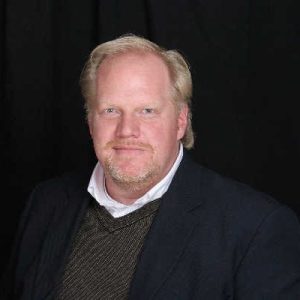
He has now formed his own firm, Schneider Consulting, and will keep Emporia as a client. He hopes to add a few more clients before the start of next year’s legislative session.
Schneider has worked as the school’s executive director of government relations since 2021.
He received a doctorate from the University of Illinois at Chicago and joined Emporia State in 1998 as an assistant professor of history.
He also was a senior fellow with the Flint Hills Center for Public Policy — now the Kansas Policy Institute — working and advocating for free market healthcare reform.
In 2019, Schneider was named Emporia’s Roe R. Cross Distinguished Professor, the highest academic award at the school.
Appointments director departs
Melissa King, the appointments director for Gov. Laura Kelly, has left the administration with only months left in the governor’s term. She has been replaced by Cora Sorensen, the appointments coordinator. Sorensen will handle those duties in conjunction with the governor’s chief of staff, Will Lawrence.
Three-day grace period ruling
sought by October
Republican Attorney General Kris Kobach is seeking to get the legal dispute over the state’s three-day grace period for mail ballots to arrive at election offices settled before the Nov. 3 general election.
Last week, Kobach asked the Court of Appeals for an expedited ruling on his appeal of an injunction restoring the state’s three-day grace period for ballots postmarked by Election Day to arrive at election offices.

The attorney general hopes to get the issued resolved by Oct. 14, the date when the first general election ballots are mailed to voters.
Last month, a Douglas County judge issued a temporary injunction that effectively kept in place for now the three-day grace period for mail ballots to arrive at election offices after Election Day in Kansas.
District Judge Carl Folsom III issued a temporary order that froze a 2025 law — known as SB 4 — that eliminated the three-day grace period, which had been in place since 2017.
Kobach sought to delay enforcement of the injunction, but was denied by the Kansas Court of Appeals and the Kansas Supreme Court.
He has filed a new request with the appellate court for delaying the injunction until the case is resolved.
“The district court’s decision finds no support in the Kansas Constitution and should be reversed,” Kobach argued in a brief filed last Friday afternoon.
“Because that decision affects which ballots will be counted in the Nov. 3 general election, the interests of justice demand that a decision be issued before then, and issuing a decision before the first ballots are mailed on Oct. 14 would assist in minimizing voter confusion,” he said.
He added in a separate brief that the secretary of state during the last year undertook an extensive education campaign to inform voters and election officials of the Election Day deadline.
“The district court’s last-minute order injected administrative and voter confusion into the primary election,” Kobach wrote.
The attorney general also noted that the Kansas Supreme Court — in deciding not to hear the case — found that the public will benefit from an expedited decision from the Court of Appeals.
“This court now has the opportunity to demonstrate the Supreme Court’s trust in this Court was well placed by considering the merits of this appeal in an expeditious fashion and granting relief from the district court’s erroneous decision.”
Abortion case
allowed to proceed
A Shawnee County judge last week agreed to allow a lawsuit challenging a state law that prohibits advanced practice registered nurses from prescribing abortion-inducing medications to move forward.
Judge Teresa Watson stayed the legal proceedings at the request of the state after the Legislature passed a law reforming the state nursing board following complaints about the agency’s heavy-handed approach to enforcement.
The state’s lawyers said the board was in such disarray that it couldn’t defend itself.
Watson said the parties have agreed that the circumstances leading to the stay have changed and the case can proceed.
The lawsuit contests a state law and regulation that prevents advanced practice registered nurses — known as APRNs — from prescribing abortion medications.
The lawsuit says that APRNs under Kansas law are otherwise fully authorized to prescribe a wide range of medications, including controlled substances and the abortion-inducing drugs mifepristone and misoprostol, for a variety of health conditions.
Sports wagering interests
come up winners
A group financed by sports betting platforms but billed itself as the “American Conservative Fund” scored wins in six out of the eight House races where it spent money during the primary.
The American Conservative Fund reported spending $486,070 on House primaries this year, including six incumbents facing Republican primary challengers on Aug. 4.
The group succeeded in helping Republican state Reps. Lance Neelly of Tonganoxie, Avery Anderson of Newton, Ken Corbet of Topeka, Adam Smith of Weskan and Kyler Sweely of Hutchinson win their primary races.
Final but unofficial results had Neelly defeating Leavenworth County Commissioner Mike Stieben by 26 votes in House District 42. Anderson defeated former Wichita Eagle reporter Michael Stavola with 63% of the vote in House District 72.
Corbet downed Melvin Hicks with 68% of the vote in District 54. Smith prevailed with 73% of the vote over Paul Simoneau in the 120th District, and Sweely defeated challenger Tyler Thrall with 58% of the vote in the 102nd House District.
The lone incumbent supported by the American Conservative Fund that lost was Kenneth Collins of Mulberry in House District 2. He lost to retired pastor Dan Muter with just 42% of the vote. The group spent about $61,000 in this race.
Wichita Police Capt. Casey Slaughter lost to marina owner Kevin O’Brien of Cheney in the 101st House District with just 39% of the vote. ACF spent about $77,000 on behalf Slaughter in this district.
The group did help Tyler Coats of El Dorado, the legislative director for outgoing House Speaker Dan Hawkins. He won his primary against Javion Napier in the 75th House District with 85% of the vote.
Coats is seeking to replace Republican state Rep.Will Carpenter.
Ingredient transparency campaign
A coalition that advocates for a uniform national standard for ingredient transparency has targeted Kansas for what it described as a seven-figure ad campaign that will run in seven states.
Americans for Ingredient Transparency has booked about $541,800 in television ads in Kansas from Aug. 11 through Sept. 15.
The campaign is an attempt to encourage federal lawmakers to pass a uniform national standard for food ingredient safety, transparency and labeling. The creative is not yet available as of Saturday.
The group said the ads will illustrate that policymakers who support a national standard will prevent price increases for their constituents at the grocery store.
The ads are running in Kansas as well as the states and districts of Republican U.S. Sens. Jim Banks of Indiana, Susan Collins of Maine, Jon Husted of Ohio, Rand Paul of Kentucky, and Republican U.S. Reps. Kat Cammack of Florida, Brett Guthrie of Kentucky and Mariannette Miller-Meeks of Iowa.
The coalition has been urging Congress to “correct a maze of state-by-state laws that confuse consumers, drive up grocery prices and hurt small businesses.”
“In the absence of a national standard on ingredient transparency, many states are moving independently to enact state-specific transparency laws,” the group said when it was created. “But these well-intentioned efforts are creating an ever-expanding patchwork of disjointed food, beverage, and personal care regulations that are increasing confusion, rather than providing Americans with the clarity they deserve.”
The group is backed by Big Food companies such as Coca-Cola, PepsiCo, Nestlé, General Mills, Kraft Heinz, Tyson Foods, Conagra Brands, Hormel Foods, Ocean Spray, Sysco and the American Bakers Association.
The group is led by senior advisers Julie Gunlock, director of the Independent Women’s Network and a conservative policy advocate and author, and Andy Koenig, a founding partner of Washington-based policy advisory firm Kwinn Consulting.
Gunlock has served as a staffer on the Senate Homeland Security and Governmental Affairs Committee and on the House Homeland Security Committee.
She also worked for Republican Ohio Sens. Mike DeWine and George Voinovich. She worked for former Oklahoma Sen. Tom Coburn.
Koenig served in the White House as a special assistant to President Donald Trump in the Office of Legislative Affairs.
He worked in Congress for seven years, including a stint as the policy director of the House Republican Conference under chairman Jeb Hensarling of Texas.
He also worked as the vice president of Policy for Freedom Partners Chamber of Commerce.
Kansas insurance coverage
New Census data shows that the rate of individuals under 65 without health insurance in Kansas increased in 57 counties from 2023 to 2024 and declined in 47 others. It remained even in one county.
The Small Area Health Insurance Estimates Program provides single-year estimates of the number of people under age 65 with health insurance in each of the nation’s 3,143 counties.
The estimates indicated that 1,300, or 41.4%, of U.S. counties had an estimated uninsured rate below 10% in 2024, down from 46.3% of counties in 2023 and 45.2% of counties in 2022.
In Kansas, 41, or 39% of Kansas counties, had an estimated uninsured rate below 10% in 2024. A year earlier, 42 Kansas counties, or 40%, had an uninsured rate of less than 10%.
During 2024, the counties with the highest uninsurance rates were Haskell (19.5%), followed by Gray and Hamilton counties (19.3%), Stevens (17.6%), Ford (16.9%), Seward (16.8%), Stanton and Finney counties (16.7%), and Wyandotte (16%).
The counties with the lowest uninsurance rates were Johnson (6.3%), Pottawatomie (6.9%), Ellsworth (7.3%), Sheridan (7.4%), Doniphan (7.5%), Leavenworth (7.6%), Hodgeman (7.7%), Ottawa (7.8%), and Butler (7.9%).
In other counties, Sedgwick County has an estimated uninsured rate of 12.1%, Douglas County had an estimate uninsured rate of 9.3%, Lyon County had an uninsured rate of 13.1%, and Riley County had uninsured rate of 10%, according to the Census Bureau.
The counties with the biggest percentage point increases in the uninsurance rate in 2024 from 2023 were Hamilton (3.3 percentage point increase to 19.3%), Logan (2.8 to 13.2%), Comanche (2.5 to 10.8%), Haskell (2.3 to 19.5%), Gove (2.1 to 12.2%), Stafford (2.1 to 15.2%), Marshall (1.9 to 10.9%), and Kingman (1.8 to 11.1%).
The counties with the biggest percentage point decreases in the uninsurance rate in 2024 from 2023 were Elk (2.8 percentage point drop to 9.7%), Hodgeman (2.5 to 7.7%), Sheridan (2.4 to 7.4%), Ellsworth (2 to 7.3%), Trego (2 to 8.5%), Scott (1.8 to 13.2%), Barber (1.5 to 9.9%), and Morris (1.4 to 9.6%).
Johnson County increased to 6.3% from 6.1%, Sedgwick increased to 12.1% from 11.6%, Wyandotte County increased to 16% from 15.7%, Douglas increased to 9.3% from 9.1%, Leavenworth County dropped to 7.6% from 7.7%, Riley County increased to 10% from 9.3%, Lyon County increased to 13.1% from 11.8%, and Crawford County increased to 11% from 10%.
Here is a spreadsheet showing the Census Bureau’s breakdown for every county in the state for 2024 and 2023. Here’s a link to the Census Bureau website showing the data.
Video roundup
The latest videos that are circulating in Kansas political circle this week.
Hamilton campaign video/U.S. Senate
AFP/Masterson/governor’s race
AFP/Masterson/governor’s race