




(Updated to include comment from secretary of state and correct the vote to 4-2 since there’s still an open seat on the court)
The grace period for advance mail ballots to arrive at election offices within three days of the polls closing remained intact Thursday after the Kansas Supreme Court decided against taking up an emergency appeal of a lower-court ruling.
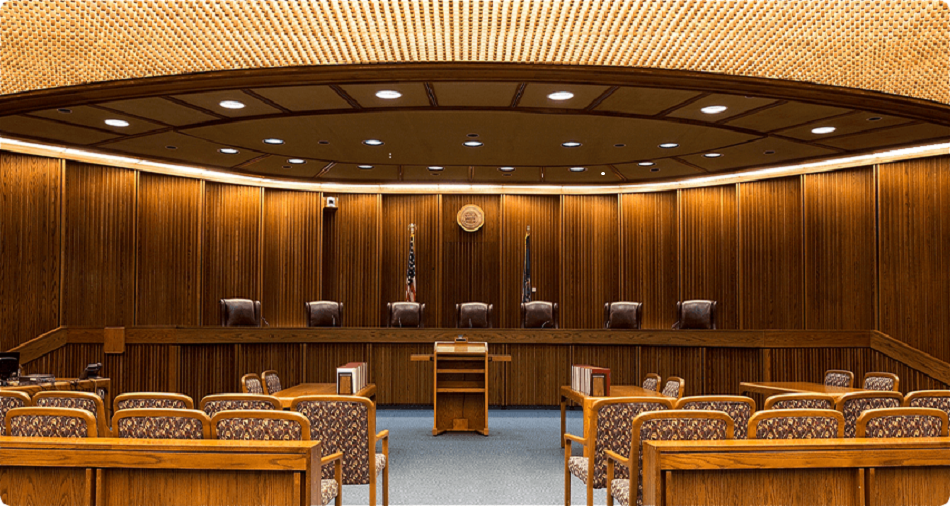
A split Supreme Court on Thursday ruled against taking up the secretary of state’s request for a stay of a lower-court ruling that kept the three-day grace period in place after it was abolished by the Legislature.
The court also denied the secretary’s emergency motion to immediately review the case before it’s heard by the Kansas Court of Appeals. The dissenting justices warned that not taking up the case now could cast doubt about the upcoming elections.
The court ruled 4-2 against issuing a stay of a district judge’s temporary injunction that froze a 2025 law – known as SB 4 – that eliminated the three-day grace period for mail ballots to arrive after the election.
The judge concluded that the plaintiffs demonstrated a substantial likelihood that the bill abolishing the grace period imposed ” an extra-constitutional burden on the right to suffrage.”
“This burden requires any mail-in ballot to survive a difficult-to-meet and unforgiving deadline, with no ability to correct the deficiency, and no ability to swear or affirm the circumstances of the mail-in ballot.
The law will remain on hold as the litigation continues to play out and will be in place when Kansas voters go to the polls next week to pick Republican and Democratic nominees for governor.
There’s also a high-stakes constitutional amendment on the ballot that calls for electing justices to the Kansas Supreme Court.
The injunction required election officials to follow a 2017 state law that allowed for a three-day grace period for mailed advance ballots that were postmarked on or before Election Day, if they’re received by election officials within three days.
“We are disappointed that the justices declined to take up this case,” said Secretary of State Scott Schwab.
“It is absolutely the duty of the court to weigh in and settle this matter, not abdicate responsibility without any accountability,” he said in a statement.
“The court system has caused the greatest voter confusion in Kansas history.
“This should make it abundantly clear to voters why they need to support the judicial selection amendment on Aug. 4 to hold justices accountable when they weaken democracy with their misguided logic,” he said,
Earlier this week, the Kansas Court of Appeals refused to grant a stay of the injunction issued by Douglas County District Judge Carl Folsom III.
A three-judge panel found that delaying the district judge’s ruling would confuse voters about whether they had to get their advanced mail ballot returned by Election Day or if they had a three-day grace period.
Secretary of State Scott Schwab asked for a stay because he said the district court’s ruling disrupted an ongoing election.
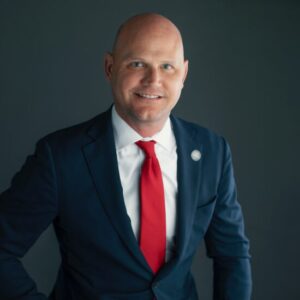
The secretary said a stay of the ruling would steady the election climate while an appellate court could decide whether an injunction should have even been issued.
“But plaintiffs asserted their constitutional challenges well before S.B. 4 became law,” Chief Justice Eric Rosen wrote for the majority of the court.
“As viewed by the plaintiffs and the district court, and apparently the Court of Appeals, the parties’ ‘last peaceable, noncontested position’ that preceded the ‘pending controversy’ was the pre-2026 version of the law – with the 3-day grace period,” he wrote.
“The timing is unfortunate but should not dictate an appellate ruling adverse to plaintiff.”
Rosen said while that issue is of significant public importance, the posture of the case is not yet final. ” Any decision we render now will not finally resolve the case.”
Justices Caleb Stegall and KJ Wall issued a dissenting opinion, saying the court had an obligation to settle the case immediately.
“By failing to take up our responsibility as the court of last resort in Kansas on these issues, we invite only suspicions about the integrity of our election outcomes at a time when the legitimacy of our voting procedures is under unprecedented assault,” the dissenting justices wrote.
“There are thousands of ballots at stake in this lawsuit,” they wrote.
“They are now going to be counted. But their ultimate legality will not be determined by this court until long after the results are announced.
“In our judgment, this is an untenable and unacceptable outcome,” they said.
The two justices referred to what is known in the federal courts as the “Purcell principle,” meaning that court’s shouldn’t interfere with election procedures on the eve of an election.
They also said a stay is warranted because there is doubt about whether the plaintiffs will win on appeal.
“Plaintiffs’ likelihood of ultimate success on the merits is sufficiently in doubt to warrant a stay and our further review,” they wrote.

“This dissent is not the proper place for a full discussion of the merits of the district court’s temporary injunction. It may or may not survive appellate review. But there are reasons to think it will not,” they said.
Attorney General Kris Kobach said the court’s decision on Thursday is another reason why voters should approve a constitutional amendment next week that calls for electing justices to the court.
“This willful inaction illustrates why Kansans should vote yes for an elected Supreme Court,” Kobach said.
“The majority acknowledged that they could have acted to ensure that election day remains election day, but they chose not to do so,” he said.
“This is a matter of huge statewide importance, but the court walked away from its responsibility to make a decision. They know that no justice has ever been removed from office under the current system.
“As a result, they feel no need to resolve this matter quickly for the people of Kansas. An elected court would have served the people of Kansas better,” he said.
Lawrence attorney Chris Mann, the Democratic candidate for attorney general, criticized Kobach for trying to push the decision to the Supreme Court in the backdrop of the the election on the judicial amendment.
“My opponent has repeatedly attempted to undermine the fair and impartial nature of our state’s Supreme Court,” Mann said.
“While I agree that this injunction should have been issued sooner, as to avoid voter confusion, the answer is not to further confuse voters with more litigation,” he said.
“And let’s not forget why we are here: Kris Kobach is upset with the outcome of the 2022 constitutional amendment and he’s upset he keeps losing in court. Now, he wants to change the way we select our state Supreme Court justices so he can — in his words — “slowly and quietly” replace our Supreme Court with a bench that will do his bidding.”