






For the second time in four years, Republicans are trying to figure out what went wrong.
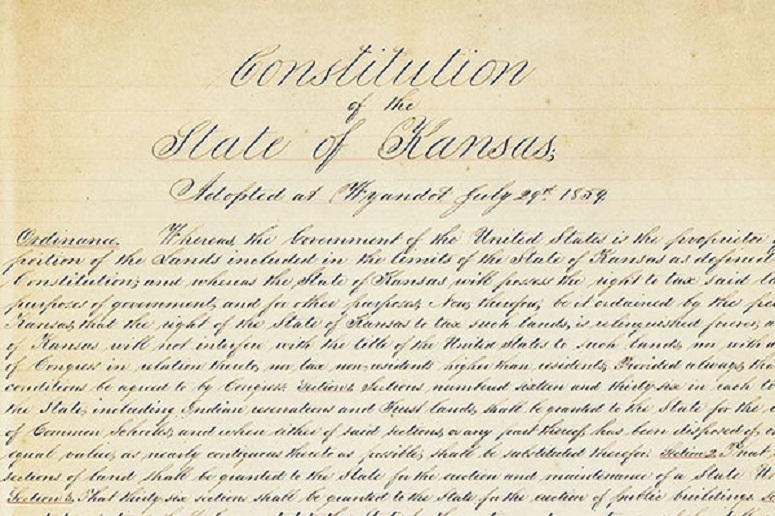
In 2022, a constitutional amendment that would have removed the right to an abortion from the Kansas Constitution was overwhelmingly defeated in a primary election marked by historical voter turnout.
Four years later in a primary that touched on the abortion debate again, Kansas overwhelmingly defeated another constitutional amendment that called for electing Supreme Court justices.
It suffered a worse defeat than the abortion amendment in 2022.
Now, the conservatives who pushed this year’s amendment – seen as an attempt to reverse a 2019 Supreme Court decision affirming the right to an abortion in the state constitution – are looking back on what happened this year.
“I’ve been scratching my head for 12 hours as far as why,” said attorney Josh Ney, who incorporated the Kansas Information Network Action that spent about $704,000 in support of the amendment through July 20.
In interviews with Republican supporters of the amendment – either in the Legislature or in the campaign – several themes emerge ranging from voter confusion to a reluctance among conservatives to change the constitution to being outspent.
There also was concern expressed that the campaign for the amendment didn’t seem to be organized and coordinated with one single group taking charge compared to several groups all spending money separately to get the amendment passed.
“With the amount of money the opposition spent, this became a more of a referendum on the disadvantages of direct elections than it did about the lawyer-controlled selection process,” Ney said the day after the election
“Whenever you’re trying to change from the status quo, I think there’s an instinct that if people don’t understand why they’re changing, they’re going to vote ‘no,'” he said.
At issue was a screening panel used since 1958 that was made up of five lawyers elected by their peers and four nonlawyers appointed by the governor. The panel nominates three candidates to the governor, who picks one for the Supreme Court.
Supporters of the amendment said the current selection method led to picking justices who were out of step with the Kansas electorate, namely citing a 2019 court ruling that found that the right to an abortion was protected by the state constitution.
The campaign for the amendment reflected several themes, including ads that said Kansans were being denied the right to vote on justices, that the court was soft on crime and illegal immigration, that screening committee members donated to Democratic politicians and that the “radical left” was trying to influence the election.
The opponents focused their campaign on the amendment turning judges into politicians who would have to raise money from the very donors who would have cases heard before the court.
They said in ads that justices were already elected in retention elections, a point that opponents said wasn’t a traditional election because it didn’t pit candidates and ideas against each other on the ballot.
In all, the opponents of the amendment spent about $9 million on broadcast television and digital ads alone compared to about $3.9 million for the supporters, according to national ad tracking service, AdImpact.
The amendment was defeated with 61% of the vote, or 22 percentage points. The abortion amendment lost by 18 percentage points in the 2022 primary election.

“There were a lot of people – even on the Republicans side – who didn’t really understand the situation and maybe needed a little more education and I don’t know that we gave it enough time to let people understand what we were trying to do,” said Republican state Sen. Mike Thompson of Shawnee.
“It takes a little explaining,” Thompson said. “It’s not something that’s just you put out a quick, pithy little statement that everybody understands. I think it’s a learning experience.”
Ney said there just wasn’t a lot of basic information available to voters about how justices are currently selected.
“I think that the amount of information out there about judicial selection is so much less…even in civics courses that people really don’t think about it as often unless you’re in the judicial system,” he said.
“To present this to the electorate, we were tasked with not only explaining why a change was needed, but also why the current system is a problem and that comes down to the fundamental principles of government that people either instinctively get or don’t,” he said.
Republican state Sen. Stephen Owens of Hesston said more education was needed, especially with the millions of dollars that were spent to sink the judicial amendment.
“The opposition did a great job of confusing the voters. I don’t think we did a good enough job educating the voters.
“Whenever I talked to the Republican voter and I had a chance to explain it, every single one of them that I talked to understood it and agreed to support it,” Owens said.
“Even on Election Day when I am getting texts and phone calls because people are confused, it told me there was a problem,” Owens said.
Key leaders in the campaign against the amendment were not available to comment for this story.
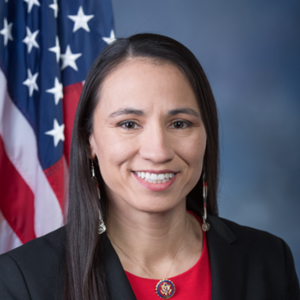
But after casting her ballot on Election Day, Democratic U.S. Rep Sharice Davids said opponents of the amendment believed it was an attempt to make up for the abortion measure that was defeated in 2022.
“I know a lot of people feel like we already did this,” Davids said. “The state Legislature has put up another constitutional amendment that really contradicts what the people of Kansas want.”
Davids said the amendment was an attempt to change the constitution because the Legislature disagreed with the court’s rulings.
“There are plenty of us who disagree with court rulings on a regular basis, but you don’t completely change the way that we get Supreme Court justices just because you don’t like some of the rulings that they make,” she said.
Nevertheless, Owens said opponent’s ads featuring former Justices Carol Beier and Lawton Nuss saying they were elected muddied the waters between a retention election and a more traditional election with candidates running against each other.
“That by itself is incredibly confusing,” he said.
Owens said better messaging was needed to counter the opponents.
“We did not do a good job of messaging with clarity and simplicity that Republicans vote ‘yes’ on this issue and here is why,” Owens said.
“It comes back on us,” he said. “We should have had one centralized organized organization running point by which all other organizations receive cooperative guidance from.”
Others shared similar views although some point out that there was a singular group that led the effort on the abortion amendment in 2022 and it still was defeated at the polls.

Republican state Sen. Kenny Titus of Wamego said voters could have been confused by language on the ballot that showed strikethroughs to demonstrate what the amendment was eliminating.
“I heard from more than one person that they thought they kind of understood it, but when the read the ballot and saw the language we were removing from the constitution it left them confused about whether they should vote ‘yes’ or ‘no.'”
“They knew they wanted to change the court system, but then after they looked at it and saw it, they weren’t sure how to vote,” Titus said.
Former state Rep. Mark Kahrs, the National Republican Committeeman from Kansas, said it’s hard enough to amend the constitution and conservatives tend to be resistant to change.
“I don’t think enough time and money were allocated to really convince conservative voters why it was so important,” he said.
“The insiders, like you and I, understood it completely, but I think the average voter really just did not completely understand the import of changing the way the system is, which in my opinion is rigged,” he said.

He added that there were vigorous Republican and Democratic primary races for governor and the debate over the amendment may have just got drowned out.
“Amending the constitution is very difficult to do and conservatives tend to oppose amending our constitution and that’s who we had to convince,” Kahrs said.
“I think the liberals did a good job of communicating their message to their voters,” he said.
He also questioned whether the message about the amendment filtered into churches.
“I’m not sure there was a real organized effort to get to the churches,” he said.
“I’m not sure how organized that effort was. I didn’t see it. I didn’t hear about it.”
At the end, Kahrs said money made a difference.
“If a special interest group spends enough money, it can convince people of anything. In this case, the lawyers, George Soros, and Planned Parenthood convinced the voters that they couldn’t trust themselves with voting.”
The Archdiocese of Kansas City in Kansas did not to take a position on the constitutional amendment calling for the election of justices to the Kansas Supreme Court
Archbishop Shawn McKnight said in a statement that the church would be neutral on the amendment, a very different approach to 2022 when the church helped bankroll the campaign for the abortion amendment.
Spokespersons for the archdioceses in Wichita and Salina also said they were not taking a position on the amendment.
The newspaper of the Wichita archdiocese – the Catholic Advance – published a piece in support of the amendment written by Chuck Weber, the former executive director of the Kansas Catholic Conference.
Wichita Bishop Carl Kemme wrote a letter authorizing Weber to appear in parishes to discuss the amendment.
“There is a vitally important measure coming up for a vote this Aug. 4 that few Kansans – let alone Kansas Catholics – are fully informed about,” he wrote.
“The purpose of this letter is to give my approval of a way for you and your parishioners can learn more about this issue so they can make an informed decision,” he said.
Weber said the outcome of the amendment was critical for Kansans and especially the state’s 380,000 to 400,000 Catholics.

“Virtually every public policy question brought forth by the Catholic Church – from immigration reform to social services to defense of the integrity of the family and the protection of human life – has the very real possibility of being impacted by the Kansas Supreme Court,” he said.
Brittany Jones, president of Kansas Family Voice, said she believed that conservatives struggled to understand the need to for the amendment.
“The biggest hurdle I found was that, for whatever reason, conservatives had trouble understanding why it was important,” Jones said.
“I think that was the biggest thing I was seeing,” she said. “I kept asking myself, ‘Why can’t people understand why we’re doing this. I don’t know that the message ever broke through.”
When it was all over, supporters said money loomed large in the campaign.
“Monday morning quarterbacking is very easy but often wrong,” said Republican state Rep. Bob Lewis of Garden City.
“Although numbers are still provisional, the ‘nos’ likely outspent the ‘yeses’ by 3 or 4 to 1, and most of that money advantage was due to money flowing into the state from outside interests.
“This is ironic since the ‘nos’ primary argument was that big money would control the election of justices.
“Why, if big-money would ostensibly control the result if justices were elected, did so much big-money, including that from heavily vested ‘big law,’ oppose to the amendment?”