






Good morning everyone:
It was a wonderful anniversary week spent with Mrs. SSJ, capped off by taking her to the KU game against Indiana on Saturday. No, a certain Kentucky fan did not melt when he entered Allen Fieldhouse — although he left the UK gear at home and wore a garden-variety T-shirt with no allegiance to anyone. We celebrated earlier in the week with an intimate dinner at Le Fou Frog in Kansas City. This will be the last Sunday Reader for 2022, although we will continue to crank out news during the week.
The Reader will be taking the next two weeks off and will not return until Jan. 8, just before the start of the new legislative session. We wish everyone a happy holiday and express our deepest gratitude for your readership as we approach our fifth anniversary next year. See you in 2023. Now onto the significant stories we published last week and other news you may have missed but need to know…
- Kansas ethics officials urged lawmakers to consider regulations for cryptocurrency campaign contributions.
- Outgoing state Treasurer Lynn Rogers is considering running for chair of the Kansas Democratic Party next year.
- A second Republican candidate has joined the race to challenge conserative state Sen. Dennis Pyle in House District 1 in 2024.
- A pair of Kansas lawmakers are working on a plan that would move the Kansas Highway Patrol out from under control of the governor and place it under the attorney general.
- The incoming House speaker announced his new legislative team.
- Incoming House Speaker Dan Hawkins has rolled out the Republican committee assignments for the upcoming 2023-24 term.
- Republican precinct leaders elected a former top aide to the state Senate president to serve in the Senate as Sen. Gene Suellentrop leaves public office.
- Former Johnson County commissioner and secretary of state candidate Mike Brown officially announced his candidacy to lead the Kansas Republican Party.
- Republican Attorney General-elect Kris Kobach is nominating former federal prosecutor Tony Mattivi to run the Kansas Bureau of Investigation.
- Incoming Speaker Pro Tem Blake Carpenter is bringing in a staffer from the Hispanic Chamber of Commerce of Greater Kansas City to be his chief of staff.
Judicial impeachment bill introduced
A bill that would allow Supreme Court justices to be impeached for “attempting to usurp the power of the legislative or executive branch of government” has been prefiled for the upcoming 2023 legislative session.
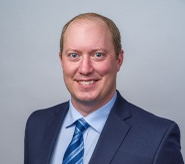
Republican state Rep. Brett Fairchild of St. John is sponsoring a bill that would define an impeachable offense for a Supreme Court justice or other judges.
It’s a bill that surfaced earlier this year when it figured into a candidate questionnaire sent out by Kansans for Life.
Currently, Supreme Court justices can be removed from office if they’re impeached by the Legislature after being convicted of treason, bribery or other high crimes and misdemeanors.
The constitution stipulates that the House must impeach an office holder for “high crimes and misdemeanors,” while two-thirds of the Senate must vote to convict.
Other judges are subject to discipline, suspension and removal for cause by the Supreme Court after a hearing.
Similar to legislation considered in 2016, the bill defines what constitutes an impeachable offense. It lists 13 possible reasons, including:
- Attempting to usurp the power of the legislative or executive branch of government.
- Failure to perform the duties of office adequately.
- Exhibiting discourteous conduct toward litigants, jurors, witnesses, lawyers or others with whom the justice or judge deals in an official capacity.
- Exhibiting wanton or reckless judicial conduct.
- Exhibiting personal misbehavior or misconduct.
- Failure to properly supervise, administer or discipline judicial personnel.
Fairchild said it is his intent that the bill apply to the entire judiciary.
“I believe this bill is necessary in order to put into statute the specific actions that are impeachable offense by judges, and in order to take the first step in reining in a judiciary that’s repeatedly usurped the Legislature’s constitutional role.”
The bill comes months after voters refused to reverse a state Supreme Court decision that found abortion rights are protected by the state constitution.
The court’s decision on abortion played a part in Fairchild’s decision to introduce the bill.
“Recently, we’ve seen the Kansas Supreme Court in particular unconstitutionally take away power from the legislative branch of government,” Fairchild posted on Facebook.
“The Kansas Supreme Court isn’t an independent court. Rather, they’ve simply become an arm of the Democratic Party in Kansas.
“Several years ago, the Kansas Supreme Court declared that there was a right to an abortion in the Kansas Constitution. That’s despite the fact that abortion was illegal at the time the Kansas Constitution was written.
“This was clearly an act of judicial activism and an example of the Kansas Supreme Court unconstitutionally taking away power from the legislative branch.”
Earlier this year, Kansans for Life’s political action committee quizzed various state candidates about whether they would support legislation defining what an impeachable offense is for a judge or one of the state’s four constitutional officers.
The KFL PAC asked candidates whether they would back legislation that would define specific actions for impeachment, including “attempting to usurp the power of another branch of government.”
Last summer, KFL declined to comment on the survey, saying it historically has not answered questions about its candidate questionnaires.
Six years ago, another legislator from St. John — Mitch Holmes — was a leading advocate for a similar bill that passed the Senate on a 21-19 vote before it died in the House.
The Kansas Bar Association opposed the bill, fearing that it would allow “the unfettered attack of justices who engage in their constitutional duty to decide cases and appropriates the Supreme Court’s most important role of being the court of last resort.”
“Impeachable offenses are actions taken by an official that violate the public trust,” the association said.
The bill would have expanded “these offenses to include the mere attempt to commit
an act.”
“This overly broad interpretation may lead to an uncomfortable result of a justice
being impeached for dissenting from the majority on an issue of whether a statute is
constitutional.”
Impeachment proceedings in Kansas have been amended just once — in 1974, according to an article authored by attorney James Hampton that appeared in the University of Kansas Law Journal.
Kansas voters approved an amendment changing the number of senators required to be present during an impeachment hearing and the offenses for which an office holder could be impeached, Hampton wrote.
Before the amendment, an office holder could be impeached for a misdemeanor, he wrote.
Kelly radio interview
Democratic Gov. Laura Kelly last week appeared on Steve Kraske’s radio show on KCUR where she talks about the election, the state’s conservative leanings, dealing with the Republican supermajority in the Legislature as well as the Keystone pipeline oil spill and the water issues confronting the state. She also discusses Kris Kobach’s appointment of Tony Mattivi to lead the Kansas Bureau of Investigation and calls to move the Highway Patrol under the jurisdiction of the attorney general. The interview is worth a listen.
State ridicules election lawsuit
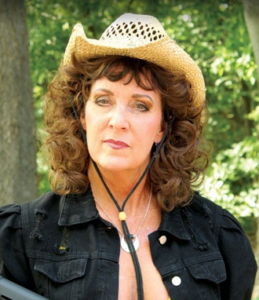
Former failed U.S. Senate candidate Joan Farr is back in federal court with a lawsuit she personally brought against many different parts of the government, including U.S. Sen. Jerry Moran and Secretary of State Scott Schwab.
The 31-page lawsuit, which attorneys for the state compared to a script for a reality television show, accuses Schwab of conspiring with Moran to ensure that an algorithm was used to suppress the votes she received during the August primary.
She lost with 20% of the vote.
The lawsuit names the CIA, the FBI, the Defense Department, the U.S. Justice Department and U.S. Sen. James Inhofe of Oklahoma and others as defendants.
It alleges that Inhofe and the government were involved in conspiracy to target her and her “loved ones” just for running against him in Oklahoma.
Among other things, the lawsuit accuses Inhofe and the government of monitoring her on social media and targeting a close family member who was given COVID-19 by using “Directed Energy Weapons.”
The family member was sick for three weeks and recovered, but his roommate later died, according to the lawsuit.
Farr not only accuses the government of using “Directed Energy Weapons” and 5G to attack her family member and give him COVID-19 but also destroying her relationship with her “high school boyfriend/soul mate using nanobots/CIA brainwashing techniques.”
Lawyers for the secretary of state call the theories in the lawsuit outright “bizarre.”
“If the court is experiencing a sense of déjà vu after reading plaintiff’s complaint, that is
no mistake,” the response from attorneys representing the secretary of state.
“This is at least the third federal lawsuit in which this pro se litigant has raised virtually
identical claims grounded in bizarre theories about vast governmental conspiracies to impair her candidacy for U.S. Senate, break up her personal relationship with her boyfriend, subject her to financial loss, improperly surveil and harass her, and ultimately kill her and others,” the response said.
“While the complaint here reads more like a script submission for a reality television show
(or perhaps simply a cry for help), the court need not delve too deeply into this scene because it lacks jurisdiction over most (if not all) of Plaintiff’s claims against the Secretary by virtue of the 11th Amendment.”
IT deficiencies
A new audit out last week revealed that about half the state agencies and local school districts reviewed were not complying with information technology security standards and best practices.
The report by state legislative auditors examined 20 agencies (including one twice) from January 2020 to December 2022 and found instances of significant deficiencies, including a lack of identifying weaknesses in their systems.
The findings were similar to what was found in the last three-year audit summary in 2020, when auditors found that more than 50% of the agencies examined from 2017 to 2019 did not substantially comply with applicable IT security standards.
In the report issued last week, auditors said state agencies and local school districts continue to have similar IT security issues to those identified as far back as 2003.
They said the results in the latest summary from 2020 to 2022 were generally similar to the results from the two previous summary reports for 2017 to 2019 and the one from 2014 to 2016.
In the most recent three-year audit summary, auditors reviewed 16 state agencies and four school districts but did not reveal specific results about each one and instead provided an overall summary of the findings.
The individual reports of each agency are confidential under state law because releasing
that information could jeopardize the entities’ information technology security.
The audit found these weaknesses:
- Ninety percent of the agencies audited did not adequately scan or patch their computers to keep them secure. Five agencies did not perform any scans, and three others had paused certain computer scans for several months due to technical issues. Another one could not provide previous scan results for review.
- Fifty-seven percent did not have adequate incident response and continuity of operations plans in the event of a security breach. Several entities did not have an incident response plan, while other plans were inadequate. One entity only had a draft incident plan.
Additionally, at least four others had not tested their plan or had no documentation of a real incident being worked. Several entities did not have adequate disaster recovery or
continuity of operations plans. - Forty-three percent of the agencies did not provide adequate security awareness training to employees. Staff at several agencies did not dispose of or secure sensitive information properly. At one agency, auditors recovered sensitive information — name, date of birth and Social Security numbers — from locked but overflowing shred bins. At another agency, they found a document with an employee’s name, birthdate and employee identification sitting next to a printer in a common area.
Landmark water decision
Last week, the Kansas Water Authority took historic action when it voted to call on the state to stop drawing water from the Ogallala Aquifer for farming irrigation. Kansas News Service’s David Condos reports that was the first time a state agency has declared that the state should stop relying on the use of the underground reservoir for water supply that’s so critical to the survival of western Kansas. Groundwater levels in areas of the state supplied by the Ogallala Aquifer, especially in southwest Kansas, have been falling since water use started climbing in the mid-1900s. Here’s Condos’ coverage from Kansas News Service, which makes the issue very easy to understand.
Keystone pipeline news
Here’s the latest news about the Keystone pipeline oil spill in northeast Kansas:
From KWCH: Four mammals and 71 fish are dead.
From Kansas News Service: The oil that spilled is composed of a material that is much harder to clean up than conventional crude oil.
From ABC News: The pipeline has reopened in sections that were not affected by the spill.
From ABC News: The Keystone pipeline spill in Kansas is the latest in almost two dozen incidents that have occurred from 2010 to 2020.
From CBS News: Another deep dive looking at the nearly two dozen pipeline accidents.
From The Associated Press: The company that runs the pipeline is recovering a small portion of the spilled oil.
From Reuters: The oil spill raised questions about the permit that allowed the pipeline to operate at a higher pressure.
Dodge City election lawsuit
Voting rights advocates last week went to court to challenge the at-large method of elections in Dodge City, Kansas.
The lawsuit, brought on behalf of two Latino residents of Dodge City, contends that the at-large election method unlawfully dilutes the voting strength of Latine residents.
The Latino population in Dodge City now makes up 65% of the city’s population and 59% of its voting-age population, the lawsuit says.
However, no Latino or Latina candidate has been elected to the five-member Dodge City Commission since at least 2000 under the at-large election system.

There was a Latina commissioner who was appointed — not elected — in 2021, but she didn’t win election to the commission in the following election cycle.
“Despite the significant size of the Latine population in Dodge City and their extensive participation in the community, there are no Latine elected officials serving on the commission,” the lawsuit argues.
“Latine citizens in Dodge City vote cohesively to attempt to elect their preferred candidates,” the lawsuit says.
“Latine voters’ cohesive voting is insufficient to overcome the non-Latine majority, who cohesively vote together for their preferred candidates and consistently defeat Latine voters’ preferred choice,” the lawsuit says.
“The current at-large election system denies Latine citizens an equal opportunity to have a voice in the future of their city.
“The combination of the at-large election system, racially polarized bloc voting, and several other factors ⎯ including the lack of polling locations serving the city’s Latine population, a history of voting-related discrimination, and severe socioeconomic disparities between the non-Latine and Latine population in the City — has prevented Latine-preferred candidates from winning any elections for commissioner in at least the past two decades.”
The city pushed back against the lawsuit.
“Dodge City believes the complaint fails to provide a more complete picture of our current method of at-large commission elections and municipal activities, as it relates to several other cities of the same size and structure across Kansas,” City Manager Nickolaus Hernandez said in a statement.
“We are eager and always open to having fruitful conversations with our community members that drive meaningful change for the good of our entire city. We intend to specifically extend that invitation to the groups who filed this complaint.
“We welcome the dialogue and look forward to the opportunity to help advance our great city, and build upon our rich, unique and diverse population.”
Dodge City Commissioner Joe Nucci disputed the idea that a Latino can’t get elected to the Dodge City Commission.
“As a Latino who actively serves as a Dodge City commissioner and who has called this community home for 36 years, I am disappointed by the incorrect claims made in this lawsuit,” Nucci said in a statement.
“I am proud of my rich Latino heritage, and of my family’s immigrant roots, and I’m also honored to serve the people of Dodge City as a public servant for 16 years as a firefighter and as commissioner, elected twice over the past several years.
“The claim and reports that frame Dodge City as not having elected representation of a Latino on the commission are categorically false, they misrepresent our commission, and are merely an attempt to divide our great city,” he said.
Four years ago, the ACLU took Ford County to court over its decision to move Dodge City’s lone polling place to a remote area outside of town that wasn’t easily accessible.
The latest case was brought by the UCLA Voting Rights Project, ACLU of Kansas, American Civil Liberties Union, and Cleary Gottlieb Steen & Hamilton.
Kentucky school tax credits struck down
The Kentucky Supreme Court last week struck down a program similar to one in Kansas that provides tax credits to those donating money for private school tuition.
The Kentucky court ruling found that a section of the state constitution prohibits the state from raising funds for private schools.
It was estimated that that the program could have cost the state up to $25 million in its first year.
It would have allowed individuals and corporations to write off up to $1 million on their state income taxes.
Kansas has a program that’s authorized to give up to $10 million a year in state tax credits to entice businesses and individuals to donate money to a scholarship program for private schools.
The scholarships are capped at $8,000 a year for each student, who is eligible for a free or reduced lunch.
Eligible students in Kansas also include those enrolled in kindergarten or grades one through eight in any public school in the previous school year in which an educational scholarship is first sought for the child.
Here’s coverage of last week’s Kentucky case, which isn’t binding in Kansas, from the Louisville Courier Journal, The Associated Press, The Hill newspaper, the Reason Foundation.
Unused tax credits
Two new tax credits approved by the Kansas Legislature in 2021 — one for the governor’s residence at Cedar Crest and another for the Dwight D. Eisenhower Presidential Library & Museum — aren’t getting used very much.
A new report out last week shows that donors to both programs are cashing in on the tax credits that are available.
Kansas taxpayers can claim a state income tax credit equal to 50% of their donations to the Eisenhower Foundation located in Abilene.

Individuals can earn up to $25,000 per year in tax credits. Corporations can earn up to $50,000 per year in tax credits.
During 2021, Kansas taxpayers earned $121,225 in tax credits for donating $242,450 to the Eisenhower Foundation. To date, taxpayers have only used $1,050 of those credits.
Friends of Cedar Crest are in a similar situation.
Kansas taxpayers can claim a state income tax credit equal to 50% of their donations to the Friends of Cedar Crest Association, which helps preserve and promote public knowledge of the governor’s residence in Topeka.
During tax year 2021, Kansas taxpayers earned $34,750 in tax credits for donating $69,500 to the Friends of Cedar Crest Association.
To date, taxpayers have only used $350 of those credits.
The amounts aren’t final because state law gives taxpayers up to three years to amend tax returns.
Inflation
New data out last week showed that consumer prices in the Midwest fell by 0.2% from October to November but were still up 6.8% year over year.
The U.S. Bureau of Labor Statistics reported last week that the decline was driven by falling energy prices, especially the price of gasoline.
Energy decreased by 3.7% from October, marked by a 4.6% decline in gas, a 5.3% drop in natural gas and a 1.5% decline in electricity.
From November 2021 to November 2022, energy prices increased 11%, mainly due to rising prices for gasoline, which was up 12.2% from a year ago.
Prices paid for natural gas service increased 12%, and electricity costs advanced 7.8% over the year.
The picture for food is different.
Food prices rose 0.2% for November. Prices for food away from home were up 0.5%, while prices for food at home were up 0.1% over the month.
Within the food-at-home category, increases in the indexes for fruits and vegetables rose 1.3%, while the cost of cereals and bakery products increased 1.6%.
Year over year, food prices increased 11.7%, including 13.3% for food at home 9.1% for food purchases away from home.