





(Updated to reflect new numbers provided late Tuesday by the Department of Revenue)
The gender markers on more than 1,300 Kansas birth certificates and driver’s licenses have been changed since the state entered into a consent decree in 2019 allowing transgender people to correct their gender markers on those documents.
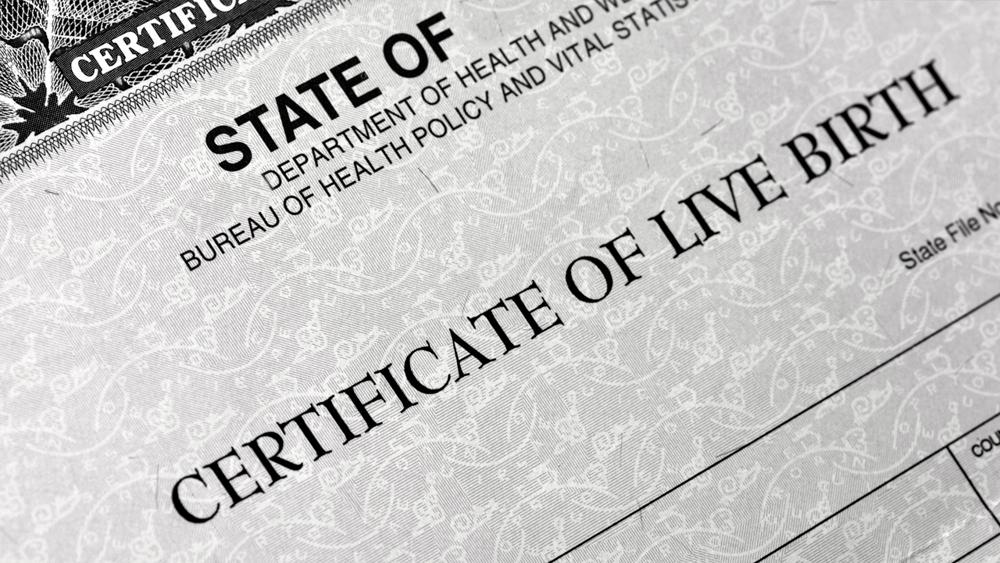
The state health department reported that 912 birth certificates have been changed from June 24, 2019 – the day the consent decree was announced – through Monday.
Meanwhile, the Department of Revenue reported 394 gender marker changes for driver’s licenses, including 161 this year.
The birth certificate numbers provided by the state health department are not exact but do give some sense of how many documents might need to revert back to their original form under a state law passed by the Legislature this year.
The numbers provided by the Kansas Department of Health and Environment are not limited only to gender marker changes based on gender identity.
They also include errors made by the provider at birth and intersex infants who were originally registered as unknown and later updated their gender marker.
The data showed that most of those changes came this year as groups mobilized to encourage transgender Kansans to change their gender markers before the new law started after it was enacted by the Legislature.
For example, there were 349 gender markers changed on birth certificates this year, more than double any single year since 2019.
Of the 161 driver’s licenses changes, 126 were made this month and last, according to state data.
On Monday, Attorney General Kris Kobach said the Women’s Bill of Rights would require the state to restore any driver’s licenses and birth certificates that were modified to reflect someone’s gender identity.
The new law – known as SB 180 – requires any state agency, school district or local government that collects vital statistics for public health, crime and economics or other topics to identify each individual as either a male or female at birth.
The new law also allows distinctions to be made between the sexes with respect to athletics, prisons or other detention facilities, domestic violence shelters, rape crisis centers, locker rooms and restrooms.
Kobach’s nonbinding opinion only addressed driver’s licenses, birth certificates and the housing of females at the Topeka Correctional Facility.
At a news conference on Monday, Kobach said the new law requires the state to change its driver’s license database to reflect someone’s biological sex at birth if the document was already changed to reflect their gender identity.
The modified driver’s license wouldn’t have to be surrendered, although any future license would show their biological sex at birth.
Likewise for a birth certificate, if the state health department has modified the document to list a sex other than someone’s biological sex at birth, the new law requires the paperwork to be restored to its original form, he said.
The current birth certificate would not have to be surrendered, although future documents would show their biological sex at birth, he said.
“Our laws should reflect truth,” Kobach said. “And that is what SB 180 ensures, it reflects biological truth.
“A person is free to present themselves how they want, to dress how they want, to get whatever their operations they choose.
“But they are not able to change what their sex was at birth or their genetic code that reflects their sex at birth.”
At the news conference, Kobach played down the number of Kansans who could potentially be affected by the law based on a Kansas City Star story that reported there were 112 transgender amendment requests in May.
The American Civil Liberties Union of Kansas sharply disagreed with Kobach’s conclusions about the law, which starts Saturday.
“Our legal team has thoroughly assessed SB 180 and determined that, while it is vague, Mr. Kobach’s opinion is absolutely incorrect,” ACLU spokesperson Esmie Tseng said.
“At no point in the text does SB 180 require any of the measures Attorney General Kobach has advised the Kansas Department of Revenue and the Kansas Department of Health and Environment to put into place,” Tseng said.
“We should note these are both executive branch agencies outside of Mr. Kobach’s scope.”
It is not known for certain how Gov. Laura Kelly’s administration will respond to the opinion, although the governor has always been a staunch advocate of the LGBTQ community.
Kelly vetoed the law at issue, although she was overridden by the Republican-led Legislature.
The governor’s administration agreed to the 2019 consent order shortly after taking office, and now Kobach is moving to have part of it dissolved so it would keep transgender people from correcting their gender marker on their birth certificates.
The governor’s office has said it disagrees with the attorney general’s legal view but has not indicated how it would proceed with the gender marker changes after July 1.
Kobach predicted there would be little change to anyone affected by the law.
“It just means changing your birth certificate is not an option and that your driver’s license in Kansas will reflect your sex at birth, but you can certainly appear in the picture anyway you wish,” Kobach said.