




Organizers of World Cup activities for Kansas City in 2026 are seeking between $25 million and $30 million from the state of Kansas, which will be on an international stage for one of the world’s biggest sporting events.
Representatives from KC2026, the nonprofit overseeing Kansas City’s plan for the FIFA World Cup, have been meeting with key political players in Kansas seeking support for an event that could generate $620 million for the entire region.
While the matches will be played at GEHA Field at Arrowhead Stadium, the overall event will spin off into neighboring Kansas with countries that will train, practice and live there during the tournament.
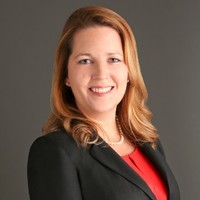
Katherine Holland, executive director of KC2026, said the amount sought for World Cup activities includes money for security and transportation, although she said the request is still fluid because the budget is not yet fixed.
“There is no bigger event and no better opportunity to showcase the state of Kansas in our region than the World Cup,” Holland said in an interview.
“This is an opportunity to elevate Kansas and our region on the global stage,” Holland said.
“I think that we need to be overprepared to showcase everything that our region has to offer,” she said.
Gov. Laura Kelly said no decision has been made on whether to include money for the World Cup in her proposed budget, which will be presented to the Legislature shortly after it convenes in January.
Kelly said she needed more information before deciding whether to include the request in the state budget. She expected a decision soon.
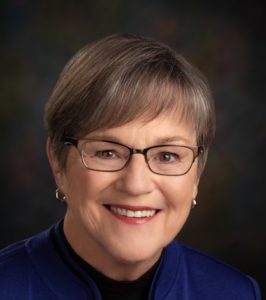
“That’s a lot of money,” Kelly said in an interview Wednesday.
“I want to know if we invest, what Kansas gets in return. I just need to have all those facts laid on the table before I make a decision.”
Holland said the event could mean a $163 million impact for Kansas.
She said organizers in Kansas City had to demonstrate that there were a minimum of 55,000 hotel rooms within a 2 1/2-hour radius of downtown Kansas City.
She said about a third of those rooms are in Kansas. She said a high-level analysis indicated that Kansas would received $163 million in economic impact.
She said the numbers could change depending on what countries come to the area and stay in base camps where players will train, practice and live in nearby hotels.
The base camp sites also will draw fans, who will want to stay near their countries’ teams.
Holland said if an international soccer powerhouse decides to locate at a base camp in Kansas, that also will boost the economic benefits even more.
Holland said Kansas could be home to three or four base camps, two of which could be in Kansas City where Children’s Mercy Park and Compass Minerals Sporting Fields are located.
She said base camps also could be located near Rock Chalk Park in Lawrence and Buser Family Park in Manhattan.
She said there’s the potential for thousands of fans to come to Kansas where they can live near their team for four to six weeks during the tournament.
She also noted that base camps are not limited to host cities, allowing for the possibility that other cities across the Midwest could compete for satellite camps as well.
There are still some unknowns, however.
It is still not known how many countries will play in Kansas City, Missouri, which is one of 16 cities hosting the event including Atlanta, Boston, Los Angeles, San Francisco and Seattle.
Until that’s known, it’s hard to know how many fans will flock to Kansas City for the tournament.
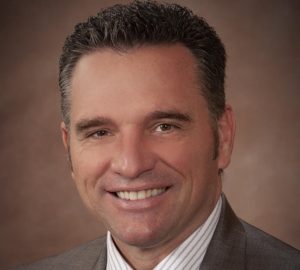
Senate President Ty Masterson said he was inclined to give the World Cup some support, adding that lawmakers need to better understand what the return will be for the state.
“We’re excited to have the World Cup in our region,” Masterson said.
“Obviously, Missouri is going to get the bulk of that benefit. We just need to look at what our role is in it,” he said.
“We do have Sporting KC, and we want to be very supportive of that. Soccer is the sport of the world. I’m excited to do what we can to be helpful.”
House Speaker Dan Hawkins said he had some reservations.
“Where’s the money going to go? Is it going to go to Missouri?” he asked.
“I want to know where all that money is going. Just to give them $30 million, I can’t see us doing that,” he said.
“I think everybody is going to have lots of questions. We should have lots of questions before we just do that.”
Dinah Sykes, the Senate’s top Democrat, serves on the board of KC2026. She believes the state should make an investment in the event.
“It goes beyond just a game,” Sykes said.
“I don’t think many people realize the economic impact the World Cup could have on Kansas, and I think we need to be positioned to make sure that we are delivering a good experience for people who are coming,” she said.
“I think there’s got to be a lot of educating, but I do think we need to be investing in this,” Sykes said.
Republican state Rep. Kristey Williams, a member of the House Commerce Committee, said she believes the World Cup presents a “huge” economic potential for Kansas.
She also said she believes Kansas would benefit being on the world stage. She was amenable to some type of agreement with the World Cup.
“I do think the fact that we’re going to be on a world stage, there are going to be some unknown benefits,” she said.
“I do think that there will be benefits that will play out into the future as people understand or even recognize where Kansas is on the map and that it’s a place they may want to go.
“I see the potential,” she said. “I do think there would be a good return for Kansas taxpayers, but we have to see exactly what that looks like.”
Like others, Williams wants more details about the economic benefits but thinks that number can be easily assessed.
“By the time the Legislature would need to vote up or down on adding a certain amount of money, I think we would have at least a good understanding of what can count on.”
Earlier this year, the Missouri General Assembly allocated $50 million for improvements at Arrowhead Stadium and marketing in advance of the World Cup.
Missouri state legislators also approved $2 million for parking upgrades near the World Cup event sites.
The city of Kansas City, Missouri, also is expected to put up at least $15 million, Holland said.
The organizing committee also could need in-kind contributions from area municipalities to support the event with various services.
Last year, the Kansas Legislature approved $10 million to improve the home of the Sporting Kansas City soccer club, although Holland said that was distinctly separate from the request for the World Cup.
The Sporting KC project included the transformation of the current Mazuma Plaza outside of Children’s Mercy Park to create an entertainment district for large-scale public gatherings and major events similar to KC Live in the Power & Light District in downtown Kansas City.
Mazuma Plaza is a 41,000-square-foot flexible outdoor event space outside the stadium just west of Interstate 435 in Kansas City, Kansas.
The project also includes upgrades to the original stadium infrastructure from 2011, including new LED video displays within the stadium, a new LED video display on the exterior and converting all field lighting to LED.
Other upgrades included the stadium audio system, a new outdoor structure to accommodate food, beverage and merchandising, and a permanent box office structure on the west side of Children’s Mercy Park.