





Republican U.S. Sen. Roger Marshall and Democratic challenger Adam Hamilton met for the last time face to face in a high-stakes debate before the general election with each candidate trying to tie each other to the worst of their party’s policies.
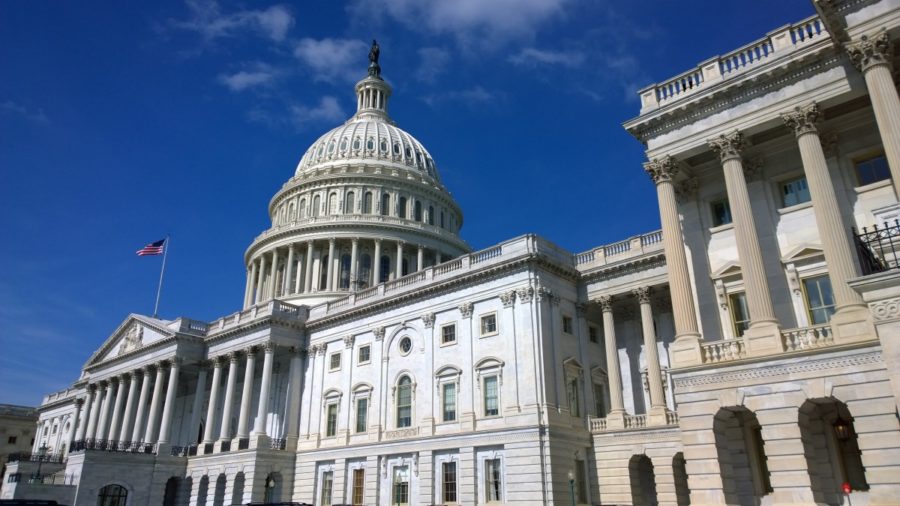
They came into the debate in basically a dead heat with the nation’s eyes on a Senate race that is costing more than $60 million with about two dozen different groups or campaigns spending money on the race.
The debate was hosted by WDAF in Kansas City and was broadcast across Kansas on the Nexstar’s network.
Over and over, Marshall on Wednesday night pounded away that a vote for Hamilton is a vote for putting New York U.S. Sen. Charles Schumer and his allies in charge of the Senate.
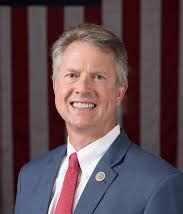
Hamilton presented himself as a change-agent who will bring stability to Washington, forge bipartisan alliances and make sure Kansans are heard in the halls of the U.S. Capitol.
They both had a chance to respond to how they are portrayed in each other’s attack ads: Marshall for suing patients for unpaid medical bill and Hamilton’s handling of a sex abuse case at his church.
It was a very different atmosphere from the last time they faced off against each other at the Kansas State Fair where Marshall was frequently jeered and booed facing a hostile and rowdy audience.
Nevertheless, Hamilton sounded some of the same themes from the debate last month.
“If you appreciate having record diesel-fuel prices, 50,000 people in Kansas taken off of healthcare, thousands of children no longer receiving SNAP benefits, if you feel like it’s OK to have ICE arresting people in southwest Kansas and hurting our livestock industry, if you think the tariffs are good and the unpredictability, chaos and corruption is OK in Washington, then I’d say vote for Roger Marshall,” Hamilton said.
“If you want change, then I’d like to ask you to vote for me whether you’re Republican, Democrat, or independent. I will stand up for you. I will fight for you and I’m going to make sure that in Washington D.C., we’re acting with decency, compassion, kindness and we’re doing the right thing for the people of Kansas,” he said.
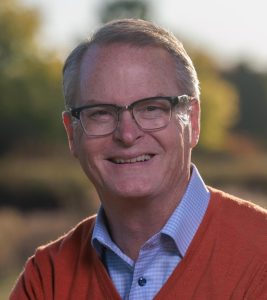
Marshall, meanwhile, made the debate as much about Schumer and the national Democrats as anything.
“Secure borders. Stronger military. Lower taxes. That’s what Republicans stand for,” Marshall said.
“If we would lose this seat, that means Chuck Schumer controls the Senate. That means Elizabeth Warren would control the banking committee, Bernie Sanders would control the health care and Cory Booker would be in charge of the ag committee.
“We can’t have that. That’s not what Kansas needs. We need someone that’s going to stand up and make sure we have strong jobs, good jobs and protects our traditional Kansas values,” he said.
“This guy’s funded by Chuck Schumer. He’ll be beholden to Chuck Schumer forever. And that’s why need to keep myself in that Senate seat,” Marshall said.
The frequent references to Schumer drew a somewhat irritated response from Hamilton late in the debate.
“We’ve heard Chuck Schumer mentioned, I don’t know, 50 times, maybe. I’m exaggerating. Maybe 20 times so far.
“I find that interesting. I’ve already said I wouldn’t support Chuck Schumer for Senate majority leader if the Democrats took control of the Senate,” Hamilton said.
Marshall accused Hamilton of crafting immigration policy with President Obama, something that the Methodist pastor said was flatly incorrect.
“You were pointing at me as though I developed these policies. I just want to remind you I’ve been a pastor for the last 38 years. I have not been a senator. I didn’t develop policies with President Obama or anyone else.”
Marshall wasted little time on the Schumer narrative, when with the debate’s first question he was asked to respond to an ad highlighting a New York Times story about the lawsuits he brought against 700 of his patients for unpaid medical bills.
Host John Holt asked Marshall what personal responsibility he would take for how those debts were collected, which included about 80 patients who were arrested for missing court dates.
“This couldn’t be further from the truth,” Marshall said of the ad before adding, “I think we need to remind everybody that control of the Senate goes through Kansas and that’s why this is so important.
“My opponent is going to say anything he can to lie to get into that office and give control to Chuck Schumer,” he said.
He said he has provided millions of dollars in free care over the years and that the Kansas Bill of Rights barred someone from going to jail for outstanding debt.
He said the woman featured in the Hamilton ad, who was arrested with an outstanding debt, had “legal issues” in three counties and had missed 16 court dates.
“I’m sorry about that,” he said.
“We did everything possible to keep them from going to collections. It was a very, very rare situation, but once it was turned over it was the same process that KU Med Center would do, Via Christi in Wichita,” he said.
“Once we sent it to collections it was out of our hands,” he said. “We did everything possible to take good care of people.”
Marshall told Holt that he didn’t put limits on his lawyers who were hired to carry out debt collections.
“Generally speaking, once it was turned over to collections, it was done,” he said. “That’s the same practice of KU Med Center, of St. Lukes, of Via Christi as well. We followed the same procedures as every other doctor.”
Marshall called the ad a “gross mischaracterization” the compassion and care he provided.
Then it was Hamilton’s turn to respond to an ad calling into question how he handled a sex abuse case in his church in 2005 and 2006.
Holt asked Hamilton about the case where two boys reported inappropriate touching at a church camp in 2005 and the pastor said the case was initially investigated internally, the findings were inconclusive and authorities weren’t notified.
Holt pointed to a recent interview that Hamilton gave to CNN where Hamilton acknowledged that police should have been called immediately in 2005. Holt noted that same volunteer was allowed to return a year later and more allegations surfaced.
“We made sure the police found out later. When they did, they investigated, they found the same thing,” Hamilton told Holt. “It was inconclusive. There was uncertainty and as a result of that, they refused to press charges as well.”
Holt pressed Hamilton, asking him what his role was in the initial investigation in 2005 and whether he agreed to let the volunteer return to the camp a year later.
“Others investigated,” he said. “I was actually preaching that weekend at the Church of the Resurrection. I did not sign off on him going back. I should have checked to make sure he wasn’t going back. That was a mistake on my part.
“When he was investigated the next year, we forbade him from working with youth or children any more. He left our church angry and upset,” he said.
Hamilton said the church played a role when he was charged and convicted in another case.
The two candidates touched on a number of other issues, including how to regulate artificial intelligence, the balance of power in Washington, and immigration enforcement.
Marshall and Hamilton had diverging views on artificial intelligence.
Marshall promoted a “light touch” in regulating artificial intelligence capability while Hamilton proposed creating an agency like the Nuclear Regulatory Commission to oversee AI.
“Congress needs to be involved, but they also need to bring in experts in AI. Congress is not experts in this field.
“We’ve got to look at how do we take care of this so we are not jeopardizing the future of our children and our grandchildren,” he said.
“Leaving this to the AI industry on their own is a bad idea,” he said.
He conceded he wasn’t sure how AI should be regulated.
“Even the people on the frontier of this are struggling to understand what it’s dangerous potentials are,” he said.
Marshall called for a “light touch” approach to dealing with AI, saying he would advocate for transparency, personal privacy and protections for children. He then returned to Schumer.
“I want you think what Chuck Schumer, what his leadership wants to do,” Marshall said.
“They want some type of a world order on this, some type of (regulation) around AI that the whole world would follow,” he said.
“Do you think that China and Russia will ever follow this,” he said.
Hamilton got in a quick response.
“He’s talks about a light touch,” Hamilton said.
“This is a potential existential threat to the human race,” he said.
“I’m not somebody who’s crying wolf. I’m just saying we can’t just go with a light touch and hope everybody does their best. We’ve got to be more involved in that,” he said.
The debate then turned to President Donald Trump and his visit this week to the Wichita suburb of Park City to campaign for Marshall and other Republican candidates on the ballot
Holt asked Marshall whether he would return the favor and completely support the president’s agenda.
“I’ve had multiple times that I objected to the president before,” Marshall said.
“But I want to emphasize that we need the Trump voters to come out and that would be my appeal tonight,” he said.
“If you want the Trump agenda to continue, if you want secure borders, if you want a strong military, if you want lower taxes and you voted for President Trump, then you need to come out because we delivered on those things,” he said.
Holt pushed to Marshall to name one Trump policy he opposed, and the senator said he voiced his concerns with the recent federal immigration enforcement operations in southwest Kansas.
Hamilton was asked about whether he could be trusted to lead from the political middle given that he’s made political contributions to Democrats such as U.S. Rep. Sharice Davids, President Joe Biden, presidential candidate Kamala Harris.
Hamilton was played recordings where he discussed white privilege and a sermon he gave about climate change.
Holt asked Hamilton why he should be trusted to vote the same way he’s promising to lead.
“I am somebody who has led from the middle for 38 years,” he said.
“If I am elected as a moderate or an independent-minded Democrat, I’m going to work across the aisle to try to bring people together to solve problems,” he said.
Hamilton said he was committed to protecting the state’s beef industry regardless of ads that portray him differently.
“I am going to fight for them in Washington D.C.,” he said. “They’re hurting under the policies Roger Marshall is supporting.
“Again, again and again, whether it’s diesel fuel prices, whether it’s the tariffs and the impact tariffs are having on farmers, it’s what’s happening in the southwest part of the state right now,” he said.
“People are crying out and saying, ‘Come on Roger Marshall, speak up for us,” Hamilton said. “He says he speaks up for us but the president doesn’t seem to listen to what he has to say.