





(Updated to include comment from Democratic candidate for attorney general)
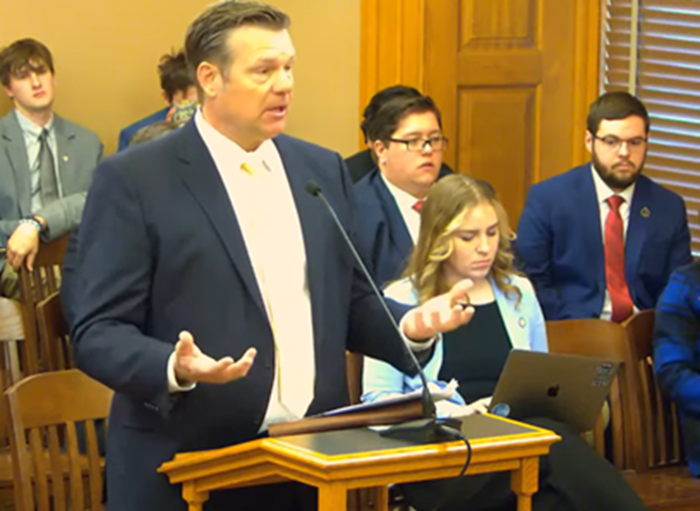
Republican Attorney General Kris Kobach has joined a proposed consent order that would declare invalid a state law providing in-state tuition at higher education institutions for students who don’t live in the country legally.
Kobach quickly joined the proposed consent agreement with the U.S. Justice Department after the federal government filed its lawsuit Wednesday challenging the law that was enacted in 2004.
“When a state law is clearly preempted by federal law, settlement is the best option for the state. Giving in-state tuition to illegal aliens has been illegal under federal law since 1996,” Kobach said in a statement.
The motion was filed with U.S. District Judge Holly Teeter, a who was appointed by President Donald Trump. Last year, the president issued an executive order vowing to confront state and local officials who he said use their “authority to violate, obstruct, and defy the enforcement of federal immigration laws.”
Kobach and the federal government are requesting that the court enter a permanent injunction prohibiting the state from carrying out the law providing in-state tuition to students living in the United States illegally.
It was unclear whether Democratic Gov. Laura Kelly might try to intervene in the lawsuit. Last session, the governor vetoed a bill that would have repealed the state in-state tuition law. The Legislature didn’t try to override the veto.
The governor’s office wasn’t ready to comment Wednesday afternoon.
The case appears to be playing out like similar lawsuits filed in Texas and Oklahoma.
A federal judge halted the 2001 Texas law signed by former Republican Gov. Rick Perry that gave college students without legal residency access to in-state tuition.
On that same day, Texas Attorney General Ken Paxton filed a joint motion along with the Trump administration to end the law for in-state tuition for immigrants not living in the country legally.
Texas was the first state to permit in-state tuition benefits to undocumented students.
Last August, Oklahoma Attorney General Gentner Drummond filed a joint motion with the U.S. Department of Justice to end a state law giving in-state tuition to immigrants who live in the country illegally.
Kobach had predicted the Trump administration would eventually sue Kansas if the Legislature didn’t pass the legislation.
“Kansas legislators would do well to bring Kansas into compliance with the law rather than being sued by the federal government,” Kobach said during the last legislative session.
Kobach’s position on the in-state tuition law appears to contradict a position he took during the 2022 campaign for attorney general when he criticized Democrat Chris Mann for not committing to defending state laws he didn’t agree with.
But Kobach said in this case that the Kansas law is “clearly” superseded by federal law and a settlement is warranted.
Three years ago, Kobach called into question answers that Mann gave during a debate when the candidates were asked how far they would go to defend state laws on the books.
Kobach questioned whether his Democratic opponent would defend laws on the books regulating abortion during a nearly hourlong debate broadcast on KTWU television.
Kobach said at the time there wasn’t a statute he wouldn’t defend as the state’s top lawyer.
“No, I will not give you a list of laws that I won’t defend,” Kobach said to moderator Nick Haines when asked for list of laws he would object to litigating.
“I will defend every law on the books in Kansas whether I agree with it or not, and I will defend it vigorously,” he said. “That is what we must do in this area.”
At that time, Mann agreed it was the job of the state attorney general to defend state laws.
But he added there is a “threshold matter” at which point a decision is made about trying a case.
Citing an opinion authored by Republican Attorney General Derek Schmidt, Mann said a decision must be made about whether a law is constitutional before going to court.
“You must first make sure that law is constitutional,” Mann said.
“If it is found constitutional, then you shall defend that law,” he said. “That’s the key.”
Kobach used Mann’s response in ads during the 2022 campaign, saying the Mann wouldn’t defend laws with which he disagrees.
Mann criticized Kobach on Wednesday for bowing to the wishes of the federal government.
“The job of the Attorney General is to defend the state of Kansas, not roll over for the federal government,” Mann said in a statement.
“If the DOJ wants to claim that a Kansas law is unconstitutional, they need to prove it in court. Kansas’s top lawyer should represent and defend Kansas, not the federal government,” he said.
“This is just the most recent example of Kris Kobach backing down when it comes time to stand up for Kansans.
“This decision calls into question who Kobach truly works for – the people of Kansas or the federal government.”