



The parent company of a new specially chartered Kansas financial institution was unable to file its annual financial report Tuesday after a shakeup in leadership.
The Dallas-based Beneficient notified the Securities and Exchange Commission late Tuesday that it would not file its annual report for the fiscal year ending March 31 on time.
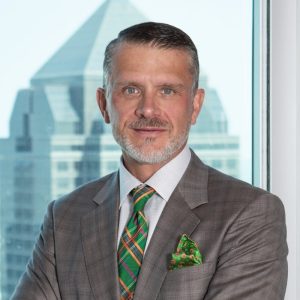
The company cited the June 19 resignation of CEO Brad Heppner.
Heppner left the company following a request from the company’s legal counsel to sit for a formal interview about his knowledge of certain documents and information concerning his relationship to a related entity provided to the company’s auditors in 2019.
The company said it needs more time to compile and analyze supporting documentation in order to complete the annual report.
The extra time would permit the company’s independent registered public accounting firm to complete its audit of the financial statements included in the annual report.
And it would allow the company time to identify and appoint an interim chief executive officer, giving them sufficient time to review the annual report and complete the required certifications in advance of filing the report.
The company said it plans to file the annual report on or before July 15.
Beneficient is the parent company of Beneficient Fiduciary Financial, which operates in Kansas as a Technology-Enabled Fiduciary Financial Institution under a state law the Legislature enacted in 2021.
The so-called TEFFI was created with the goal of giving sophisticated investors the ability to liquidate alternative assets such as venture capital and private equity that aren’t easily converted to cash.
Kansas is believed to be the only state with a law that allows this type of financial institution to operate.
The parent company has been closely watched in Kansas because of its holdings in Kansas.
In Kansas, Beneficient Fiduciary Financial is required set aside 2.5% of transactions for charitable contributions, with part of the proceeds going to the Department of Commerce to promote economic revitalization of Kansas communities under 5,000 people.
The Commerce Department has not yet provided information about how much it has collected from Beneficient Fiduciary Financial since it started operating.
The company also is required to pay the state a $1 million yearly assessment for operating in Kansas, which must be submitted by mid-July.
“We continue to operate in Kansas,” said Derek Fletcher, chief fiduciary officer and director for Beneficient.
“The operations continue and we remain committed to our Kansas operations for sure.”
The state’s top banking regulator has voiced concern over the years about the health of the parent company and how it could affect the Kansas institution.
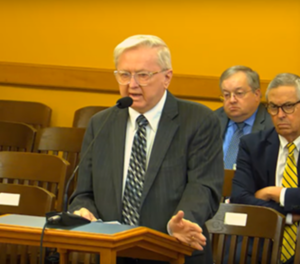
“We monitor the financial condition of Beneficient through its filings to the Securities and Exchange Commission and press reports regarding Beneficient,” David Herndon said in written testimony to the lawmakers at the end of last year.
“Recent filings along with share prices indicate significant stress on the company. Assuming one role of a parent holding company is to be a source of strength for its subsidiaries, that stress level extends to BFF,” he said.
Fletcher said the Kansas institution is “strong” and “well capitalized.”
“We remain confident that we’re able to continue operations in a meaningful way,” Fletcher said. “We continue to operate and feel confident in our ability to do so.”
The amount of the capitalization of the Kansas operations was not available Tuesday.
Asked about Heppner’s comments that he believed it was time to wind down the company, Fletcher said those were personal remarks that didn’t reflect the position of the company.
“You are correct. He’s been the face of it. He was the visionary for it,” he said.
“But there’s been a board and a management team that has executed on that vision and continues to do so and remains committed to doing to so,” he said.
“From an operational perspective, we fully expect to continue operating and delivering…”

Republican state Rep. Nick Hoheisel of Wichita, chair the joint legislative committee that oversees the Beneficient operation in Kansas, issued a statement Tuesday night.
“I am actively gathering all relevant information regarding the recent developments at Beneficient and remain in close communication with the Office of the State Bank Commissioner,” Hoheisel said in a statement.
“I have also initiated the process of convening the Fiduciary Financial Institutions Oversight Committee to ensure that we fully meet our oversight responsibilities,” he said.
“It is important to reassure the public that the State of Kansas bears no financial liability in this matter.”
The report gives the public insight about the company’s history, organizational structure, financial statements, earnings per share, subsidiaries, executive compensation and other relevant data.
If a company anticipates it will be unable to file a report on time, it can notify the SEC of the later filing and the reasons for the delay, which is what happened in this case.
The parent company has been struggling in recent years.
On Tuesday, the company was trading at 29 cents a share, down from the 52-week high of 6.27 cents share.
The company has been facing the threat of being delisted by Nasdaq because the stock price had been below the minimum $1 per share bidding required for continued listing on the exchange.
The company was first notified about the possibility of delisting on Jan. 13. The company was provided an initial period of 180 calendar days, or until July 14, 2025, to regain compliance with the bid price requirement.
In its filing Tuesday, the company said that for the year ending March 31, 2024, it lost $98.7 million with a net loss attributable to Beneficient common shareholders of $2.1 billion.
As of March 31, 2024, the company reported its investments, at fair value, were $329.1 million and total assets were $368.5 million. Total liabilities were $309.6 million as of March 31, 2024.
For the year ending March 31, 2025, the company said it expects to report a revenue loss of $7.9 million and net income attributable to Beneficient common shareholders of $51.2 million.
As of March 31, 2025, the company’s investments, at fair value, were expected to total $291.4 million and total assets are expected to total $354.9 million.
Total liabilities were expected to total $299.3 million as of March 31, 2025.
Beneficient’s annual report for the year ending March 2024 listed more than two dozen risks facing the business at that time.
Among other things, the 2024 annual report said that Heppner may have financial interests that conflict with the interests of Beneficient and its stockholders.
The report also noted that the company’s “inability to raise sufficient capital, recurring losses from operations, negative cash flows from operations, delays in executing our business plans, and the results of the recent equity awards arbitration in which over $55 million in compensatory damages were awarded to the claimant raises substantial doubt regarding our ability to continue as a going concern.”
The report continued, “If we are unable to obtain sufficient additional funding, do not have access to capital, or are not successful in negotiating a settlement with the claimant or otherwise reducing the potential current cash requirements associated with the arbitration, we may be required to terminate or significantly curtail our operations.”
Beneficient has drawn critical media coverage, especially from the Wall Street Journal.
The newspaper had examined the parent company’s relationship with GWG Holdings, a financial-services firm that sold bonds to retail investors.
The idea, the newspaper reported, was that GWG would raise the money and Beneficient “would put it to work.”
“Beneficient would use money from GWG’s investor base to acquire stakes in private-equity funds and other high-flying assets, giving rank-and-file investors access to markets typically off limits to them,” the newspaper reported.
“The first funds from GWG to Beneficient, $50 million, landed in June 2019. As far as the board directors were concerned, Beneficient would use the money to expand the business, former directors said,” the newspaper reported.
“Instead, it kicked off what became one of the biggest financial blowups to strike retail investors in years,” the newspaper reported.
Herndon had said there was a murky relationship between Beneficient and GWG Holdings, which until the fall of 2021 had been Beneficient’s parent company.
At one point, GWG and Beneficient shared two directors, and Heppner was chair and CEO of Beneficient while also chairing GWG’s board of directors.
In the fall of 2021 Beneficient spun off from GWG to become an independent company.
In 2022, Beneficient and five members of its board, including Heppner, were named in a federal lawsuit in Texas accusing the company of misleading investors in the sale of a type of high yield bond — known as an L bond — that bankrolls the purchase of life insurance policies on the secondary market.
The company told The Kansas City Star that the lawsuit was “baseless” and that GWG was not involved in the management of Beneficient nor the legislation establishing the TEFFI.
Beneficient notified shareholders in its June 2023 quarterly report that it received a Wells Notice from the staff of the enforcement division at the Securities and Exchange Commission in connection with the company’s relationship to GWG.
A Wells Notice is a preliminary determination by the staff to recommend to the SEC that a civil enforcement action or administrative proceeding be brought against the recipient.
SEC filings show that the agency’s enforcement staff had made a preliminary determination to recommend that the SEC file a civil enforcement action against the company alleging violations of federal securities laws related to Beneficient’s association with GWG Holdings.
The company said its actions were appropriate and that it “vigorously” defended itself.
And on July 1, 2024, the company and Heppner received termination letters from the SEC staff advising them that its investigations had concluded and that the staff didn’t intend to recommend any enforcement actions.