




Good morning everyone:
Happy Father’s Day to everyone. Mrs. SSJ and I are boarding our flight this morning for our short jaunt to central Pennsylvania (Gettysburg) and Annapolis, Maryland (Naval Academy). We always promise that we’ll be gone to keep expectations low. There is at least one story we’ll try to get to from out of town. Just wondering how the internet access will be atop Little Roundtop. That said, the Sunday Reader will take a break next week since there will be little time to put one together when we arrive home. Wishing everyone a great week. Now on to the significant stories we published last week and other news nuggets you might have missed but need to know….
- A state appeals court panel gave Gov. Laura Kelly’s administration the go-ahead to allow transgender Kansans to change their gender markers on driver’s licenses while a legal battle plays out in court.
- A federal judge has blocked the state from carrying out warrantless searches of boarding and training kennels as part of regulating animal welfare in Kansas.
- The state ethics commission has amassed legal bills exceeding $300,000 after a Shawnee County judge awarded legal fees to the chief of staff of the former House speaker after the agency largely abandoned an ongoing ethics investigation.
- Democratic state Sen. Cindy Holscher of Overland Park last week launched a campaign for Kansas governor. Now watch and see what Lawrence attorney Chris Mann does.
- Wichita business owner Jon Rolph will be leaving the Kansas Board of Regents at the end of the month.
- A screening panel last week recommended two district judges and a lawyer in private practice to Gov. Laura Kelly to fill a vacancy on the Kansas Supreme Court. Here are snippets of interviews with 10 of the 15 candidates, including two who were recommended to the governor to appoint to the court. Here are interviews with the last five candidates who appeared before the Supreme Court Nominating Commission.
- Here is how the Supreme Court Nominating Commission voted on the three candidates recommended to Gov. Laura Kelly to appoint to the Kansas Supreme Court.
- The work of the Supreme Court Nominating Commission has been watched by the legal community over the years, but this year’s meeting is magnified more than usual with a constitutional amendment overhauling the selection process looming in the wings.
- Democratic Gov. Laura Kelly joined with 21 other states supporting California’s federal lawsuit seeking to reverse President Donald Trump’s deployment of the National Guard to Los Angeles to quell immigration protesters.
- Barb Rankin is leaving her position as assistant insurance commissioner, retiring after 17 years in state government and 43 years practicing as an attorney.
Republican Party debate rules
With field of Kansas Republicans running for governor possibly reaching a half-dozen or more, the GOP has issued a set of rules that will govern who can participate in a party-sanctioned debate.
The rules set a number of fundraising conditions, which would likely limit participants to only the most viable of Republican candidates running for governor in 2026 and allowing them more time in a debate to address questions and issues.
The party is expected to host a debate at its annual meeting in January in Wichita.
Under the rules, the Kansas Republican Party will be the facilitator between the candidates and the organizations who wish to host a debate.
The Kansas Republican Party will have the sole right to make the final determination of the terms of the officially sanctioned debates but only after having consulted with all parties to the agreement for their input.
The candidates will have to meet one of the following four conditions as reported on their Jan. 10, 2026, campaign finance report:
- $500,000 cash on hand
- $250,000 cash on hand with at least $1,000 from 80 different Kansas counties
- $250,000 cash on hand with 800 individual donations of $100 or more from 800 individual Kansas voters.
- $250,000 cash on hand with no more than 50% raised from any congressional district or less than 10% from any congressional district.
The party will hold no more than two debates before June 1, 2026, and no more than
two debates after June 1, 2026.
However, with consensus of all major Republican candidates, one additional debate might be added before or after June 1 as well as before the primary.
“The point of the debate agreement is to help Kansas Republicans select the best candidate to represent our party in the general election,” said state Party Chair Danedri Herbert.
“It also gives any novice candidates some target metrics that will help them to be successful in the general election.
“Fundraising is a critical factor in winning a statewide election. Energizing the grassroots is another critical factor,” she said.
“The Republican Party is looking forward to a vigorous campaign season and getting to know the candidates.
Other rules include:
- Must file as a Republican candidate for governor by next Jan. 29.
- Be a registered voter in Kansas who voted in the 2022 gubernatorial election.
- Agree to participate in a unity event hosted by the Kansas Republican Party the week following the primary.
- Agree to support the Republican nominee for governor.
- Contribute $10,000 to the Kansas Republican Party on behalf of themselves, their candidate committee or a third party.
- Sign the agreement.
The rules were developed by the party’s debate committee.
So far, no candidates have yet signed the agreement, although party officials have been talking informally with candidates as the rules were developed.
The Republican field has been gradually growing and could number nine or 10 by the time of the first GOP debate.
Former Lt. Gov. Jeff Colyer and Secretary of State Scott Schwab have already announced their candidacies.
Senate President Ty Masterson is expected to join the field, possibly later this month. And Johnson County businessman Philip Sarnecki has been putting together a campaign team.
Other candidates who could join the Republican field include Insurance Commissioner Vicki Schmidt, former Royals General Manager Dayton Moore and Wichita businesswoman Joy Eakins.
Former Johnson County Commissioner Charlotte O’Hara and Republican businesswoman Stacy Rogers have each appointed treasurers to run for governor but have not officially filed to run for the office.
Conservative podcaster Doug Billings is the only Republican candidate to officially have filed to run for the seat.
In 2018, the party adopted debate rules that candidate Jim Barnett refused to sign and was barred from participating.
State GOP officials said the rules were needed to ensure a civil discussion.
But Barnett accused the party of protecting then-Gov. Jeff Colyer and then-Secretary of State Kris Kobach from tough questions.
Injunction sought
in foreign donor case
An abortion-rights group is asking a federal judge to immediately halt a state law that bans foreign money from flowing into campaigns for state constitutional amendments.
Kansans for Constitutional Freedom wants U.S. District Judge Dan Crabtree to issue a preliminary injunction stopping the law, which is set to start July 1.
The group says the law, which it contends is unconstitutional, will impede efforts to oppose a constitutional amendment calling for the election of Supreme Court justices.
The judicial elections amendment will be on the ballot in August 2026.
A hearing on the request for the injunction is set for June 23.
The state has not yet filed its response to the motion for the injunction. It has until June 16 to file its response to the injunction request.
The lawsuit challenging the law was filed in mid-May.
Three years ago, Kansans for Constitutional Freedom spent almost $11 million campaigning against a constitutional amendment that would have removed the right to an abortion from the Kansas Constitution.
The group says the new legislation passed last session was a response to its efforts to defeat the constitutional amendment in 2022.
The group says it’s now turning its attention to a constitutional amendment that will be on the ballot in 2026 calling for the state to elect Supreme Court justices.
“To be effective, KCF must start preparing to engage in this advocacy now,” the group argued in its motion.
But the group said it can’t make the certifications required by the law, which therefore bars it from “engaging in its planned advocacy to educate Kansas voters about these important policy issues.”
The law requires anyone who raises money to campaign for or against a constitutional amendment to file a yearly report with the secretary of state identifying donors who contributed $50 or more.
The report must certify that they have not knowingly accepted contributions, either directly or indirectly, from a foreign national.
They also will have to certify that none of the donors who contributed to them has knowingly accepted, directly or indirectly, any contributions or expenditures from foreign nationals that exceed $100,000 for any purpose within a four-year period.
The law also bars a person from engaging in constitutional advocacy for up to four years if the person has accepted contributions from a donor who knowingly accepted more than $100,000 in contributions from any foreign national in the past four years.
And it also requires anyone making an independent expenditure for or against an amendment to certify within 48 hours that they have not knowingly accepted more than $100,000 directly or indirectly from a foreign national within the previous four years.
Micah Kubic, president of Kansans for Constitutional Freedom and executive director of the ACLU of Kansas, submitted a declaration to the court saying that the group does not collect information from its individual donors regarding citizenship status.
“KCF therefore cannot say whether any of its existing funds were contributed ‘directly or indirectly’ by a foreign national,” Kubic said in the declaration.
“Engaging in invasive questioning of donors regarding the source of any funding they have received for any purpose will directly hinder KCF’s ability to raise funds to engage in the advocacy central to its purpose,” Kubic said in the declaration.
“But for HB2106, KCF would continue to solicit contributions in the future from a wide variety of potential donors, including those who would be unable or unwilling to provide KCF with the broad personal and financial information about their own funding sources.”
He said the group has “serious concerns” about becoming the target of enforcement actions or private citizen complaints related to its advocacy.
He cited legislative hearings where witnesses testifying in support of the bill singled out KCF as an organization that they believed had received substantial funding from foreign sources.
Supporters of the law have cited donations that the Sixteen Thirty Fund, which has been tied to Swiss billionaire Hansjörg Wyss, made to Kansans for Constitutional Freedom as an example of the foreign influence on state elections.
Kansans for Constitutional Freedom says the law targets the speech of citizens and domestic organizations who associate with foreign nationals, even when that association has nothing to do with the advocacy at issue.
Further, the group says the law requires citizens and domestic organizations that want to engage in issue advocacy to first make certifications that many will not be able to make and to obtain certifications from their donors that they may be unwilling or unable to make.
They said the law threatens the free speech of U.S. speakers who have no actual association with foreign nationals but who simply cannot persuade their donors to provide the assurances that the law requires.
Repass making another
run at DNC post
Kansas Democratic Party Chair Jeanna Repass is again running for a vice chair position on the Democratic National Committee after falling short earlier this year.
The DNC is holding two new elections for vice chair roles after a complaint was lodged about a procedural error in the February vice chair elections that elected gun-control activist David Hogg.
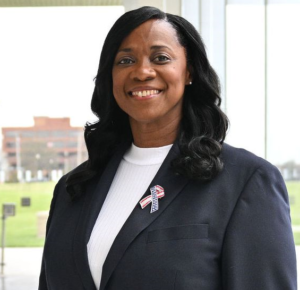
Hogg decided not to run again after he became embroiled in a controversy over his promise to run candidates against “ineffective” Democratic incumbents in Congress.
The vote for the new male vice chair was set to be held from June 12 to June 14, and then a vote for a second vice chair of any gender will be held from June 15 to June 17.
With Hogg bowing out, state Rep. Malcolm Kenyatta of Pennsylvania ran unopposed for the male vice chair role.
Three other candidates for DNC vice chair — Repass; Shasti Conrad, chair of Washington state Democratic Party; and Kalyn Free, a DNC committee member from Oklahoma — were seeking the second opening.
“I remain committed to the Kansas Democratic Party, first and foremost,” Repass said Saturday. “But red states like Kansas need representation at the DNC level.
“Nationally, states like ours don’t get the recognition and are treated very much like flyover states where we are here doing great things for Democrats,” she said.
Repass said the rules limited the candidates for the second vice chair position to those who were on the ballot from earlier this year.
Repass said she was not making this run for a DNC position a priority, calling it an extension of her earlier campaign for a leadership role.
“I am so laser focused on Kansas,” she said. “Basically, my name remains on the ballot.
“I have reached out to all the DNC members via email, but that’s the extent of it. If they choose to elect me, great. If they don’t, great.”
Child wellbeing
The overall wellbeing of Kansas children climbed five notches in national rankings in the new 2025 Kids Count Data Book released last week.
The new report, reflecting data from 2023, showed that Kansas ranked 14th for overall child wellbeing compared to 19th in 2024.
Further, the report – put out by the Annie E. Casey Foundation, showed that Kansas rose to fifth for economic wellbeing, up from 12th in 2024 and the highest it has been at any point since 2014.
The state, however, continues to lag behind more than half of other states in student success, with the percentage of below-average math and reading scores performing worse than nationwide totals.
The rate of fourth graders falling below NAEP-defined proficiency reading levels was 72% during 2024, while the rate of eighth graders falling below math proficiency levels was 74%.
Eleven percent of high school students did not graduate on time during 2021-22, according to the report.
Kansas Action for Children reported Kansas ranked 35th for reading proficiency for fourth-graders and 25th in math proficiency in for eighth-grade students.
“The 2023 data show that investments in families during the pandemic bolstered their economic security and other aspects of their kids’ well-being,” said John Wilson, president and CEO of Kansas Action for Children.
“Kansas could easily be one of the best states for parents to raise their children, if lawmakers prioritize policies that make it easier to raise a family in our state.”
In terms of economic wellbeing, the number of Kansas children living in poverty declined from 94,000 children in 2022 to 89,000 in 2023.
In 2023, the number Kansas kids living in households where no parent had full-time employment — defined as working for at least 35 hours per week for 50 weeks in a calendar year — dropped by 10,000 to 128,000 from 2022.
During 2023, the number of Kansas children living in a household with a high housing cost burden — defined as more than 30% of the family’s income — dropped to 146,000 from 156,000, according to the report.
Kansas’ ranking for health struggled, dropping from 19th in 2024 to 26th in 2025.
In 2023, 41,000, or about 6%, of Kansas children lacked health insurance, an increase from 38,000 in 2022.
Trump voting order struck down
A federal judge dealt another defeat for President Donald Trump’s efforts to require prospective voters to prove their citizenship when registering to vote.
U.S. District Judge Denise J. Casper of the U.S. District Court in Massachusetts last week blocked parts of an executive order that required proof of citizenship and required states to exclude any mail-in or absentee ballots received after Election Day.
Currently, 17 statesaccept mailed ballots received after Election Day as long they are postmarked on or before that date, according to the National Conference of State Legislatures.
Kansas just passed a law that eliminated a three-day grace period for mail ballots to arrive at election offices after Election Day. The Kansas law is now being challenged in state court.
“The constitution does not grant the president any specific powers over elections,” Casper wrote. “Rather, the constitution vests the President with ‘executive Power’ and commands him to ‘take Care that the Laws be faithfully executed.’
“The President ‘plays no direct role in the process’ of appointing electors, ‘nor does he have authority to control the state officials who do,’” the opinion said.
Last week’s ruling came about two months after a federal judge in the District of Columbia issued a similar ruling.
U.S. District Judge Colleen Kollar-Kotelly issued a preliminary injunction stopping the Election Assistance Commission from changing the federal voter registration form to require prospective voters to prove their citizenship with passports or other documents.
The ruling also prevented federal agencies from implementing another part of the order that directs them to ascertain whether someone receiving public assistance is a citizen before giving them a voter registration form.
“The President has no constitutional power over election regulation that would support this unilateral exercise of authority. The Constitution vests that power in the States and Congress alone,” Kollar-Kotelly ruled.
She found that the president’s power was “at its lowest ebb” in that case because his unilateral instruction to add a documentary-proof-of-citizenship requirement to the federal registration form was contrary to laws enacted by Congress in 1993 and 2002.
Tuition increases
The Kansas Board of Regents last week approved tuition increases at five of six state universities, ranging from 2.5% to 4% for resident undergraduate students.
“The Regents’ strategic plan emphasizes affordability for Kansas families and success for students in our institutions,” said board chair Carl Ice.
“These tuition rates balance those priorities by keeping costs as low as possible while ensuring that state universities can continue to help students succeed in the classroom and in their careers after graduation.”
Here’s the breakdown for the tuition increases for resident undergraduate students per semester:
Fort Hays State: 4%, $94.05 per semester
Kansas State: 3.5%, $179.25 per semester
Wichita State: 3.5%, $131.76 per semester
University of Kansas: 3%, $165 per semester
KU Medical Center: 3%, $168 per semester
Pittsburg State: 2.5%, $78 per semester
Emporia State: None
Here is our roundup of the tuition and fee increases for all the schools plus a more detailed analysis of the increases from the Board of Regents after they were approved last week.
Food assistance & snacks
U.S. Secretary of Agriculture Brooke L. Rollins last week signed waivers that will prevent food-assistance benefits from being used to purchase soda and candy in three states.
Rollins signed the waivers for Arkansas, Idaho and Utah on the heels of signing similar requests from Nebraska, Iowa and Indiana.
The waivers are similar to one Kansas submitted after lawmakers tied it to the release $1.8 million for the SUN Bucks program, which helps families buy food for their school-age children during the summer.
Arkansas’ waiver excludes soda, low and no-calorie soda, fruit and vegetable drinks with less than 50% natural juice, other unhealthy drinks, and candy. It starts July 1, 2026.
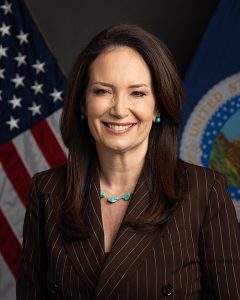
The waiver for Idaho excludes soda and candy, and it will start Jan. 1. The waiver for Utah excludes soft drinks, and it will start Jan. 1.
“The Trump administration is unified in improving the health of our nation,” Rollins said.
“America’s governors have proudly answered the call to innovate by improving nutrition programs, ensuring better choices while respecting the generosity of the American taxpayer,” Rolllins said.
“Each waiver submitted by the states and signed is yet another step closer to fulfilling President Trump’s promise to make America healthy again.”
Earlier this year, the Kansas Legislature wrote language into the state budget requiring the Kelly administration to seek the waiver to secure the money for the summer EBT program.
Kelly had opposed the waiver, saying she thought it would be more difficult for Kansas families and would harm Kansas businesses.
“The waiver is also confusing and nonsensical — and changes to the SNAP food assistance program should be made at the federal level, not on a patchwork, state-by-state basis,” Kelly said in a statement.
But she added, “due to our commitment to keeping Kansas kids fed, we re-submitted the waiver in order to unlock crucial funding that supports programs hungry children desperately need.”
Abortion reversal
A curious case out of California related to abortion-pill reversal treatments.
Courthouse News Service reported that a federal judge last week ruled that Culture of Life Family Services in Escondido, California can proceed with its claim that the state is unconstitutionally targeting groups promoting the procedure.
The news service reports that the case is among the first federal lawsuits contesting restrictions on abortion pill reversal claims.
The treatment calls for administering the drug progesterone after a patient takes mifepristone in an effort to stop the abortion process and preserve the pregnancy.
The judge “sided with the Catholic health clinic on that point — for now — writing that it had ‘sufficiently alleged that the APR statements constitute protectible noncommercial speech,” according to the news report.
“He added that it would be premature to weigh scientific evidence at this early stage.”
The California litigation began in 2024 when California Attorney General Rob Bonta sued Heartbeat International and RealOptions Obria for reportedly making false claims about the safety and effectiveness of abortion pill reversal.
Bonta said there was “no credible scientific backing” the procedure and had potential risks for patients.
The Kansas Legislature passed a law in 2023 requiring physicians to notify women that their drug-induced abortion can be reversed.
A state judge has temporarily blocked that law, ruling that it would violate the state constitutional right to bodily autonomy and the abortion providers’ right to free speech under the state constitution as well.