







Nine people – most of them generally unknown to the voting masses in Kansas – will convene this week in one of the most important meetings in state government this year.
They will screen candidates for an open seat on the Kansas Supreme Court, working under a more intense spotlight than usual.
The committee will pick three out of 15 candidates to send to the governor, who will choose one to replace retiring Justice Evelyn Wilson.
While the work of the committee has been watched by the legal community over the years, this year’s meeting is magnified more than usual with a constitutional amendment overhauling the selection process looming in the wings.
Next year, Kansas voters will decide whether to abolish the current process for picking Supreme Court justices – used for nearly 70 years – in favor of electing justices.
It will be a culmination of many years of debate that was heightened after the Kansas Supreme Court found a state constitutional right to an abortion in 2019.
If approved, a committee made up of five lawyers elected by their peers and four nonlawyers appointed by the governor would be wiped away in favor of elections.
If no other Supreme Court justice retires between now and the time elections would start in 2028, this could be the last time the committee meets to help pick justices.
The process that will play out this week will be watched closely by many in political circles with the campaign over electing justices a little more than a year away.
In some ways, it offers a test for the public – as much or as little as it pays attention to these matters – to get a better view of how selecting justices in Kansas works.
“As we watch the judicial nominating process, this particular time will provide important information to the citizens of Kansas who will vote on this system next year,” said Brittany Jones, director of policy and engagement for Kansas Family Voice.
Kansas Family Voice, a Christ-centered organization, opposes the current process for selecting justices, saying it’s controlled by lawyers with liberal inclinations and has led to decisions on abortion and education that it says are out of step with Kansans.
Nevertheless, the commission has ardent supporters in the legal community who not only say this is the best way to pick the best justices but that the panel making those decisions is well qualified to make those decisions.
“I am sure that the people who are in favor of (the amendment) are going to scrutinize those three names very carefully,” said trial lawyer Tim O’Brien of Overland Park.
“I’m sure there’s going to be some politicalization of this whole process, but I don’t think that…it’s going to make a difference in what the commission does and…I don’t think it will be very effective,” O’Brien said in an interview.
“Everybody is going to disagree about who the top candidates are, but, I think, as a general rule people are going to look at the list of three and say, ‘Yeah, I can’t really argue with that,'” O’Brien said.
Gloria Farha Flentje, chair of the Supreme Court Nominating Commission, set aside questions about whether the panel would be under any more pressure this week than at any time in the past when recommending justices for the court.
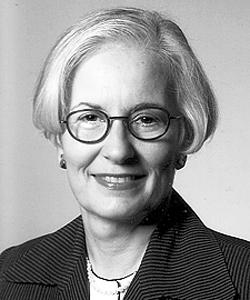
“The Supreme Court Nominating Commission is committed to the selection process detailed in the Kansas Constitution and is focused on selecting the three most qualified individuals from the 15 applicants for the Supreme Court vacancy,” Flentje said in a statement responding to a reporter’s question.
“We are proud that this process has provided very qualified candidates in the past and are committed to doing the same,” she said in an email.
There are others who don’t necessarily see it that way. They believe that the amendment will have some influence on how the commission approaches the selection process.
“I would expect the nominating committee to be cognizant of the upcoming vote on judicial selection,” said Republican state Rep. Bob Lewis of Garden City, a lawyer and a member of the House Judiciary Committee who supports the amendment.
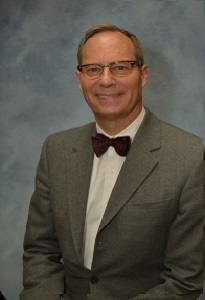
“They will seek to therefore protect the prerogative of lawyers and politically connected individuals who make up the committee,” Lewis said.
“They’ll do that by striving to nominate those who appear to be apolitical and moderate, which has not been the case in recent years,” he said.
O’Brien and other trial lawyers put their trust in the commission to make the best decisions. They don’t believe the looming constitutional amendment will influence the commission’s decision.
“I have a lot of confidence in the nominating commission,” O’Brien said. “I don’t think the nominating commission is going to change its focus on selecting the best three individuals to send to the governor.”
Democratic state Rep. Dan Osman of Overland Park is a lawyer who is the ranking member on the House Judiciary Committee.
“I’d like to believe that the nominating committee will do what they’ve done over the last 70 years…and just nominate the best people for the job,” Osman said.
“I don’t think that’s going to change because all of this is hanging in the air,” he said.
But he worries about the possibility that politics could still be injected into the selection process in a campaign down the road.
“I’m afraid that’s exactly what’s going to happen regardless who is ultimately selected,” Osman said.
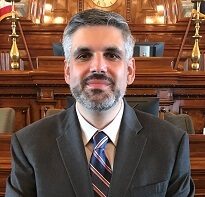
“I’m afraid that they’re going to be bringing politics into this nomination,” he said. “But that is not the way the system is designed, and that’s not the way that it should be.”
There was already small flare-up in the process when Jefferson County attorney Josh Ney filed legislation this year that would make most of the Supreme Court Nominating Commission records open to the public.
He filed the bill after the Supreme Court clerk would not release the names of candidates for the nominating commission until after the filing deadline.
Ney unsuccessfully ran for chair of the commission, although he supports the amendment moving the state to elections for Supreme Court justices.
“From a political standpoint, I think it’s an incredible moment in Kansas history for us to get to shine a light on a process that most Kansans don’t know about or don’t understand,” Ney said in an interview.
“To the extent there’s additional scrutiny on how they approach this particular vacancy and the questions they ask (of candidates), I think that’s a good thing,” he said.
“I think Kansans need to decide for themselves how they want their Supreme Court to be picked,” he said. “I think that the nominating commission has an uphill task to prove that this system works.”
Kansas political strategist David Kensinger was the chief of staff for former Gov. Sam Brownback, who tried unsuccessfully to get the Legislature to adopt a model where the Senate would confirm the governor’s appointments to the state Supreme Court.
At that point in time about a decade or so ago, the Legislature didn’t consider electing Supreme Court justices, but now elections are viewed as popular with voters.
Brownback succeeded in getting that approach adopted for the Kansas Court of Appeals but could never get the two-thirds vote required to pass a constitutional amendment that would have moved away from the nominating committee.
Kensinger said the nominating commission would be best served moving through the process as “quickly” and “quietly” as possible.
While the committee’s recommendations may be magnified in the context of the amendment election, Kensinger said it’s not so much about the individual candidates.
“If you come up with a judge who happens to be well outside the mainstream, that reinforces the argument” against the nominating commission, Kensinger said.
The issue, he said, is bigger than any one candidate or any one case.
“The more discussion we have about how the current process actually functions, the better it’s going to be for the advocates of reform,” he said.
“If anything goes sideways, that serves as a further indictment of the current process,” he said.