






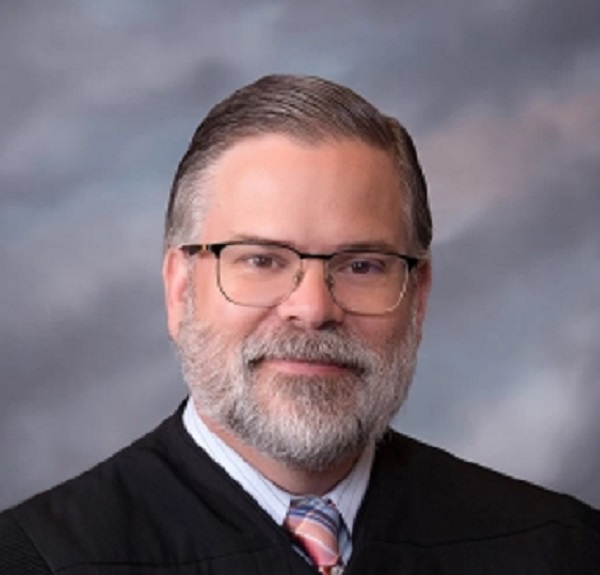
Supreme Court Justice Caleb Stegall has ended his teaching relationship with the University of Kansas School of Law in the aftermath of a controversy over a speaker who the student chapter of the Federalist Society brought to campus.
In a six-page letter sent to the law school dean, Stegall said he would not renew his teaching relationship with the school after a blowup over the Federalist Society’s announcement it would host an attorney from an organization viewed by some as a “hate group.”
The group hosted a lunchtime event Oct. 20 with Jordan Lorence, attorney and director of strategic engagement for Alliance Defending Freedom, which advocates for religious liberties but has been criticized for being hostile to LGBTQ rights.
A student who attended the event said Lorence discussed religious liberty in the context of a recent U.S. Supreme Court case involving a high school football coach who wanted to pray on the 50-yard line of the football field after games.
Despite protests to cancel the event, it was still held inside Green Hall while other students gathered outside the law school at the same time for an event celebrating the LGBTQ community.
Stegall said in the letter that he feared that KU administrators discouraged Federal Society students from holding the event, which ran counter to training lawyers to consider issues from different perspectives even if they’re the minority viewpoint.
“Educated citizens,” he wrote, “have a minimum obligation to listen to opposing viewpoints and engage in reasoned dialogue.”
The justice said no one emerged “unsullied” from the handling of the controversy. He called it an “institutional failure.”
KU Law School Dean Stephen Mazza declined to comment. A university spokesperson said the dean has responded to Stegall’s letter. The response was not made available.
“The university takes pride in its role as a marketplace of ideas, and we strive to provide opportunities for various perspectives to be debated and discussed within our community,” KU spokesperson Erinn Barcomb-Peterson said in an email.
The events arising from the speaker’s campus appearance raised concerns with Stegall about whether opposing views – even those that might be unpopular – are being heard within an institution that trains lawyers to hear out dissenting opinions.
“KU Law is not serving its students well nor is it preparing them to take their place as lawyers in the great conversation (or in Kansas courtroooms) when it engages in bullying and censoring tactics, fosters a spirit of fear, drives dissent into a guerrilla posture, and gives institutional backing and support to overwrought grievances which can and do cripple a persons’ ability to critically engage with ideas or people with whom they disagree.”‘
For his part, Stegall, appointed to the bench by former Gov. Sam Brownback, said in his letter that he would not publicly comment on the correspondence.
In the letter, Stegall said an associate dean and a law professor “pressured” the Federalist Society students to cancel the event, a point the university says is inaccurate.
“The administration representatives warned student leaders that they needed to consider the impact the event could have on them,” Stegall said in his letter.
“The students were told that even though it was their right to host the speaker, they needed to be warned about the impact of their choices,” he wrote.
“The student leaders were told several times to consider what this would do to their reputation,” his letter said.
Stegall said in his letter that – knowing the people involved – he didn’t believe there was an intent to threaten or coerce the Federalist Society students.
He even conceded it might have been an “ill-advised” attempt to protect the students.
“After all, it is true that in the current environment, being willing to swim upstream may in fact harm a person’s reputation and even standing in the legal community,” he wrote.
“But isn’t that the problem? Rather than acquiescing to this, my hope and expectation is that leaders in the legal community would instead help protect the reputations of students willing to engage in difficult decisions – and guide them in the process.
“Without that support, it took great courage for the students to carry on.”
Stegall also commented on an email from the law school’s Diversity, Equity, Inclusion and Belonging Committee that labeled the speaker as a “practitioner of hate speech.”
The email, he wrote, said the law school would allow the Federal Society event to continue since KU was bound by the First Amendment.
“The email, by implication, accused the student leaders of the KU Law Federalist Society of facilitating hate speech,” he wrote.
“Worse, the email made it very clear that the principles of free and open dialogue are only acquiesced to as a legal obligation at KU Law. They are not celebrated, cherished, or valued,” he wrote.
Stegall said criticisms and concerns over the handling of the event was unrelated to the speaker, his institutional affiliation or the organization in general.
Stegall said no one emerged from the controversy looking good.
He acknowledged that the Federalist Society had been accused of not following the proper procedures for inviting the speaker and that the event might have been an “ambush.”
“I find that plausible given what is clearly a closed and stifling culture of discourse at KU Law,” he wrote.
“Certainly nothing that transpired suggests that KU Law would have welcomed a discussion or debate with this speaker if the chapter had only followed proper procedure.
“Of course, that doesn’t justify a failure on the part of the Federalist Society chapter to be fully considerate of others. Two wrongs never a right make.
“The point is that the behavior on both sides indicates an institutional failure.”
Stegall said KU Law “owes its students (all of them, not just those in the Federalist Society chapter) and the future of the rule of law in Kansas better.
“And it is possible to course correct. But until that time, I can’t continue to provide tacit support to the current direction through my teaching affiliation.
“Not when that direction so clearly threatens the basic pillars of our profession and not when the duty to ensure the great conversation continues is so clearly ours to shoulder.”
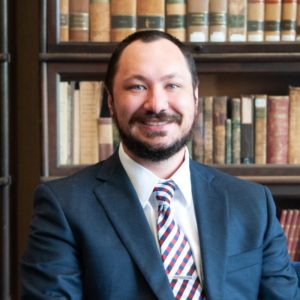
KU law student Josh Sipp, editor of the Kansas Journal of Law & Public Policy, was among those who called on the Federalist Society not to hold the event.
Sipp, a second-year law student, was not aware of Stegall’s decision not to teach at KU.
“Obviously, I respect his decision,” Sipp said. “I still feel like KU is an open and diverse community willing to engage in any type of discussion.”
He said that’s demonstrated by the fact that Federal Society event continued.
He said diverse viewpoints were still recognized whether it was the outdoor event to recognize the LGBTQ community or the speaker in the classroom.
“The university did nothing to stop that from continuing,” Sipp said.
“While student leaders may have called for it to not happen or they may have preferred something else to have happened, the university never stepped in to stop it.”
The head of the student chapter of the Federalist Society at KU did not respond to requests for comment.
This is not the first time Stegall has spoken out on issues in the public arena.
Two years ago, Stegall took the extraordinary step of defending Gov. Laura Kelly’s appeals court nominee, Carl Folsom III, from criticism for his legal defense work as a federal public defender.
The Senate had rejected Folsom’s nomination because of his focus on defense work of people who are not the most popular – criminal defendants.
Stegall said it was unfair to criticize Folsom for representing criminal defendants. He sounded a similar theme in that case as well.
“At a time when different segments of society seem less and less inclined to give a fair hearing to voices, ideas and people they disagree with, it strikes me as imperative that we reacquaint ourselves with the majestic principles that serve as pillars of justice delivered under the rule of law,” he wrote at the time.
“Those principles include the idea that in a court of law, every person must be fully heard; that in criminal cases, their cause must be represented by competent and trained counsel; that everyone is equal before the bar of justice and no one, no matter how despised they may be by society, is prejudged or presumed guilty.
The ADF has had a presence in Kansas, most recently in a case in Geary County where it helped challenged a Kansas school district policy that barred teachers from revealing to parents that a student has requested to be referred to by a name or pronoun “inconsistent with their biological sex.”
The lawsuit was brought on behalf of a former teacher punished for violating a policy requiring teachers to use the preferred names and pronouns of transgender students. The school district ultimately paid the teacher $95,000 for damages and attorney’s fees.
The ADF also brought a lawsuit against Gov. Kelly over her executive order limiting mass gatherings at church services in an effort to slow the spread of the coronavirus.
The ADF represented two churches asking a judge to block the state from enforcing the executive order and declare it unconstitutional.
Four years ago, Newsweek profiled the organization, comparing it to a conservative variation of the American Civil Liberties Union, a point that some hotly debate.
The magazine reported the organization had a network of 3,200 attorneys nationally and $48 million in funding.
Sipp, the law student, said the Federalist Society could have brought many other people in to discuss the issues he talked about at KU.
“The Federalist Society knew this could be inflammatory,” he said.
“They knew they had other people who could have spoken on this topic, and they still chose to bring in this specific person.”