






The Kansas Supreme Court on Wednesday explored the digital world of dragons where justices face a key legal question: Is slaying the mythological creature skill or luck?
The court took up a not-so-fantasy case that dates back to 2019 when a subsidiary of a Georgia-based software company introduced the game Dragon’s Ascent in bars and other establishments across Kansas.
The Kansas subsidiary of Pace-O-Matic, based in Duluth, Georgia, has been trying for years without success to clarify with certainty that the machine complies with the state’s gambling statute that limits games of chance to casinos.
The game was introduced here in 2019 and there are about 200 across Kansas now.
But company officials said some retail outlets are refusing to allow the games because of legal uncertainty and threat of prosecution.
Company officials have been asking state regulators to determine whether the game is based on skill and legal under Kansas gambling laws.
The company says there is no formal process for getting its game reviewed to determine if it’s based on skill or chance. 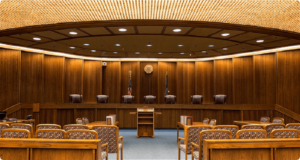
If it’s a game of chance, it would not be allowed under state law. Games of chance are only allowed in the state’s four casinos.
“When confronted with sufficient uncertainty over state and local agencies reserving
the right to enforce laws and ordinances against business activities, impacted businesses
are entitled to seek declaratory relief,” the company argued in its brief.
The company has gone to court seeking a declaratory judgment to decide whether the machines are games of chance or skill.
However, a lower court ruled against the company because the state had not ruled on the issue and a judge concluded there wasn’t a controversy that needed settled.
“We’ve been working for years trying to get some sort of definitive answer from the state on that and this is the avenue we have to prove that we have a legal product,” said Michael Barley, chief public affairs officer for Pace-O-Matic.
The state argues there’s no dispute that needs to be decided and “no adversarial process” to test the company’s claims.
The state says that the company is essentially asking the court for an advisory opinion that is prohibited under law.
The attorney general says he’s not threatening to prosecute a case involving the game or seize any of the devices.
Further, the attorney general says his office hasn’t issued an order to bring the games to a halt, according to court filings.
And the general counsel for the Kansas Racing and Gaming Commission has said in an affidavit that the agency has not completed any investigation as to whether Dragon’s Ascent is a game of chance or skill.
The commission’s lawyer said there is no opinion about whether Dragon’s Ascent violates state law, although Pace-O-Matic’s lawyers said the agency has subtly suggested otherwise.
Meanwhile, three of the state’s four casinos – Boot Hill, the Kansas Star and Hollywood Casino – have filed a separate lawsuit in Shawnee County claiming that Dragon’s Ascent is an illegal gambling machine that infringes on the legal gaming market in Kansas.
They say Dragon’s Acent is a game of chance.
The company says Dragon’s Ascent is a game of skill and is legal under Kansas law.
The player’s objective is to shoot virtual dragons flying across a screen in “pre-set, repeated and fixed sequences” by firing from a gun turret. Shooting the dragons results in prizes that can be redeemed for cash.
“A patient and skilled player learns the sequence, captures more valuable dragons and earns larger rewards,” the company’s lawyers told the Supreme Court in its brief.
“Dragon’s Ascent was specifically designed to have ‘no chance elements,'” the lawyers told the Supreme Court.
However, in court filings, the company said state regulators have already signaled that they think the game might involve more chance than skill even if they haven’t rendered a decision about whether it’s legal.
In August 2020, the executive director of the Racing and Gaming Commission sent a letter to the Kansas Sheriff’s Association and others declining to issue an opinion on the game but still suggested there might be legal issues, according to a court filing.
The executive director, Don Brownlee, said that several agency staffers played the game and believed that it involved some skill, but “contained too many non-skill features to allow mastery of the game.”
Brownlee said one law enforcement agent played the game and placed a heavy can on the joy stick, which allowed continuous firing.
The agent beat all of the staff members attempting to win with skill.
The lawyer for Pace-O-Matic, Tom Hamilton, told the Supreme Court on Wednesday that the executive director’s letter was an “artfully worded way” of saying the game was illegal.
Hamilton told that court that while the Kansas Racing and Gaming Commission was willing to voice its opinion about the legality of the game to law enforcement, it would not share its views with Pace-O-Matic.
The company also believes that agents from the state’s Division of Alcohol Beverage Control have told certain local bars not to allow customers to play Dragon’s Ascent unless the state determines it’s legal.
The company also said in its brief that Kansas bars and drinking establishments have refused to place Dragon’s Ascent in their business, fearing they would be criminally prosecuted. As a result, the company says it’s lost money because of state inaction.
Justice Dan Biles questioned whether Pace-O-Matic had standing to bring the case to court if the attorney general hasn’t shown an interest in enforcing the state law against the dragon game in question.
“If the A.G. doesn’t want to pursue this, then you still don’t have any ability to be here,” Biles told the attorney for the gaming company.
Hamilton turned back to the August 2020 letter from the executive director of the Kansas Racing and Gaming Commission.
“That’s the KRGC in its authority telling law enforcement throughout Kansas that your game is illegal,” Hamilton said.
But Justice K.J. Wall noted that the August 2020 letter said the agency was not taking a position on the legality of the machines.
Wall said someone might be able to read between the lines to understand the mindset of the regulators, but there was still not an official opinion saying the game was illegal.
But Hamilton said that letter from the commission’s executive director has confused law enforcement about whether the game was legal.
Wall asked the state’s lawyer, Deputy Solicitor General Dwight Carswell, whether state regulators had put Pace-O-Matic in a type of purgatory by sending mixed messages.
“Can you just keep a party in this sort of no-person’s territory forever?” Wall asked.
Carswell said there wasn’t a conflicting message. He said the 2020 letter from the commission’s executive director did not take a position on the legality of the game.
“At the end of the day, you read the letter it says, ‘We have no opinion on this,'” Carswell said.
Dragon’s Ascent surfaced as an issued in Wichita last year when the city considered an ordinance intended to get tough on illegal gaming machines.
Hamilton appeared before the City Council where he described Dragon’s Ascent as a game of skill.
He told the council that state regulators hadn’t ruled on the legality of the machines and invited officials to vet the game.
The city passed a law addressing illegal gambling machines but carved out an exception for games of skill. Dragon’s Ascent is now in businesses in Wichita.
Questions have arisen in other states about whether games like Dragon’s Ascent that were manufactured by Pace-O-Matic are a game of skill.
Last November, the Commonwealth Court of Pennsylvania – that state’s intermediate appeals court – found that Pace-O-Matic’s machines were not slot machines as
commonly defined and were legal under state law.
The Pennsylvania Attorney General Michelle Henry has appealed the ruling to the Pennsylvania Supreme Court, arguing against the machines.
The attorney general said the appeals court’s decision will have sweeping effects in
Pennsylvania, where thousands of the machines will proliferate across the state,
in bars, in convenience stores, and even in casino-style gambling halls — “all without
any special licensing, regulation, or taxation.”
“Under the lower court’s ruling that these slot machines are not slot machines, they could be placed anywhere at all, even in middle school cafeterias.”