




A nonprofit group of Johnson County neighbors are fighting back against efforts to force them to disclose where they get their funding while questioning the legal credentials of the ethics commission’s executive director.
Fresh Vision OP filed a petition Wednesday, asking the state ethics commission to dismiss a finding that it needs to file a campaign finance report because it falls within the purview of a political action committee.
The group is incorporated as a social welfare group under 501(c)(4) of the federal tax code, meaning that it’s exempt from disclosing its donors and expenses under federal campaign finance law but not necessarily under state campaign finance law.
State law requires an organization to register as a PAC regardless of its tax status if its major purpose is to spend or contribute money for the nomination, election or defeat of a clearly identified candidate for state or local office.
A complaint was brought against the group after it urged voters last year to vote for Overland Park City Councilman Faris Farassati for mayor.
The commission found that Fresh Vision came under the state campaign finance law because in two instances – on a mailer and on its website – it expressly endorsed Farassati’s candidacy for mayor during the 2021 primary for Overland Park mayor.
The commission tabled the case last week to give the group 30 days to register with the secretary of state and file a campaign finance report.
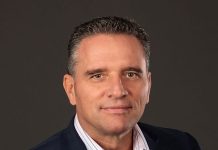
The group, however, wants the case dismissed or a new hearing partly based on the executive director of the ethics commission not disclosing that his law license was suspended when he was identified during the hearing as a “licensed attorney.”
During last week’s hearing on the complaint, the commission did not swear in Mark Skoglund – the chief witness in the case – because he was an attorney.
At one point during the hearing, Fresh Vision’s treasurer, Chengny Thao, questioned whether Skoglund was licensed to practice law.
Commissioner John Solbach, acting as the presiding officer, said Skoglund was a licensed attorney who was answerable to the judicial disciplinary administrator.
The group notes in its petition that Skoglund’s law license had been suspended since 2015.
A law license is not required for the position and Carol Williams, the former longtime executive director of the commission, was not a licensed attorney.
Skoglund has been the executive director of the ethics commission since 2017 after working as a principal fiscal analyst for the Legislative Research Department.
He previously practiced law at the Sanders Warren & Russell law firm in the Kansas City area. He has a law degree from the University of Michigan and a bachelor’s degree in political science from the University of Kansas.
Skoglund said he chose not to maintain the license because he wasn’t using it and the license is expensive to maintain.
He declined comment about the exchanges during the ethics hearing because it’s an ongoing case.
The petition says Skoglund was obligated to reveal the status of his law license when questions about whether he was a licensed attorney were raised during the hearing.
“Skoglund’s failure to disclose or otherwise affirmatively correct the record…when introduced as an ‘attorney’ and later as a ‘licensed attorney’ by the presiding officer deprived respondents of their opportunity to effectively cross-examine Skoglund to develop issues, identify issues, for a later hearing,” the petition says.
The petition further argues that Skoglund’s investigation of Fresh Vision did not produce clear and convincing evidence that a major purpose of the group was to expressly advocate for the election or defeat of a candidate for state and local office.
The complaint says Skoglund did not investigate Fresh Vision’s activities to sufficiently conclude whether the expressed advocacy in one mailer and a statement on the group’s constituted a major purposed of the organization.
“In short, the complainants’ entire case and chief missed the forest of issue activity and community engagement for the tree of an isolated endorsement mailer,” he said.
Thao and the group’s president, James Muir, appeared before the commission in a hearing held on Zoom.
They both said the group was made up of neighbors whose major purpose was advocating for their community, not any particular candidate.
They opposed tolling on U.S. 69, new development at Overland Park’s arboretum and the use of rocky, oily material called chip seal that the city uses to preserve streets.
“Our major purpose – and almost exclusive purpose – is the social welfare of the neighborhoods and communities around which we live,” Muir told the commission.
“It is not to support a political candidate.”
Thao echoed a similar view.
“We are a bunch of neighbors just banding together to push forward on some of the social causes that we see that are impacting our neighborhoods,” she said.
Thao and Muir said they believed that the organization spent perhaps less than 15% of its time backing candidates for public office.
They couldn’t document how the group divided up their time, but said that would be very difficult given that the group does a lot of its work interacting with neighbors.
“Most of the work we do is face-to-face talking with people that are members of our community. It’s hard to give you any physical evidence of that,” Muir said.
Muir said the group raised a couple thousand dollars for its efforts.
Ethics officials said that while they didn’t know how much the mailers cost, they believe it was a substantial amount of what Muir said was raised.