
Gov. Laura Kelly’s administration is urging the federal government to take a cautious approach with an ambitious and controversial plan to conserve 30% of U.S. land and water by 2030.
Testifying before a special legislative committee exploring the implications of the Biden administration’s “30 by 30” plan, Wildlife Secretary Brad Loveless said federal officials should take steps to allay concerns that the plan is a “land grab.”
Biden issued an executive order in January creating what became known as the 30 by 30 plan, but there is still uncertainty about how its goals will be accomplished and what effect, if any, it would have on Kansas property owners.
The plan – with so many unknowns – has stirred fears that the government wants to take private property as part of its efforts to protect natural resources and endangered species.
The Legislature agreed to create a special joint committee to examine the 30 by 30 plan and what it means for Kansas.

During a daylong hearing Wednesday, agriculture interests expressed the need for more specifics about the plan, a point that Loveless also emphasized during his testimony.
“This proclamation came out…but there wasn’t any flesh on the bones, there weren’t any details,” Loveless told lawmakers.
“So in that vacuum a lot of ideas have emerged,” he said.
“Because of speculation about what 30 by 30 might be, we advised the Fish and Wildlife Service to clearly say what it’s not because they knew what they didn’t intend, but they didn’t say that,” he said
Kansas is urging the federal government to collaborate with the states on the issue and to more clearly define the purpose and intent of the program, he said.
The federal government, he said, stumbled early from a public relations point of view by saying it wanted to “protect” land instead of “conserve” land, potentially alienating some constituencies who fear more government restrictions.
Loveless said the government needs to specifically state that eminent domain won’t be used to take private land for conservation, or that every county won’t be required to set aside 30% of its land and water for conservation.
“Eminent domain isn’t even on their horizon as far as how to move this program forward,” Loveless said.
“We said, ‘Make sure you point out that you don’t intend to use eminent domain,’ which they told us they never even anticipated.
“We said, ‘You need to say that,'” he said.
He also said that the federal government needs to make clear that any lands included in the 30 by 30 program are done voluntarily and they are not subject to any new federal regulations.
“Any efforts under 30 by 30 should be encouraged through voluntary, incentive-based approaches that foster and support good stewardship and partnerships with private landowners,” he said.
“That’s what we’ve said over and over again.”
In a separate statement, Loveless emphasized the need for working with agriculture in land conservation.
“The 30 by 30 campaign is an opportunity for us to evaluate the potential of privately-owned lands and come up with mutually-beneficial solutions that increase the land’s overall conservation benefit, while supporting our farmers and ranchers,” he said.
The is the second major environmental issue where the Kelly administration had distanced itself from the Biden administration with her reelection drawing closer.
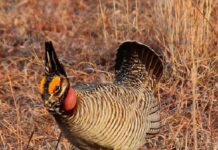
Last September, Loveless urged the federal government not to impose new protections for the lesser prairie chicken, saying the states are in the best position to protect the bird’s habitat.
He echoed a similar sentiment about land conversation.
“What we’re saying is if you want to do good conservation – if you really want to make a difference in terms of conserving species and improving environmental health – you need to be able to work with us and private landowners here in Kansas with things that are voluntary and incentivized.”
The lack of specificity in the plan is causing angst among farmers who are not sure what to believe what the new conservation plan means.
“There is a frustration within membership of Kansas Farm Bureau,” said Ryan Flickner, senior director of public policy for the Farm Bureau.
“We haven’t seen specifics. Yes, you have recommendations. Yes, you have principles. But as we all know, the devil’s in the details.
“Without details, I think that’s kind of maybe what got us here today and why we’re even having this hearing is because our mind wanders and we have questions.
“The constituents, quite frankly, they don’t know. Is it a true conspiracy? Is it made up? Is there something else that maybe this administration has against private landowners?
“Until we have hard and fast specifics, we need to ask this administration a lot of specific questions,” Flickner said.
However, Democratic state Rep. Sydney Carlin of Manhattan said she saw no indication that the government wanted to use eminent domain to take property to meet its conservation goals.
She praised President Joe Biden for wanting to address climate change and protect the environment.

“I didn’t find eminent domain anywhere in the information that was presented that was official,” Carlin said.
“I saw voluntary, voluntary, voluntary. I did not see eminent domain,” she said.
“If it’s not spoken in the documents, I don’t see why we’re so worried about it. If I thought it was going to happen, I would be right with you,” she said.
“I just don’t think that’s what it’s about,” she said. “I think it’s about trying to take care of the Earth.
“For President Biden to come out with this seven days after he was inaugurated…I think that’s a good thing.”
Aaron Popelka, lobbyist for the Kansas Livestock Association, urged lawmakers to carefully consider how they might respond to the 30 by 30 plan.
“While the 30 x 30 report, and ensuing federal actions, are a cause for concern, most of the battles to stop this overreach must be fought in the halls of Congress and in the courts,” Popelka said in written testimony to the committee.
“While there may be some things a state legislature can do,” he said, “Kansas policy makers should be careful in their attempt to fight this overreach to not take away conservation tools used by private citizens in the state.”