





A pair of Kansas senators have successfully challenged a provision in the Kansas Constitution that has been a hurdle over the years for the Legislature to ask Congress to call a convention of states.
U.S. District Judge Toby Crouse ruled in favor of Republican state Sens. Mike Thompson of Shawnee and Michael Murphy of Sylvia in their lawsuit contesting a provision in the Kansas Constitution that requires a two-thirds vote to call a convention of states to propose amendments to the U.S. Constitution.
Now, the Legislature would need just a simple majority to pass a resolution seeking a convention of states, a threshold the Legislature has easily crossed in the past but fell short of because of the two-thirds requirement in the state constitution.
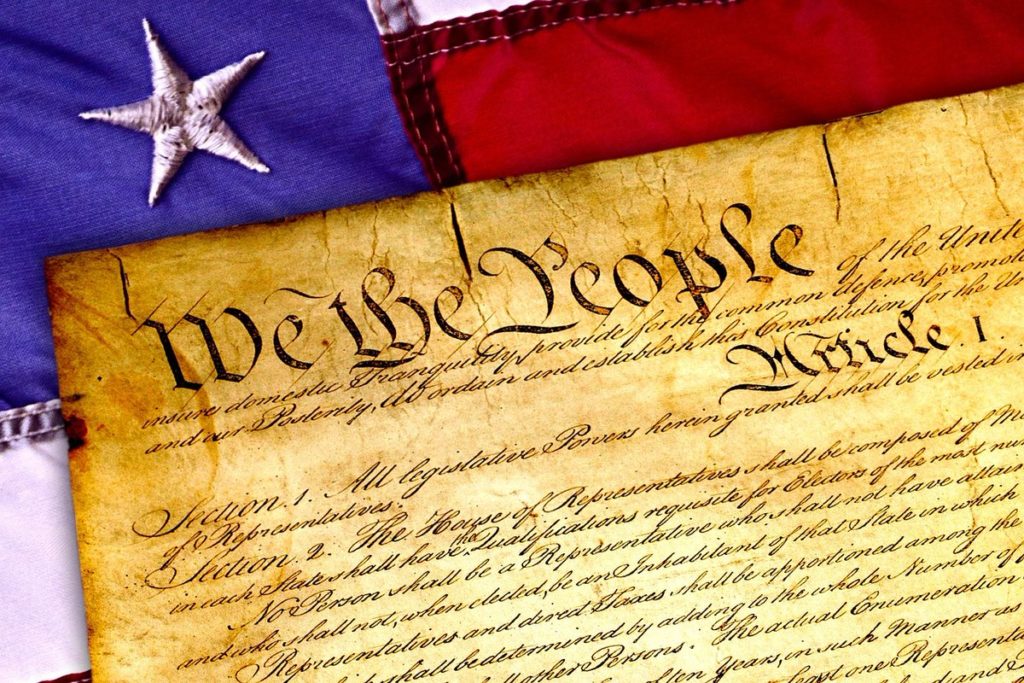
It’s a ruling that was seen as having national implications because it gives state legislatures broader authority to use their powers under Article 5 of the U.S. Constitution, which sets out how Congress and the states can amend the constitution.
“Today marks a major victory for Kansas and for our Constitution,” said Republican state Rep. Blake Carpenter, the speaker pro tem.
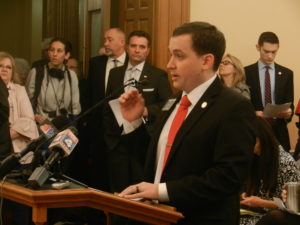
“A federal court ruled that the Kansas Constitution cannot override the authority granted to state legislatures under Article 5 of the U.S. Constitution,” he said.
“This decision simply restores the original balance our founders designed—where states, acting through their elected representatives, have a direct role in proposing reforms when Washington refuses to act,” he said.
The Kansas Legislature has tried multiple times since 2016 to pass a resolution calling for a convention of states under Article 5 of the U.S. Constitution, repeatedly coming up short of the two-thirds majority required by the Kansas Constitution.
The decision handed down by Crouse – appointed by President Donald Trump – means the Kansas Legislature will now only need a majority to pass a resolution calling for a convention of states under Article 5 of the U.S. Constitution.

“Any state attempt to limit or inhibit the legislature’s prerogative — whether by way of directing them how to vote, directing what action to take, or establishing a threshold for what constitutes legislative assent — trenches upon the federal power the framers conferred upon the state legislatures,” Crouse wrote.
The lawmakers sought a declaratory judgment that Article 2, Section 13 of the Kansas Constitution ran afoul of the U.S Constitution.
“I think it was a conflict that needed resolved,” Thompson said in an interview.
“It has resulted in improper votes in applying for an Article 5 convention in multiple legislative sessions,” Thompson said.
“This hopefully paves the way to us being able to apply for an Article 5 convention.”

Convention of States Action, a nonprofit organization that advocates for a convention of states as provided for in Article 5 of the Constitution, said the federal ruling in Kansas was significant nationally.
“This is a great day for everyone who understands how desperately our nation needs the state legislatures to act to rein in D.C,” said Convention of States Action co-founder and President Mark Meckler.
“The decision also puts to bed conspiracy theorists’ claims that the Article 5 convention process is some big mystery, and that courts can’t intervene when needed.”
Meckler said a convention of states has “had consistent, overwhelming support from the people of Kansas and the Kansas Legislature.
“In prior years, we’ve passed both the Senate and the House with well more than a majority of votes,” he said.
Earlier this year, the Kansas Senate voted 29-11 for a resolution calling for a convention of states that would be limited to proposing amendments to the U.S. Constitution that impose fiscal restraints on the federal government, limit the power and jurisdiction of the federal government and limit the terms of members of Congress.
The resolution is still alive for the upcoming legislative session when the House would only need a majority to pass the amendment under the court opinion issued Wednesday.
Senate President Ty Masterson, who was a defendant in the lawsuit, said the opinion will mean passage of a convention of states resolution in the Legislature.
“I have always maintained that the supermajority provision in the Kansas Constitution is inconsistent with the power Article V gives state legislatures,” Masterson said.
“I am grateful the federal district court agrees. I have long championed the Convention of States and this will help ensure passage,” he said in a statement.
There have been some persisting questions over whether Kansas could require a two-thirds majority as spelled out in the state constitution, and state lawmakers have anticipated for some time that litigation would be filed challenging the two-thirds threshold.
In 1974, Kansans voted to amend the constitution to require two-thirds of the Legislature to ratify any amendment to the U.S. Constitution or to ask for a constitutional convention.
But a 2019 opinion issued by then-Attorney General Derek Schmidt noted that Article 5 of the U.S. Constitution did not explicitly authorize or forbid a state from adopting specific requirements for ratifying a constitutional amendment.
Since no federal constitutional convention has been held since 1787, there were no cases that directly addressed whether states can impose voting requirements on a legislature’s decision to apply for Congress to call a convention of states, the attorney general wrote.
The attorney general said that only one court had reviewed a state constitution’s supermajority requirement for ratification of a federal constitutional amendment.
That opinion addressed but did not rule on the constitutionality of the supermajority requirement imposed by the Illinois Constitution, noting only that each chamber of the legislature could decide whether to adopt the three-fifths requirement imposed by that state’s constitution.
The 2019 attorney general’s opinion suggested the constitutional provision requiring a two-thirds vote was essentially an expression of the will of the people of Kansas and isn’t binding, even though it’s in the state constitution.
“The effect of the supermajority requirement is merely precatory, or in other words an expression by the people of Kansas of their desire that the Legislature muster a two-thirds vote in each house to ratify federal constitutional amendments or apply for Congress to call a convention for proposing federal constitutional amendments,” the attorney general’s office wrote.
“The power to ratify amendments to the United States Constitution or apply for Congress to call a constitutional convention to consider amendments to the United States Constitution is a federal power granted to the Kansas Legislature by the federal constitution which cannot be constrained by the people of Kansas through the text of their state constitution,” the attorney general wrote in 2019.
Crouse’s ruling is based on a 1920 Supreme Court case where justices examined a provision of the Ohio Constitution that attempted to limit the state’s ratification power by taking it away from the legislature and turning it over to a popular vote.
The Supreme Court struck down the Ohio constitutional provision, holding that “ratification by a state of a constitutional amendment is not an act of legislation within the proper sense of the word,” and that “the power to ratify a proposed amendment to the federal Constitution has its source in the federal Constitution.”
The Supreme Court said that the act of ratification by the state derives its authority from the federal Constitution and, therefore, Ohio did not have the authority to impose a referendum requirement on the legislature’s ratification of amendments.
The court applied the Ohio case two years later when it rejected a lawsuit seeking to have women’s names stricken from the voter rolls because the Maryland Constitution denied women the right to vote.
The plaintiffs in the Maryland case argued that the 19th Amendment giving women the right to vote was not part of the federal Constitution because several states that ratified it had provisions in their constitutions that rendered those states’ ratifications invalid.
The Supreme Court rejected the argument, saying that “the function of a state Legislature in ratifying a proposed amendment to the federal Constitution, like the function of Congress in proposing the amendment, is a federal function derived from the federal Constitution.”
“In other words, any constraints imposed by the states’ constitutions affecting the Article V power were ineffective,” Crouse wrote.
At one point during the litigation, Kansas Democratic lawmakers tried to intervene in the case, arguing that the named defendants – the Senate president and the House speaker -would not defend their interests.
U.S. Magistrate Judge Gwynne E. Birzer denied the request from the Democrats, who contended that the two Republicans who brought the lawsuit colluded with the defendants who tried to fast-track the litigation and reach a decision quickly.
The Democrats noted that Hawkins and Masterson voted on the same side as Murphy and Thompson on resolutions considered by the Legislature to call for a convention of states.
Nevertheless, the judge found that there was no collusion between the plaintiffs and defendants.
She also found that the Democrats had the identical interest as the defendants in the case.
“The Court, at least at this stage of the litigation, does not have any compelling evidence before it to suggest counsel will not fulfill their duty and uphold their oath in this matter as they have promised to do,” Birzer wrote.
The Democrats objected to Birzer’s ruling, which Crouse upheld.
“The proposed intervenor defendants are adequately represented by the defendants,” Crouse wrote.
“And Article II, Section 13 of the Kansas Constitution seeks to restrict the power conferred by Article V of the United States Constitution.
“Accordingly, the proposed intervenor defendants’ objection is overruled.”