


House and Senate Democrats are continuing to battle to intervene in a legal challenge to part of the state constitution that has kept the Legislature from asking Congress to call for a convention of states.
Last month, a federal magistrate judge denied a request from the Democrats, who questioned whether Senate President Ty Masterson and House Speaker Dan Hawkins — the named defendants — would sufficiently defend their interests.
But the Democrats, including Senate Minority Leader Dinah Sykes, have lodged an objection to the ruling.
The lawmakers say the judge imposed a heavy burden in assessing whether they had presented “unquestionably persuasive evidence” that Attorney General Kris Kobach would not provide them adequate representation.
But the lawmakers say the bar is much lower.
They argued the test in the federal 10th Judicial Circuit is only whether they presented evidence suggesting inadequate representation, which they say they did, according to their court filing.
They say the magistrate judge’s error should be corrected by allowing them to intervene in the lawsuit. The lawmaker plaintiffs filed a two-page response opposing the objection.
The Democrats contend that the two Republicans who brought the lawsuit — Sen. Mike Thompson and Rep. Mike Murphy — colluded with the defendants to fast-track the litigation and reach a decision quickly in their favor.
The Democrats noted that Hawkins and Masterson voted on the same side as Murphy and Thompson in supporting resolutions considered by the Legislature to call for a convention of states.
“If defending this lawsuit becomes politically unpopular, or the defendants for any reason shift strategy and stop defending this lawsuit, allowing the plaintiffs to prevail, there would be no current party to take an appeal to the 10th Circuit,” the Democrats argued.
Nevertheless, the judge found that there was no collusion between the plaintiffs and defendants. She also found that the Democrats had the identical interest as the defendants in the case.
Hawkins and Masterson are represented by the attorney general’s lawyers, who have pledged to “robustly and completely” defend the constitution, Magistrate Judge Gwynne Birzer wrote.
“The Court, at least at this stage of the litigation, does not have any compelling evidence before it to suggest counsel will not fulfill their duty and uphold their oath in this matter as they have promised to do,” Birzer wrote.
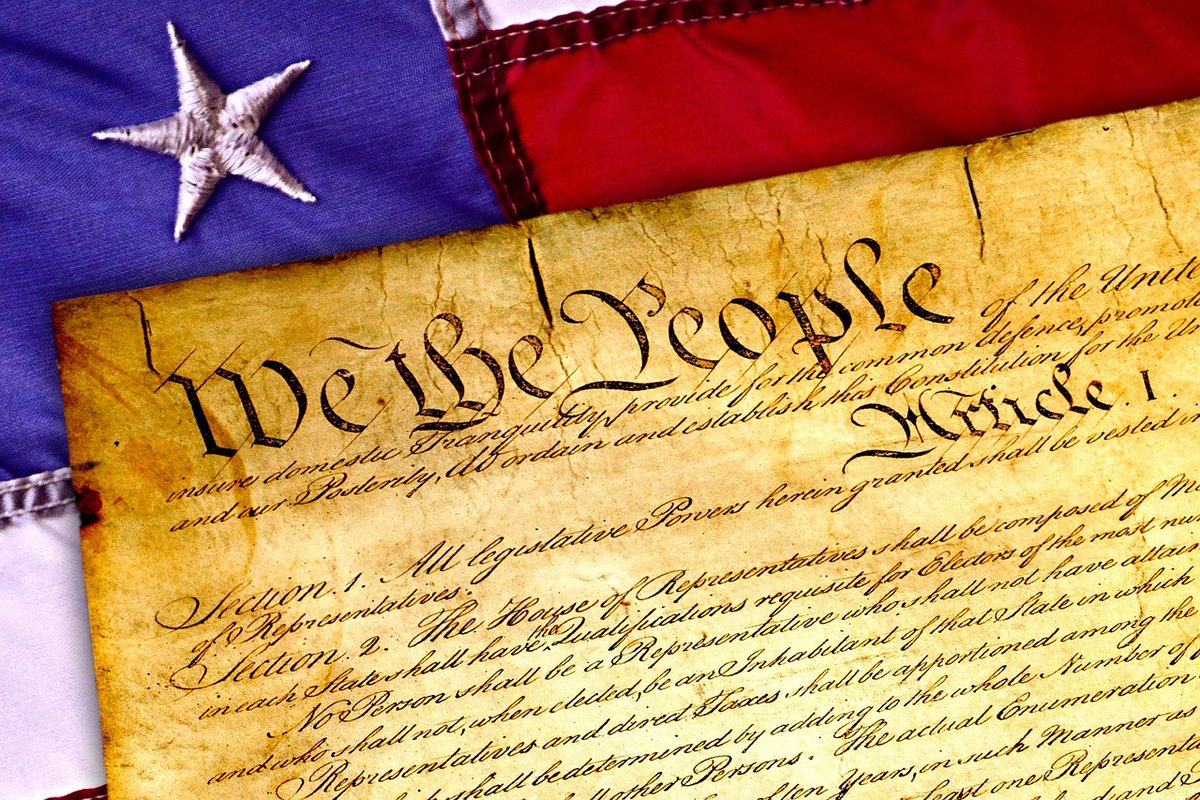
The lawsuit challenges a section of the state constitution that requires a two-thirds vote to call a convention of states to propose amendments to the U.S. Constitution.
In 1974, Kansans voted to amend the constitution to require two-thirds of the Legislature to ratify any amendment to the U.S. Constitution or to ask for a constitutional convention.
But a 2019 opinion issued by former Attorney General Derek Schmidt notes that Article 5 of the U.S. Constitution does not explicitly authorize or forbid a state from adopting specific requirements for ratifying a constitutional amendment.
Since no federal constitutional convention has been held since 1787, there are no cases that directly address whether states can impose voting requirements on a legislature’s decision to apply for Congress to call a convention of states, the Schmidt wrote at the time.
The attorney general said that only one court has reviewed a state constitution’s supermajority requirement for ratification of a federal constitutional amendment.
The U.S. Supreme Court found in 1922 that because the state’s ratification power comes from the federal Constitution, it “transcends any limitations sought to be imposed by the people of a state including limitations in a state’s constitution.”
The Legislature has tried unsuccessfully at least five times since 2016 to pass a resolution calling for a convention of states under Article 5 of the U.S. Constitution, repeatedly coming up short of the two-thirds majority required by the constitution.
The four lawmakers involved in the lawsuit — Masterson, Hawkins, Murphy and Thompson — said they didn’t work together to reach a decision in the case.
The lawyers for Masterson and Hawkins said they were ethically required to proceed in a way that saved judicial resources and didn’t incur unnecessary litigation expenses.
“Plaintiffs’ counsel agreed the issues are purely legal and they are trying to proceed efficiently, but also reiterated plaintiffs take a very different stance on the constitutional issues than defendants,” Birzer wrote.
“The court agrees the issues here appear to be legal and finds nothing unusual regarding parties wanting to efficiently solve legal questions,” she wrote.
“Thus, the Court finds no showing, let alone a concrete one, of collusion between plaintiffs and defendants in this regard,” she wrote.
Two Democrats — Sykes and state Sen. Ethan Corson — filed declarations stating no one from the attorney general’s office reached out to them regarding how the case was going to be defended.
During a recent hearing, lawyers for the attorney general said that while they represent the Legislature at large, they had no obligation to sit down with every lawmaker and discuss how the case would be defended.
While Birzer said the Democrats didn’t show failed representation, she said she saw no reason why the attorney general could not at least hear their thoughts on how the case should be defended.
She also said there was nothing that kept the Democrats from contacting the attorney general’s office, which has “not appeared to have happened either.”
Nevertheless, the Democratic lawmakers say the court must take a “liberal approach” that favors granting a motion to intervene, especially in a case “raising significant public interests.”
The magistrate judge’s ruling, they said, fails to apply the appropriate standard, which would be that the evidence only has to suggest inadequate representation.