




(CLARIFIES that governor’s lawsuit seeks to only nullify part of the legislative resolution. Updated to reflect more reporting, links to the governor’s court documents with edits throughout)
Gov. Laura Kelly and Republican leadership in the Legislature are headed to court over the governor’s efforts to control COVID-19 by limiting the size of religious activities.
Kelly is suing the Legislative Coordinating Council over its decision on Wednesday to revoke the governor’s executive order limiting the size of religious gatherings to 10 or fewer people.
“I want to be clear. This is not a normal disagreement about policy or politics,” Kelly said.
“The actions of the Republican legislative leaders jeopardized both the health and safety of Kansans,” she said. “We do not have time to play political games during a pandemic.”
The governor’s lawsuit goes much further than the executive order, however, raising deeper questions about what extent the Legislature can limit executive branch power.
It seeks to nullify part of the resolution passed unanimously by the Legislature that gives the LCC the ability to review the governor’s executive orders and revoke them.
The resolution sets May 1 as the deadline for the governor’s emergency declaration, and requires extensions to be approved by the State Finance Council and subsequently the LCC.
Kelly revealed her legal strategy during her daily briefing, less than 24 hours after Republican leadership reversed the governor’s executive order limiting attendance at church activities.
Kelly said the petition and the supporting memorandum would be filed directly with the Kansas Supreme Court. She is asking for a decision before Easter Sunday.
The Legislative Coordinating Council, made up of Republican and Democratic leaders, voted along party lines to reverse the governor’s executive orders.
The council voted 5-2 on Wednesday to rescind the order with House Minority Leader Tom Sawyer and Senate Minority leader Anthony Hensley casting the dissenting votes.
Kelly argues the LCC did not have the legal power to revoke her executive order.
State law, the governor said, gives the Legislature a check on the governor’s powers during an emergency.
However, she said those checks are delegated to the Legislature in its entirety, not the seven-member LCC.
She said the LCC’s action conflicts with the state statutes and the constitution, which expressly provide that revocation of emergency powers resides with the Legislature.
Kelly said the Legislature would need to return to Topeka and pass a law changing the governor’s emergency powers.
“It cannot be done by the LCC,” she said.
In the motion, the governor’s legal counsel argues that the resolution empowering the LCC to revoke her orders is a “plain violation” of state law.
The motion argues that resolution tries to reallocate authority to the LCC that expressly belongs to the entire Legislature.
Republican leaders in the Legislature have been headed toward a Holy Week showdown with the governor after she signed the order Tuesday limiting the size of religious activities.
The governor on Wednesday angrily responded to the LCC’s action, calling it a “shockingly irresponsible decision that will put every Kansan’s life at risk.”
The governor has said the executive order is critical for preventing a spike in COVID-19 cases through additional church gatherings during the approaching Easter weekend.
State health officials have been tracking 12 coronavirus clusters across the state, including three related to churches.
The state saw its single biggest increase in COVID-19 mortalities Wednesday when they jumped by 40%.
The state now has 1,106 confirmed cases of COVID-19, up from 1,048 on Wednesday and 552 a week ago.
There have been 42 deaths and 263 hospitalizations.
Republican leadership predicated their decision on the attorney general’s opinion that the executive order likely violated state law, an opinion the governor characterized as “unusual, unwarranted and nonsensical.”
Kelly accused Attorney General Derek Schmidt of political gamesmanship during a public health emergency.
House Republicans along with Schmidt had been working to settle the issue without a courtroom battle on Thursday even as they came under harsh criticism on social media.
They agreed to drop their objection to the executive order if the governor would agree to remove criminal penalties for violating the law. A violation is a misdemeanor that can be fined by 12 months in jail and a $2,500 fine.
“Our goal was to work together to develop a solution that is both legal and protects the health and safety of all Kansans,” House Speaker Ron Ryckman Jr., Majority Leader Dan Hawkins and Speaker Pro Tem Blaine Finch said in a joint statement.
“That solution does exist,” they said. “Unfortunately, the governor’s office was insistent that (the executive order) continue to contain a provision that would make church attendance in Kansas a crime.
“Under the advice of the attorney general, that provision is unconstitutional and unenforceable,” they said.
Senate President Susan Wagle sounded a similar position.
“The House speaker suggested we allow the executive order to take effect if she agreed to not arrest and prosecute persons attending a worship service,” Wagle said.
“This is still America where citizens voices are heard and our constitution matters,” she said.
Republicans argued that the governor’s executive order treated churches differently from other institutions such as bars and restaurants that were exempted under certain circumstances.
The controversy now transcends the bounds of the statehouse as it grabs headlines across the country.
Republican leadership has been hammered on social media from critics – even from self-professed Christians – who believe the LCC’s actions put the health of churchgoers at risk.
“The deaths of Kansas citizens is on your hands,” Magdalena Wagner posted on Schmidt’s Facebook page.
Jenni Allen Miller posted, “When a person’s religion interferes with the rights of others, it was unconstitutional.
“Churches meeting right now puts the rest of us in danger, interfering with our rights.”
Other were more supportive.
“Thank you for your leadership and common sense approach, as well as your defense of our constitutional rights,” posted Anne Marie Poitevin Sweden.
“Ignore the hateful comments about people of faith in Kansas. Apparently, when there’s a new virus going around, people think they have a license not only to be nasty, but to deny others their first amendment freedoms,” she wrote.
Democratic Congresswoman Sharice Davids weighed in on the controversy earlier in the day on Thursday.
“The decision to overturn Governor Kelly’s executive order is not only outrageous and irresponsible – it’s putting lives at risk,” Davids said in a statement.
“Rather than work to ensure the health and safety of Kansans, extremists in the state legislature have created chaos and confusion and endangered our public health.”
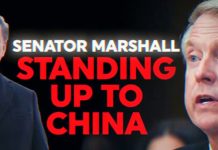
On Wednesday, Republican Congressman Roger Marshall, a candidate for U.S. Senate, came out against the governor on Twitter.
The congressman questioned why the governor would leave abortion services available during the crisis but limit church attendance.
Marshall called the governor’s action in a tweet a “complete distortion of Kansas values.”
The Kansas Catholic Conference, representing the state’s bishops, also is skeptical whether the governor’s executive order is constitutional.
The bishops had already ceased public masses in an attempt to stop the spread of the virus.
However, the Catholic Conference said in a statement that the governor’s executive order was “troubling” because it singled out restrictions on churches and religious activities while granting exemptions for other “public gatherings that present the same threat to public health.”