





A unique type of Kansas financial institution that came under new scrutiny when the founder of its parent company was indicted by a grand jury is not built on fraud and lies, top executives told lawmakers Thursday.
Executives of Dallas-based Beneficient and its Kansas subsidiary appeared before a joint legislative oversight committee only days after the former top executive of the parent company was indicted on various fraud charges.
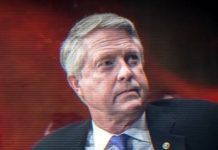
A hearing on Beneficient was scheduled weeks ago but took on a new context Thursday after its founder, Brad Heppner, was indicted in New York on charges of securities and wire fraud, falsifying records and making false statements to auditors.

“I assume Beneficient and you personally understand our frustrations, the frustration of this committee and the Legislature as a whole,” Republican state Rep. Nick Hoheisel of Wichita told Beneficient’s interim CEO, James Silk.
“I’ve heard from other members of the Legislature their frustration with this. We definitely feel deceived. We were sold a lemon car, basically,” said Hoheisel, chair of the joint oversight committee.
The federal indictment accused Heppner of setting up a shell company that benefited from tens of millions of dollars that he falsely claimed was owed by Beneficient to a third company that he controlled.
In the process, Heppner was accused of looting another publicly traded company – a company he chaired – by persuading it to invest in Beneficient to help pay the debt.
The company – GWG – later filed for bankruptcy, causing losses exceeding $1 billion for thousands of investors and bondholders, the indictment said.
Ironically, the indictment could potentially free Beneficient up from $112 million in debt that the third company that Heppner controls claims it’s owed by Beneficient.
Company officials and their local legal counsel expressed disappointment at this week’s legal developments involving Heppner, who now faces 25 years in prison if he’s convicted on the all charges in the case.
“As someone who in front of this committee sat next to Mr. Heppner on multiple occasions, if these allegations are true, I’m not just disappointed, I’m angry and I’m guessing a number of you are angry as well,” said former state Sen. Jeff King, counsel for Beneficient.
“Having kicked the tires and looked at the business model that Beneficient brings, I still believe this business model is a strong one and that it can work,” King said.
“I remain optimistic and hope that the anger at the allegations of one individual can turn into something that still can be positive for the state,” he said.
King said none of the allegations in the indictment against Heppner apply to the Kansas subsidiary and Kansas.
He said none of the money that the subsidiary has paid the state in fees and charitable contributions is at risk.
“There is no risk to Kansans or any of those funds from any of these allegations,” he said.
At issue Thursday was the subsidiary, Beneficient Fiduciary Financial, which operates in Kansas as a Technology-Enabled Fiduciary Financial Institution under a state law the Legislature enacted in 2021.
The so-called TEFFI was created with the goal of giving sophisticated investors the ability to liquidate alternative assets such as venture capital and private equity that aren’t easily converted to cash.
Company officials emphasized that over the years, Beneficient’s subsidiary has paid the state more than $13 million in tax and fees.
The company pays a yearly $1 million assessment fee to the state and shares 2.5% of the transactions it processes for charitable contributions, with some of the proceeds going to the Department of Commerce to promote economic revitalization of small communities.
But the state’s top banking regulator has repeatedly expressed concerns about regulating Beneficient’s subsidiary as well as any other similar company that would enter the Kansas market.
The bank commissioner sounded alarms as early as 2022 about the Kansas financial institution because of troubles encountered by its Dallas-based parent, which were heightened with Heppner’s indictment on fraud charges.
“I realize these are allegations and Mr. Heppner is no longer associated with the management of BFF or its parent company Beneficient, except perhaps as a stockholder,
but it does reinforce the concerns previously expressed to this committee,” Bank Commissioner David Herndon told legislators Thursday.
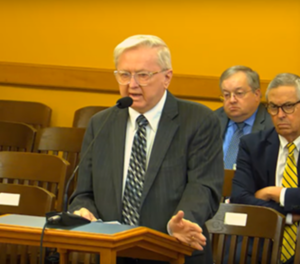
Herndon told lawmakers that his agency has proposed issuing a formal corrective action against the subsidiary altogether unrelated to the grand jury indictment in New York.
“Significant and repeated violations of Kansas statutes and regulations have been cited,” Herndon told the committee.
Due to the volume of violations, the banking commissioner’s office has proposed the issuance of formal corrective action, which is forthcoming, he said.
Last summer, Herndon said his agency planned to institute two new oversight provisions for Beneficient Fiduciary Financial after the business underwent an examination.
He said the agency would start a “continuous” exam for BFF, meaning instead of an annual examination, it will have examinations underway without specified start or end dates.
He said the continuous exam process will permit BFF to provide updates on remediation processes with timely feedback from regulators.
Herndon didn’t go into any more detail about the violations Thursday but said a consent order would be sent to the company either Thursday or Friday.
The order can’t be made public until it’s signed by the company. Beneficient officials said they could not comment because they had not seen the order.
Republican state Sen. Stephen Owens of Hesston, a leading advocate for the law creating the financial institution, has repeatedly pressed skeptics to show how the state has been negatively affected by Beneficient.
“There is such strong opposition yet zero evidence that continues to this day that there’s been any harm to the Kansas taxpayer,” Owens told the committee.
“While the business certainly hasn’t gone the way that I think anybody has expected, I continue to reiterate the fact there is no risk and no harm has come to the Kansas taxpayer for the passing of this legislation and allowing an industry to get a foothold,” he said.
“If that industry ultimately fails, then it fails. It will fail on its own accord,” he said.
“However, having an Office of State Bank Commissioner that every six months is so adamantly opposed to this industry, certainly doesn’t send a signal of a business that is supported by the state that anybody would want to do business with.”
Hoheisel asked Beneficient’s Silk directly whether the Beneficient business model was built on lies and fraud and whether it was sustainable. Silk said the business model was strong, adding there is a need in the market for liquidity.
“The market opportunity that was initially presented years ago is as strong if not stronger,” Silk said. “The retailization of alternative assets, alternative investments…continues to grow. The need for liquidity increases accordingly.”
Silk said the company is uniquely positioned to fill that market demand, although he added it’s limited by access to cash and stock to get the deals done.
He conceded that there was “over-optimism” expressed by his predecessor – Heppner – to create the currency needed to take advantage of the market opportunities.
“I think it’s fair to say in the past that we have over-promised and under-delivered. I’ll be perfectly frank with that. But we have delivered,” Silk told lawmakers.
The company noted that Silk and Beneficient’s board chairman, Tom Hicks, opted to convert more than $50 million in preferred stock combined to common stock
They agreed to lock up the shares for three years, meaning they can’t gain appreciation in the stock price during that time but would have to shoulder any decease in the value.
Derek Fletcher, chief fiduciary officer and director for Beneficient, highlighted the stock conversion for the committee
He said the decision by Hicks and Silk to convert their preferred stock to common stock should demonstrate their belief in the company.
“It speaks to people within the company that not only say they believe, but they put their money where their mouth is,” Fletcher said.
King noted there is a difference between a fraud perpetrated by a business model than fraud perpetrated on a business model.
He said the indictment shows that prosecutors believed that this “was outside fraud perpetrated on an otherwise successful business in order to siphon off proceeds of that model for an illicit purpose,” King said.
“There is nowhere anywhere in here that the business model itself was fraudulent or involved in this at all,” he said.