




State banking regulators are planning to impose a formal corrective action order on a unique Kansas financial institution that allows affluent investors to liquidate alternative assets such as venture capital and private equity that aren’t easily converted to cash.
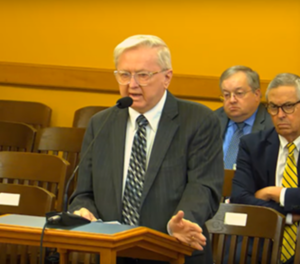
State Banking Commissioner David Herndon told lawmakers Thursday that his agency will institute two new oversight provisions for Beneficient Fiduciary Financial after the business underwent an examination that concluded July 23.
Herndon’s comments came Thursday at a joint legislative oversight committee meeting held after the top executive of BFF’s parent company resigned abruptly in June because he would not agree to be interviewed by the company’s audit committee.
The parent company – Beneficient – has not yet filed its annual report for the fiscal year ending at the end of March and is now facing the renewed prospect of being delisted by the Nasdaq stock exchange because its stock price has plummeted to below $1 a share.
The subsidiary – Beneficient Fiduciary Financial – operates in Kansas as a so-called TEFFI, shorthand for Technology-Enabled Fiduciary Financial Institution, that was created under a law the Legislature enacted in 2021.
Kansas is believed to be the only state with a law that allows this type of financial institution to operate.
Any new oversight proposed in Kansas is unrelated to the events at BFF’s Dallas-based parent company since that’s outside the state’s regulatory scope.
Herndon said details of the “corrective action” will be based on the findings of the recently concluded confidential examination.
He said those details are still being worked out
He said the agency would start a “continuous” exam for BFF, meaning instead of an annual examination, it will have examinations underway without specified start or end dates.
He said the continuous exam process will permit BFF to provide updates on remediation processes with timely feedback from regulators.
He said a written report of the examination is being prepared and will be presented to senior management at BFF and Beneficient as well as their board of directors.
The examination included a review of the Kansas subsidiary’s compliance with the law that was passed in 2021 allowing it to operate here, Herndon said.
The exam also covered the company’s progress in addressing and resolving, when possible, findings from previous exams, he said.
The company’s executives attending the meeting said they had not seen the exam and could not respond to Herndon’s comments.
“We understand that there’s maybe going to be a consent order,” said Alan Deines, managing director and chief operating officer for the Beneficient subsidiary.
“We haven’t seen it. Frankly, we haven’t even seen the exam yet, so we’re not sure how to respond to that,” Deines told lawmakers.
“We feel like a little bit that by implication there’s serious wrongdoing involved with that. I’m not aware of any,” he said.
“Without getting into the details of the exam there’s not much I can tell you other than I don’t feel like any of it goes to the safety and soundness of the company.”
There is nothing in state law that provides a penalty or punishment if the company does not comply with the statute.
Herndon said the Office of the Bank Commissioner has elevated concerns about the Kansas financial institution because of troubles encountered by its Dallas-based parent company, which is often referred to as BEN.
“Very recent events at Beneficient have created significant financial and managerial stress on that parent company thus elevating (the) level of concern to the subsidiary BFF,” Herndon told the committee.
While the state banking commissioner does not conduct exams of the parent company, Herndon said he’s still worried that several publicly disclosed “adverse events” at the parent company could have a “waterfall effect on BFF.”
“These negative events have only reinforced the opinions I have previously expressed to this committee – that the Kansas TEFFI Act has not produced the results nor met the
expectations originally intended,” he said.
He renewed his call for the Legislature to consider repealing the law authorizing the TEFFI and withdrawing Beneficient’s charter.
“I am not suggesting BFF should be legislated out of business,” he said. “But I do believe the company should succeed or fail based on the market it operates in without influence or interference by my agency or the Kansas government.”
Republican state Sen. Stephen Owens of Hesston, who worked to pass the legislation creating the new type of financial institution, pressed Herndon about how taxpayers would be negatively affected if the subsidiary fails.
The company pays a yearly $1 million assessment fee to the state and shares 2.5% of transactions for charitable contributions, with part of the proceeds going to the Department of Commerce to promote economic revitalization of communities under 5,000 people.
“I certainly think we can agree that the TEFFI act hasn’t worked quite as we had planned,” Owens said. “Can you tell me how Kansas or Kansans have been hurt by the TEFFI act?”
Herndon said he couldn’t answer that question.
“You can’t provide any indication of how Kansas or Kansans have been hurt by the TEFFI act, yet year after year you continue to come in and lobby for its elimination,” Owens said.
Herndon told Owens that the law creating the TEFFI limited his agency’s ability to meet its mission of ensuring the integrity of regulated providers as it relates to that type of financial service.
Beneficient’s Deines said he didn’t see how general Kansans could be hurt if the project ultimately didn’t work out, adding that the $1 million assessment the company pays each year more than covers the cost the yearly examination.
“The worst thing that could happen is if we go out of business and there’s money that gets left on the table that we could provide,” he said.
James G. Silk, the new interim CEO for Beneficient, said he heard the continued skepticism voiced by the banking commissioner.
“It’s on us at BEN, working together with your team, to show you…what we can continue to do to benefit Kansas and all of our other stakeholders,” Silk said in a virtual appearance before the committee.
“We will disagree at times, obviously. You would not be doing your job of a regulator without identifying the areas we can do better,” Silk said.
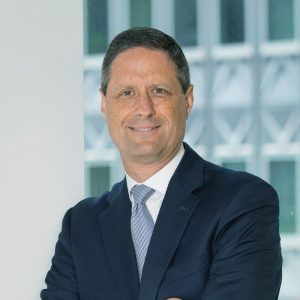
Derek Fletcher, chief fiduciary officer and director for Beneficient, addressed the larger issues affecting Beneficient and its parent company.
“As this committee knows, we have faced a number of challenges and headwinds in the past,” Fletcher said. “Admittedly, the business has not performed the way we had hoped and envisioned it would.
“We’re just optimistic that if we can get some of these headwinds behind us what we may be able to do together with the state of Kansas,” he said.
Fletcher acknowledged that parent company’s annual report had not been filed but said it would be in the near future. He also said he was restricted from discussing any details about the previous CEO’s departure.
Fletcher said the company would continue to operate in Kansas even with the departure of Brad Heppner, who had been the face of the project in Topeka.
“Brad is an incredible visionary, incredibly intelligent person, certainly skilled as a founder,” Fletcher said.
“But I want the committee to know that the professionals that built BEN and that operated BEN continue to do so,” he said.
“We’re committed to the business. We’re committed to one another. We’re committed to shareholders,” he said.
“We’re committed to the state of Kansas, and we intend to fulfill that commitment.”
Silk took a backhanded swipe at Heppner in predicting the company’s future in Kansas.
“BEN has certainly faced challenges and perhaps in a departure from a predecessor, I’ll acknowledge that success is not something that can be guaranteed,” Silk said.
“What I can guarantee, on behalf of myself and the rest of the management team, is that we will lead the company going forward with integrity, professionalism and civility.”
Deines laid out some of the obstacles facing the company, including challenging economic conditions and what he described as “reputational issues” related to intensive media coverage that put the spotlight on Beneficient.
Beneficient drew critical coverage in recent years from the Wall Street Journal, which examined its relationship with GWG Holdings, a financial-services firm that sold bonds to retail investors and at one point had been the parent of Beneficient.
At one point, GWG and Beneficient shared two directors, and Beneficient’s chairman and CEO, Heppner, also chaired GWG’s board of directors. The newspaper’s reporting suggested that Beneficient used money raised from GWG to expand its business.
Beneficient and Heppner sued the Wall Street Journal, and the case was later dropped.
Among the issues Fletcher said that’s now in the past was a Securities and Exchange investigation of Beneficient’s relationship to GWG.
Beneficient notified shareholders in its June 2023 quarterly report that it received a “Wells Notice” from the staff of the enforcement division at the Securities and Exchange Commission in connection with the company’s relationship to GWG.
A Wells Notice is a preliminary determination by the staff to recommend to the SEC that a civil enforcement action or administrative proceeding be brought against the recipient.
SEC filings show that the agency’s enforcement staff had made a preliminary determination to recommend that the SEC file a civil enforcement action against the company alleging violations of federal securities laws related to Beneficient’s association with GWG Holdings.
The company said its actions were appropriate and that it “vigorously” defended itself.
And on July 1, 2024, the company and Heppner received termination letters from the SEC staff advising them that its investigations had concluded and that the staff didn’t intend to recommend any enforcement actions.