





The state’s banks are urging lawmakers to take steps to allow them to better compete for local and state government deposits that they say are now flowing to out-of-state financial institutions at a cost to the Kansas economy.
The banks say state law is structured in a way that local and state governments are less inclined to invest their funds locally than they are with institutions from out of state, which they say reduces the amount of capital for Kansas businesses that want to expand.
With local and state government investments going out of state, the banks say there are fewer funds available for home and car loans, local infrastructure and an overall diminished level of economic activity.
They point to how public funds are currently being invested in Kansas by the state’s Pooled Money Investment Board, which manages nearly $10 billion in state idle funds and local public funds held within a state-managed municipal investment pool.
However, they say only about 0.52% of those funds – about $49 million – are currently invested in Kansas bank certificates of deposit.
The vast majority is allocated to out-of-state investments such as agency discount notes, U.S. Treasury bills and commercial paper. More than 12% is invested in U.S. domiciled Canadian banks alone, they said.
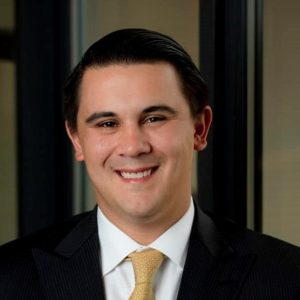
“We think that’s wrong,” said Alex Orel, senior vice president of government relations for the Kansas Bankers Association.
“Why are we investing a significant amount of our taxpayer dollars outside the country, large sums of money, and not investing them in the state?” he said.
The banks say the amount of local government money being invested with the Pooled Money Investment Board now totals more than $1 billion with 21% of counties, 13% of school districts and 9% of cities putting their money with the state.
The say the growth of that fund and investment decisions made by the Pooled Money Investment Board demonstrate that state laws intended to keep local and state government investments within Kansas are flawed and need improvement.
Orel said state law now requires local governments to bid out where they’re putting their deposits and investments.
“That is good practice, it is well intended and it has worked for many, many years,” he said. “But there are a few things we can tweak to make it better.”
A study by the Docking Institute of Public Affairs at Fort Hays State University found that out-of-state financial institutions would need to pay 3.15 percentage points more in interest than state financial institutions for Kansas to experience any economic impact.

Emily Briet, who teaches banking and finance at Fort Hays State, told a panel of legislators Monday that the primary advantage of placing deposits in Kansas financial institutions is that the money is more likely to be lent to Kansas borrowers.
Briet, who conducted the study, said the money lent to Kansas borrowers would boost the state’s capital stock, economic activity and income.
“The overall economic impact or impact on state government revenues will rise when the deposits are kept in Kansas financial institutions,” Briet told the committee.
“In other words, the gain in economic activity from tax revenues would more than offset the loss of interest income to the state of Kansas,” she said.
Briet compared the deposits to “raw materials” that allow the finance institutions to issue more loans. Any decrease in deposits, she said, hampers banks’ ability to loan money.
She said there is a multiplier effect where a portion of the deposited money is lent out and redeposited into the banking system, creating a cycle of deposits and loans that increases the overall money supply in the economy.
She estimated that revenues for state and local governments should increase if at least 9.52% of local government deposits in Kansas financial institutions are loaned out to support in-state activities.
Briet said that the larger the disparity between interest paid by out-of-state investments and interest paid on investments placed with Kansas banks leads to a decline in economic activity for state and local government revenues.
When the interest rate gap is small, the change in state and local government revenues is much larger. But as the gap between the two interest rates widens, the economic development benefits to the state decline.
“As Kansas financial institutions accept more deposits, more capital is accumulated within the state, leading to higher income and greater tax revenues,” she said.
“When Kansas banks retain a larger portion of local government funds, the state’s capital stock grows more rapidly, resulting in larger income gains, and consequently increases in state and local government revenues,” she said.
Assuming there is a demand for loans in Kansas that matches the ability of Kansas banks to supply loans, a new deposit of $10 million – while holding back $2 million – would provide $8 million available to be lent out, she said.
As the money rolls over, she said that would result in total deposits of $16 million.
Factoring in another 20% holdback, the initial investment would produce $12.8
million more in available loans made in Kansas.
Among other things, the banks are asking the Legislature to consider:
- Lowering the statutory certificate of deposit rate for the Pooled Money Investment Board. Currently, the rate for the PMIB bank CD program mirrors commercial paper rates, which are at about 4.5%. Bankers recommended lowering the rate 2 percentage points with a floor of 0.5%. They said cutting the rate would make it more viable for Kansas banks to accept the deposits, potentially increasing the percentage of PMIB funds invested in Kansas financial institutions.
- Adjusting the statutory bank investment rate. They urged lawmakers to consider eliminating or lowering the statutory rate that banks must offer to guarantee receiving deposits from public agencies. The rate currently mirrors the federal funds rates of about 4.5% and is 0.5% higher than the internally set municipal rate offered to public entities by the PMIB. Other options to consider include eliminating the rate entirely or setting the rate at 2 percentage points below the PMIB rate for municipal funds with a 0.5% floor.
- Clarifying legislative intent on rate negotiations. The bankers say current law allows public entities to negotiate their own terms and rates with local banks, allowing them the flexibility to keep their dollars local. To address the potential for misinterpretation or confusion, the bankers recommended adding language to a state law clarifying that the statutory investment rate is only needed to guarantee receiving funds, not mandated.
- Create an oversight process for public fund investments. The bankers support creating a process to ensure public entities are following the intent of public funds laws. They suggested establishing a hotline within the treasurer’s office or PMIB where complaints could be filed if institutions aren’t allowed to bid on funds or if entities are bypassing the law. The process could initiate a temporary freeze on an entity’s ability to access the PMIB until they have proven they complied with the law.
- Treat bond proceeds as public funds. The bankers want to clarify that bond proceeds should be treated as public funds, subject to the same local bidding requirements as other public funds deposited in banks. They want to bring clarity that the money must be offered to banks at the local level first, instead of potentially bypassing public fund statutes. Orel said there is a loophole in the law where a financial adviser told local school district that it didn’t have to bid out where it would invest its bond proceeds locally. “We think that’s absolutely wrong,” he said. “The spirit of the law is public funds need to be bid out locally.”
- The bankers suggested the Legislature create a centralized collateral pool program that would streamline the process for banks to pledge collateral for public deposits, making it easier and more efficient to accept public funds. They said a centralized pool would reduce administrative burdens on banks and governments.
“This is worth the time to take the deep dive,” Orel told lawmakers on the special committee studying the issue.
“It may create a little bit more work for the financial institutions. It may create a little bit more work for the local government entities. It may create a little bit more work for the PMIB and the state treasurer’s office as well,” he said.
“But the return on investment, I believe, is extremely clear.”
Nathan Eberline, executive director for the League of Kansas Municipalities, praised the Kansas Bankers Association for its efforts in reach out.
“We share a common goal of addressing the concerns of our respective memberships and look forward to collaborating on policies that benefit all communities across Kansas,” Eberline said in a statement.
“Our goal is to ensure cities continue to find financial arrangements that work best for them and their citizens, but also to have viable options that support local financial institutions.
“Finding that balance will take a cooperative effort, and we appreciate the continued opportunities to work with the KBA for long-term solutions,” he said.
State Treasurer Steven Johnson, who sits on the Pooled Money Investment Board, issued a statement saying he looked forward to working with the Legislature to implement a collateral pool.
“The efficiencies pooled collateralization could bring the state of Kansas deserves serious consideration,” Johnson said.
“We further look forward to exploring opportunities that expand investments in Kansas that increase total return to the state while meeting safety and liquidity needs.”