




Even with the Democrats poised to claim the governor’s office while winning 19 seats in the Kansas House, Republicans were still winning statewide offices for secretary of state, insurance commissioner and treasurer.
Complete but unofficial results show that state Rep. Pat Proctor had defeated former Democratic state Rep. Jennifer Day 48% to 47%, or 10,756 votes.
United Kansas candidate Scott Morgan won 4% of the vote here, potentially enough to make a difference in the race.
Elsewhere, outgoing House Speaker Dan Hawkins defeated the Senate’s top Democrat Dinah Sykes, 49% to 47%.
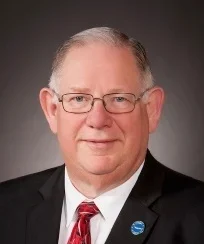
Libertarian candidate Rick Koehn drew support from 4% in this race.
And in the race for treasurer, Republican incumbent Steven Johnson won 51% to 44% for Democrat Juan Luengo.
In the race for insurance commissioner, Hawkins ran up against Democratic Gov. Laura Kelly who filmed a video for Sykes that was critical of Hawkins.
Kelly blamed Hawkins for the Legislature’s failure to expand Medicaid, adding that his career in the insurance industry makes him the wrong person to oversee that same line of business in Kansas.
“Dan makes his living selling insurance,” Kelly says into the camera. “Now he wants to be the state’s top insurance regulator. Who’s he going to answer to? Kansans or his own clients?
“Meanwhile in the Senate, Dinah has fought to lower prescription drug costs, strengthen protections for consumers and hold insurance companies accountable,” the governor said.
“Dan Hawkins made a living off the insurance industry. How can he be trusted to hold the very industry he’s profited from his whole career accountable? The answer is he can’t.”
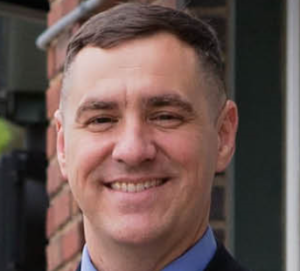
A spokesperson for Hawkins’ campaign said the governor misunderstood what he did in the insurance industry.
“As with many issues in this race, our opponent and her allies are missing the facts,” the spokesperson said.
“Speaker Hawkins’ business has been built on 32 years of going to battle with insurance companies on behalf of Kansans,” the spokesperson said in a statement.
“Now, he wants to use that experience to benefit all the people of Kansas,” the spokesperson said.
“As the only candidate in the race with experience standing up to insurance companies, Speaker Hawkins remains focused on n his plan to make insurance more accessible and affordable for all Kansans.”
Over in the race for secretary of state, Proctor had to fend off questions about wage-and-hour violations found at two of his restaurants back in 2016.
The issue surfaced in an interview Proctor gave to Manhattan radio personality Mike Matson, who asked Proctor about Labor Department complaints that said two of his restaurants owed a little more than $93,000 in minimum wage and overtime back pay.
Proctor told Matson he ultimately paid “significantly” less than that amount. He told Matson that he paid in the range of $68,000 or $78,000, but said in an interview he believed it was less than that.
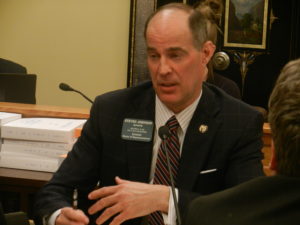
Proctor, the chair of the House elections committee, highlighted comments Day made last year at a Douglas County forum where she discussed the prosecution of the mayor of the small town of Coldwater with election fraud.
In that discussion about the Coldwater mayor, Day talked about how she thought he was confused about whether he could vote and then moved on to address how some local governments in other parts of the country allow noncitizens to vote.
“We need to look into how we properly educate people about the difference between being a permanent legal resident and what a citizen is and how that voting works,” she said at a forum that was recorded.
“There are some places in the United States, in Washington D.C., I think there are spots in California, where you can vote as an immigrant who is not a citizen in their municipal elections, their local municipal elections. That is not the case in Kansas, unfortunately.”
Proctor had used that last clause against Day on social media and at a Kansas Chamber event, saying she wants noncitizens to vote in Kansas.
Day said she did not support allowing anyone in the country illegally to vote.
As chair of the House elections committee, Proctor led efforts to end the three-day grace period for advance mail ballots to arrive at election offices.
The bill repealing the law was vetoed by the governor, but the Legislature overrode the veto.
A Douglas County district judge has issued an injunction allowing the grace period to temporarily remain in place. The case is now on appeal.
Proctor led passage of another measure to keep noncitizens off the voter rolls by requiring the secretary of state to match names on voter rolls with a list of noncitizens who have driver’s licenses.
Proctor also backed a constitutional amendment to ensure noncitizens could not vote, although critics said it wasn’t necessary.
As he ran for secretary of state, Proctor campaigned on the amendment, which won with 64% of the vote on Tuesday.
As currently written, the state constitution says that “every citizen of the United States who has attained the age of 18 years and who resides in the voting area in which he or she seeks to vote shall be deemed a qualified elector.”
The proposed amendment reworks the language so that the constitution would explicitly say that no person shall be a “qualified elector” — or voter — unless they are a citizen of the United States.
There had been concern expressed that passage of the amendment could lead to the Legislature taking steps to require proof of citizenship to register to vote.
A federal judge has already struck down a state law requiring proof of citizenship to register to vote in Kansas, but some believe there will be a renewed effort to require driver’s licenses to denote citizenship and limit someone’s ability to vote.
Proctor said the judge’s ruling from 2018 prevents the state from reinstating proof of citizenship.
“Nothing that we can do in the Kansas Constitution will in any way implement or allow us to implement documentary proof of citizenship,” he said. “That is a false argument.”
“A federal judge has ruled on that so I don’t have any intentions of bringing a law to take us back into court on a settled issue,” he said.