

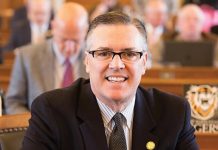



Gov. Laura Kelly on Monday signed an executive order creating an independent office that’s intended to protect Kansas children and families within the child welfare system.
Kelly’s executive order creates the Division of Child Advocate, something that the Legislature had not been able to accomplish for the last four years.

The new office is intended to provide independent oversight and greater accountability for public and private agencies involved in the child welfare system.
It will compile and accept complaints made on behalf of children within the welfare system and will review practices employed within the network.
“Above all, the division will work to ensure that all Kansas children, all Kansas families are getting the services they need when they need them,” Kelly said at a news conference where she signed the executive order.
The governor’s office said Kansas would now be the 14th state to have an independent agency providing oversight of the child welfare system.
The governor’s executive order comes on the heels of a legislative session where lawmakers couldn’t agree on a bill creating a child advocacy office.
A House committee recommended a bill in mid-February, but it died on the calendar.
Under the House bill, the child advocate would have been jointly appointed by the governor and the chief justice of the Kansas Supreme Court, subject to confirmation by the Senate, for a term of six years.
The Senate later approved a bill creating an office that would have been overseen by the Kansas attorney general’s office. The Senate bill was approved on a 31-4 vote.
Critics said the Senate bill vested too much control in an elected state official and gave the attorney general too much authority over the office.
Senate President Ty Masterson on Monday defended the proposal passed by the Senate.
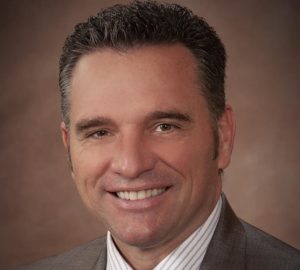
He said the Senate bill “created a true independent office of child advocate that would bring accountability and transparency to the child welfare system in Kansas.
“This is the more appropriate course and one we will continue to pursue next session.”
Kelly said the executive order structures the child advocacy office in a way that it will have independence.
She noted that the appointment will be made for a set term that will give the adovcate room to work.
She noted that neither the governor nor the Legislature can fire the advocate.
Kelly said any effort to remove the person would have to follow an ouster procedure established in state law – a process that she characterized as “pretty rigorous.”
“This is about as independent as you can possibly get,” Kelly said.
The governor’s executive order would make the division part of the Office of Public Advocates, which was created by a separate executive order issued Monday.
The Public Advocates Office also will include the long-term care ombudsman and the KanCare ombudsman.
The office will be attached to the Department of Administration. But the department and the secretary shall have no authority of over the Division of Child Advocate.
The governor would appoint the child advocate for a five-year term. The person could serve beyond that period if needed until a successor is appointed.
The advocate would need to have a degree in law, social work, public health or a related field to qualify for the job.
The child advocate can’t be a current or former executive of the Department for Children and Families or any current welfare case management grantee unless the person is 12 months removed from those roles.
The governor’s office will set the salary, which can be increased but not decreased.
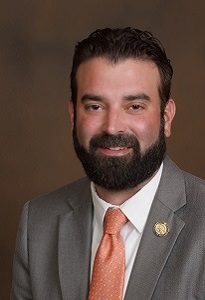
“This is a big, big day,” said Democratic state Rep. Jarrod Ousley of Merriam, who has been trying to pass legislation creating a child advocacy office.
“There’s a lot of good in there,” Ousley said. “It’s going to benefit the kids.”
Kansas Appleseed, which has been a driving force for improving the state’s welfare system for children, praised the governor’s executive order.
“The governor absolutely has stepped in and pushed this much further than the Legislature was able to do in the last several years,” said Mike Fonkert, Just Campaign director for Kansas Appleseed.
“Up until this point, there has been no one who truly has been able to focus on what kids and families need,” Fonkert said in an interview.
“If done correctly, this will be a one-stop shop that Kansans can trust to dive into the issues that they are encountering with these systems,” he said.