



The U.S. Justice Department has now turned its attention to Kansas as part of its ongoing national effort to collect voter registration information from across the country.
The Justice Department sent two letters this month to Secretary of State Scott Schwab seeking the state’s voter registration list, including voters’ full names, birth dates, residential addresses, driver’s license numbers or the last four digits of their Social Security number.
There are about 2 million Kansans on the state’s voter registration list.
The department said it’s seeking the information to determine whether the state is complying with the “maintenance requirements” of the National Voter Registration Act and the Help America Vote Act.
The NVRA was intended to make registering to vote easier, while HAVA established minimum standards for election administration, voting systems and voter access.
The information, first sought in a letter from the U.S. Justice Department on Aug. 6, must be submitted by Thursday, Aug. 21. A second letter was sent last week.
Schwab didn’t signal how he plans to respond to the request for information, which is sought under the authority of the Civil Rights Act as well as the National Voter Registration Act and the Help America Vote Act.
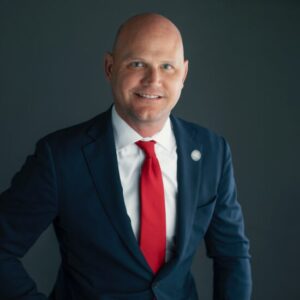
“We are in talks with the DOJ for clarification on their request and in consultation with the Kansas attorney general,” Schwab said in a statement.
The Associated Press reported earlier this month that the Justice Department has requested copies of voter registration lists from election officials in at least 15 states.
The AP reported that in Colorado, the department demanded “all records” relating to the 2024 election and any records the state retained from the 2020 election.
Election officials from Alaska, Arizona, California, Florida, Illinois, Maine, Maryland, Michigan, Minnesota, Nevada, New Hampshire, New York, Utah and Wisconsin told The AP they received written requests for the information from Justice.
At least one other, Oklahoma, received the request by phone, according to The AP.
Back in May, the Justice Department filed a lawsuit against North Carolina election officials for failing to maintain an accurate voter list in violation of the Help America Vote Act.
The lawsuit accused the state of violating federal law by using a voter registration form that did not require a voter to provide identifying information such as a driver’s license or the last four digits of a Social Security number.
The Justice Department’s request for the Kansas voter information comes at a time when Gov. Laura Kelly’s administration is in a battle with the U.S. Department of Agriculture over providing detailed information about food-assistance recipients.
It is believed that Justice wants to check for duplicate voter registrations and run the data through the new SAVE program, short for Systematic Alien Verification for Entitlements.
Administered by U.S. Citizenship and Immigration Services, the SAVE program can be used by election officials to verify U.S. citizenship for voter registration, voter list maintenance or oversight of election processes.
SAVE is a system of federal databases that state and federal agencies have used since the 1980s to check the immigration status of noncitizens living in the United States.
State and local authorities can input Social Security numbers to help verify U.S. citizenship and prevent immigrants living in the country illegally from voting in elections.
U.S. Citizenship and Immigration Services announced in May it had upgraded the SAVE program to ensure a single, reliable source for verifying immigration status and U.S. citizenship nationwide.
Election officials said the newly designed system would allow federal officials to run the voter registration data through the SAVE program to flag deceased voters who died out of state and therefore did not appear on the death certificate list.
The Justice Department said that to the extent there are privacy concerns, the voter registration list is subject to federal privacy protections.
Earlier this week, the American Civil Liberties Union and two journalists filed a lawsuit to enforce the Freedom of Information Act requests sent to multiple federal government agencies seeking information about changes to the federal databases.
The ACLU sent open records requests along with two Lawfare journalists to several agencies to determine what changes were made to the databases, what data and records are being offered, and how the data is being used to conduct voter list maintenance.
Some states have refused to provide the information to the Justice Department.
Late last month, Maine Secretary of State Shenna Bellows denounced the Trump administration’s request for the data.
“The Gulf of Maine is awfully cold, but maybe that’s what the DOJ needs to cool down,” Bellows said. “So, here’s my answer to Trump’s DOJ today: go jump in the Gulf of Maine.”
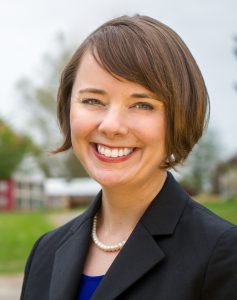
“The DOJ doesn’t get to know everything about you just because they want to,” said Bellows, a Democrat.
“I believe strongly in voter privacy, and I feel strongly that the federal government has overstepped its bounds with this request,” she said.
And this week, Oregon Secretary of State Tobias Read said he believed the Trump administration is overstepping its federal authority after requesting data on voters.
Over the last month, the Oregon secretary of state’s office has received at least two requests from Justice asking for information about Oregon voters and the workers who maintain Oregon’s voter rolls.
KOIN television in Portland reported that Read turned down the Trump administration’s request, saying it didn’t cite any legal authority for the information it’s seeking.
“I do not see how I can fulfill my duty to protect the integrity of Oregon’s election system while engaging in data-sharing agreements with the U.S. DOJ or other federal agencies at present,” Read said in the television’s station’s report.
The state of Utah, meanwhile, provided the requested voter list, but the Salt Lake Tribune reported that information did not include Social Security numbers or birth dates.
The newspaper also reported that the submission did not contain the names of voters whose information was marked as private or withheld.
“The state of Utah is in compliance with federal election law… and has implemented safe, secure, and timely safeguards and processes for maintaining voter registration lists,” Utah Lt. Gov. Diedre Henderson wrote in response.
“Utah has a robust process for voter list maintenance and monthly certification from county clerks to ensure maintenance is being done,” Henderson wrote.
“The lieutenant governor provides and maintains a statewide voter registration database that county clerks use to register voters and update existing voter registrations.
“Clean voter rolls are the foundation for secure elections and therefore need to be routinely and systematically updated.”