



Good morning everyone:
Well, it’s officially halftime for the 2021 Kansas legislative session. Unfortunately, no elaborate show with fireworks. Just more work. It ended with all eyes toward next year as Republicans started to position themselves in the Kansas governor’s race and see who might get to challenge Democratic Gov. Laura Kelly. Here are the significant stories we published as well as other news you may have missed but need to know…
- A super political action committee with a connection to western Kansas businessman Cecil O’Brate is urging Kansas Attorney General Derek Schmidt to run for governor.
- Former Kansas Gov. Jeff Colyer took the first step toward launching his candidacy for governor in 2022.
- The state paid out more than $1 million on behalf of dead KanCare benificiaries to companies that manage the state’s Medicaid program.
- The father of House Speaker Ron Ryckman Jr. is returning to the state Legislature, replacing the late Bud Estes in the Senate.
- The Kansas House passed a new civics test requirement for high school students to graduate.
- The Kansas House passed a bill that puts limits on the longstanding practice of local governments collecting extra revenue without raising the property tax rate.
- The wind industry says it could be shut down by new legislation aimed at protecting residents who don’t like living near wind turbines.
- The Kansas Legislature has opened the door for the Kansas City Auto Show to move out of downtown Kansas City, Missouri, across the state line to Wyandotte County.
- Kansas Senate passed a sports wagering bill, setting up a showdown with the House.
- The Kansas Legislature approved a $100 million loan program to soften the financial blow that municipal-owned utilities suffered from soaring gas and electric prices during the recent deep freeze that gripped the region last month.
- Congresswoman Sharice Davids urged the governor to do more to address problems at the Labor Department.
- The Kansas Senate approved legislation that would require public schools to offer full, in-person learning no later than March 26.
Heartland Flyer extension funding?
Amtrak is working on a plan that would call for Congress to fund 36 new passenger rail routes, including an extension of the Heartland Flyer from Oklahoma into Kansas.
Derrick James, Amtrak’s Midwest director of government affairs, recently revealed Amtrak’s intent to ask Congress for $25 billion over five years when the current five-year federal transportation plan lapses this October.
“We think the future of passenger rail is connecting important population centers which are within a few hundred miles of each other with quality passenger rail service,” James told the Kansas Passenger Rail Coalition last month.
James said one of the routes that would be funded in Amtrak’s plan is the proposed extension of the Heartland Flyer on existing rail from Oklahoma City to Newton.
The Heartland Flyer already runs from Oklahoma City to Fort Worth. An extension to Kansas would link to the Southwest Chief, a cross-country route that connects to Topeka, Lawrence, Kansas City and Chicago to the east and Los Angeles to the west.
James said Amtrak is proposing to pick up all the capital and operating costs on the front end. However, he allowed for the possibility that the state would have to cover operating costs after about three years of operation.
James told the coalition that it would be Amtrak’s goal to gradually phase out operational support after three years, leaving it up to the state to incrementally step up funding.
“Our hope is that with being able to front-load the capital project…we can get the service up and running,” James said.
“The service can start to mature such that by the time the state needs to step in and fund the remaining operating support, the service has matured and is popular enough that it would induce that level of contribution that’s needed from the state,” he said.
James said the rail expansions Amtrak is considering are the ones that would perform the best financially.
Amtrak spokesman Marc Magliari said frequent and reliable corridor routes of typically less than 500 miles represent the fastest-growing segment of Amtrak’s service.
“Population growth, changing demographics, travel preferences and environmental concerns all point to new opportunities for intercity passenger rail,” Magliari said.
“We have developed a visionary plan to expand rail service across the nation, providing service to large metropolitan areas that have little or no Amtrak service,” he said.
Rail advocates have been trying to extend Heartland Flyer to Kansas for more than a decade.
Last year, the Kansas Senate passed a resolution urging the Kansas congressional delegation to support federal funding for the Heartland Flyer extension when the transportation bill comes up for reauthorization.
Legislative Hunger Games
Every year it happens. Senate and House leadership pick and choose which bills survive at turnaround and which ones will be sidelined until next year. It’s sort of a legislative Hunger Games for the bills that are not exempt from deadlines: Some bills live, some don’t. Here’s a look at the nonexempt bills that stay alive this year.
In the Senate
- SB 174: Authorizes advanced-practice registered nurses to work independently and no longer require a collaborative agreement with a responsible physician.
- SB 161: Allows for automated delivery vehicles on city streets and sidewalks. The bill pits FedEx against Amazon over how large the vehicles should be.
- SB 177: Establishes a committee to oversee modernization of the Labor Department’s
 computer system and reduces the weeks of eligibility for unemployment benefits. The bill holds employers harmless for fraudulent unemployment benefits claims. A similar bill has already passed the House.
 - SB 213: Bars employers from mandating vaccines.
- SB 219: Changes the law pertaining to real estate brokers and salespersons including the definition of broker, licensure and actions that require licensing.
- SB 199: Amends the definition of short-term, limited-duration health plans to plans with a policy period of less than 12 months with renewal or extension periods up to a maximum policy period of 36 months. The bill also requires insurance companies that issue short-term, limited-duration health insurance policies to disclose certain information to consumers regarding the Affordable Care Act.
- SB 57: Suspends statutory speedy trial provisions until May 1, 2024, in all criminal cases filed before the law is enacted. The House has already passed a similar bill that suspends the speedy trial provisions but doesn’t eliminate them from state law.
- SB 245: Provides for the financing of electrical corporations with securitized bonds.
- SB 150: Regulates attorney advertising beyond the scope of the Kanas Rules of
Professional Conduct. - SB 206: The Fairness in Condemnation Act sets new requirements for condemning private property.
- SB 212: Supporters say the bill prohibits the state health secretary from permanently requiring additional immunizations to attend a child care facility or school. The bill is backed by Kansans for Health Freedom.
- SB 146: Requires the Highway Patrol to administer and oversee state-certified ignition interlock manufacturers and their service providers.
- SB 158: Prohibits a vehicle from being towed to a location outside of Kansas without the consent of the driver or owner of the vehicle or without the consent of a motor club of which the driver or owner is a member.
- SB 37: Amends provisions governing agent licensing and renewal licensure requirements in the Uniform Agents Licensing Act and in the Public Adjusters Licensing Act.
- SB 93: Requires school districts to allocate sufficient funding in a manner reasonably calculated so that all students may achieve the educational goal also known as the Rose capacities.
- SB 173: Reauthorizes the high density at-risk student weighting.
***
In the House
- HB 2382: Makes appropriations for the Kansas Department for Aging and Disability Services for individuals waiting to receive intellectual or developmental disability home and community-based services. It also lapses state foundation aid and authorizes school districts to expend unencumbered cash balances.
- HB 2176: Clarifies the vacation or exclusion of territory from city boundaries or release of easements.
- HB 2366: Requires prosecutors to disclose their intent to introduce testimony from a jailhouse witness and to forward information to the Kansas Bureau of Investigation.
- HB 2380: Amends Healthcare Stabilization Fund minimum professional liability insurance coverage requirement.
- HB 2206: Updates definitions in the Kansas Telemedicine Act. The bill would permit telemedicine to be used for referral to specialty services to the extent the services are
consistent with the standard of care. The bill would also allow for coordination of care between providers of a patient who has established a relationship with the providers. - HB 2236: Allows an appraiser to not complete a sales comparison approach to
determine value when performing a residential real property appraisal in a rural county if there are no comparable sales within 30 miles of the property.
- HB 2301: Requires accredited high schools to provide a course of instruction in personal financial literacy.
- HB 2287: Creates the Kansas Promise Scholarship Act, which provide scholarships to students who attend post-secondary educational programs that correspond to high-need career fields.
- HB 2219: Creates the Kansas Targeted Employment Act, which would provide tax credits for the employment of Kansans with developmental disabilities. Eligible businesses would receive a 50% nonrefundable income tax credit based on the wages paid to eligible individuals with a developmental disability.
- HB 2004: Creates the right to appeal an involuntary discharge or transfer from an adult residential care facility.
- HB 2067: Requires school districts to allocate sufficient funding in a manner reasonably calculated so that all students may achieve the educational goal also known as the Rose capacities.
- HB 2068: Expands a program that’s authorized to give $10 million a year in state tax credits to entice businesses and individuals to donate money to the scholarship program for private schools. A similar bill has already passed the Senate.
- HB 2119: This is the mega education bill, which includes spending for the Department of Education and expansion of the tax credits program for private school scholarship donations. It also includes education saving accounts, which would allow students to take their base state aid to a private school under certain conditions. The bill also places limits on remote learning.
- HB 2154: Allows the Education Department to contract with private vendors to install, operate and maintain stop signal arm video recorders on school buses. The bill is intended to address the large number of drivers who ignore
 school bus stop arms.
 - HB 2160: Establishes certification and funding for certified community behavioral health clinics.
- HB 2281: Establishes and implements 988 as the suicide prevention and mental health crisis hotline in Kansas.
- HB 2329: Modifies the list of entities that are subject to Kansas Corporation Commission rules and regulations adopted to ensure conformity with the federal Natural Gas Pipeline Safety Act.
- HB 2339: Expands the crime of election tampering to include changing or altering votes cast, manipulating computer hardware or software or vote tabulation methods or producing false vote totals.
- HB 2346: Allows release of defendants to a pretrial supervision program.
- HB 2363: Would lift the $80-an-hour cap on what Kansas can pay private lawyers who take on defense cases for the state.
- HB 2373: Requires the Kansas Department for Aging and Disability Services to establish a mobile crisis services program for individuals with intellectual or developmental disabilities.
- HB 2150: Changes state law related to the abuse, neglect or financial exploitation of adults.
- HB 2389: Authorizes a notice to appear for unlawful possession of marijuana to be
deemed a complaint under the Kansas Code of Criminal Procedure.
Airbnb meets cars
The Kansas House last week passed legislation without much attention that would bring the sharing economy to cars.
The House unanimously passed a bill setting up a new regulatory framework allowing Kansans to share their vehicles, very much in the same way Airbnb lets you share your home.
Known as peer-to-peer car sharing, the bill clears the way for someone to share their car on a short-term basis – at a price, of course.
Similar legislation was considered in the Senate last year but died in committee.
It’s all part of the sharing economy in the internet age where people are willing to loan everything — often for a price — from textbooks and clothes to even their chores to people they only know online.
Referred to as P2P car sharing in shorthand, the business model allows car owners to list their vehicles on an app similar to how you would find lodging on Airbnb.
The owner provides details such as the car’s make and model, mileage and year. A customer can then look up a car and sign up for one that meets their needs.
The model is seen as advantageous because it’s convenient for people who may not want or be able to afford a car but need more flexibility than what public transportation offers.
The San Francisco-based Turo claims to be “the world’s largest peer-to-peer car sharing marketplace where you can book any car you want, wherever you want it.”
Laura Manno, the company’s senior government relations manager, pitched the benefits of car sharing to lawmakers last month.
“Hosts earn a little extra income to offset the high costs of car ownership, or lessen the burden of credit card debt, student loans, or medical bills,” Manno told the House Transportation Committee in written testimony.
“Guests, who are also often local, enjoy the opportunity to choose an exact make,
model, and price point to suit their specific needs or take them on their next adventure.”
In the last decade, at least eight states have approved P2P car-sharing legislation, according to a report compiled by the National Conference of State Legislatures.
Another state approved a study on the feasibility of establishing a regulatory framework for P2P car sharing and had planned to submit recommendations to the legislature last year.
Last year, Automotive World reported that the number of car-sharing vehicles rose from about 200,000 worldwide in 2015 to more than 440,000 in 2020.
It reported that the number of vehicles was expected to grow to almost a million by 2025.
Turo, for instance, claims it has 450,000 vehicles listed with more than 850 unique makes and models.
Tyler Diers is executive director of Midwest TechNet, which bills itself as a national, bipartisan network of technology CEOs and senior executives that promotes the growth of economic innovation.
He urged lawmakers to pass the legislation. By his count, 11 states have passed legislation similar to the one pending in the Kansas Legislature.
“Peer-to-peer car sharing is a convenient way of connecting people wishing to utilize an Internet platform to safely and securely share their personal vehicle when it otherwise may sit idle, all while earning a passive income on one of their largest assets,” Diers said in written testimony.
“These platforms also create convenient, affordable, and environmentally friendly on-demand access to vehicles for those who do not own cars, or for whom car ownership is cost prohibitive,” he said.
Kansas 25th safest state during pandemic
A new report out last week from WalletHub ranked Kansas as the 25th safest state during the COVID-19 pandemic.
WalletHub compared the 50 states and the District of Columbia using five key metrics: vaccination rate, positive testing rate, hospitalization rate, death rate and transmission rate.
WalletHub graded each category on a 100-point scale, with a score of 100 representing the safest environment.
It determined a weighted average across all the categores to come up with an overall score for each state and used the resulting scores to rank-order the states.
Kansas received a score of 62.13, just ahead of Nevada at 26th with a score of 61.02 and just behind Missouri at 24th with a score of 62.75.
The safest state, according to WalletHub, was Alaska with a score of 80.14. The unsafest state? Virginia with a score of 28.19.
Vaccine data
Kansas reports that it has now vaccinated 15% of the population against COVID-19, with more than 400,000 people receiving at least their first dose.
The state health department on Friday reported that 439,127 people have received the first of their two doses. Another 219,000 have received both doses.
The state reported that 311,948 of those inoculated were white compared to 9,781 who were African American and 5,494 who were Asian. Nearly 45,000 were two races or more.
The race of about 66,000 who received the shot was not reported.
More females were vaccinated than males, 276,196 to 162,112. The gender was not reported for 819 other patients.
Last week. Gov. Laura Kelly announced an intensive effort to vaccinate workers at the state’s meatpacking plants, which could reduce the racial disparity in the vaccination rate.

As of Friday, the health department reported that about 76 out of every 1,000 Hispanic or Latino residents had been vaccinated.
In contrast, about 127 out of 1,000 non-Hispanic residents had been vaccinated.
Here’s more coverage of the governor’s plan to vaccinate workers at the meatpacking plants from WIBW, KMBC, The Kansas City Star and the Capital-Journal.
Unemployment fraud
From The Associated Press: Unemployment fraud nationally hits $63 billion.
From The Denver Post: Colorado law enforcement joins battle against fraud.
From The State newspaper: South Carolina reports it had more than 2,800 potentially fraudulent unemployment claims since the pandemic started.
From KPNX in Phoenix: Arizona residents struggle to get their legitimate unemployment claims even as the state pays out fraud claims.
From the Columbus Dispatch: First criminal charges brought in Ohio over unemployment fraud.
Unemployment bill
The Kansas House passed sweeping legislation that makes changes at the Kansas Department of Labor, including the creation of a 13-member committee that would oversee efforts to modernize the agency’s aging computer system.
The bill passed 87-36 and now goes to the Senate.
The bill would require the agency to fully design, implement and administer a new computer system by no later than Dec. 31, 2022.
The bill also calls for an audit of the unemployment insurance system examining the effects of fraudulent claims filed with the state, which are estimated at somewhere from $300 million to $600 million during the pandemic.
The bill also directs $450 million — potentially from coronavirus stimulus money — to be used to recoup any losses from unemployment fraud.
The bill also reduces the number of weeks of eligibility for workers who are unemployed.
The bill would move the state back to a sliding scale where the unemployment rate determines how many weeks of benefits a laid-off worker is eligible to receive.
Lawmakers are proposing to change the law so the unemployment rate — based on a three-month, seasonally adjusted average statewide — would have to be at least 5% to qualify for up to 20 weeks of benefits.
Under an earlier scale adopted eight years ago, the unemployment rate could range from 4.5% to 5.9% to qualify for 20 weeks.
The unemployment rate would have to reach 6% to receive 26 weeks of benefits, the same way it was under the old scale that was approved in 2013.
Business reparations
Later this week, the Senate tax committe will hold a hearing on a bill that could potentially resolve litigation over whether the state should cover business losses suffered because of the shutdown during the pandemic. Here’s our coverage on the bill from about a week or so ago when it was first filed. Meanwhile, New Mexico’s Senate recently approved a bill that would provide $200 million for businesses that suffered declines during the pandemic. The governor ultimately signed the bill into law at the end of last month.
Concealed guns
The Kansas House passed legislation that would lower the age for carrying a concealed gun in Kansas from 21 to 18. The legislation would require anyone under 21 to complete a background check and take a safety training course to carry a concealed firearm.
The bill passed the House 85-38. A similar bill passed in the House a couple years ago but died in the Senate. The bill is more likely to pass the Senate this year after a leadership change.
Emergency management laws
The Kansas House lat week passed its version of a new emergency management law that puts checks on the executive branch’s authority to declare an emergency declaration.The bill passed 81-40. The House bill is not as broad as a Senate bill that puts limits on the ability of local health officers to issue orders, limiting them to only making recommendations to county commissions. The bill is likely to be left to a conference committee to settle the differences. What’s happening in Kansas is unfolding in state legislatures across the country. Here is look at what’s going on elsewhere:
- From National Public Radio: New York lawmakers removed Gov. Andrew Cuomo’s extraordinary emergency powers that he was given last year. Legislators said circumstances related to the pandemic no long merit the governor having expanded emergency authority. Here’s more coverage from Politico.
- From The Associated Press:There’s an effort under way in Indiana to limit that governor’s emergency powers.
- From the Salt Lake Tribune: Lawmakers in Utah have passed legislation limiting the emergency powers of that state’s governor. Any state of emergency declared by the Utah governor lasting more than 30 days would have to be approved by committee comprised of current legislative leadership and other lawmakers with relevant experience. Here’s the Utah bill and more coverage from the Deseret News.
- From the Atlanta Journal-Constitution: A look at how Georgia lawmakers are moving to curb the governor’s emergency powers. More coverage from the AJC with details about effort to stop the governor from closing churches and businesses during an emergency.
- From the Hawaii Tribune Herald: Lawmakers there are seeking to give themselves more oversight of emergency declarations handed down by the governor. Gov. David Ige has reportedly issued 18 emergency proclamations since last March.
Here and there
Eric Pahls, the former campaign manager for Republican U.S. Sen. Roger Marshall, has joined the national political consulting firm, Big Dog Strategies, as vice president.
The firm, with offices in Buffalo, New York, Washington D.C. and Austin, Texas, was paid about $22.8 million during the last election cycle, according to the Center for Responsive Politics.

Th firm’s clients included Marshall’s U.S. Senate campaign, the Congressional Leadership Fund, the Georgia Republican Party, the Kansas Republican Party, the Michigan Republican Party and former Congressman Steve Watkins.
A graduate of the University of Kansas, Pahls also worked as a spokesman for former presidential candidate Carly Fiorina’s Unlocked Potential, which works with leaders of nonprofit organizations.
He also worked at the Robert J. Dole Institute of Politics as study groups coordinator and a research assistant.
He also served in 2014 as production assistant for MSNBC’s “Morning Joe,” working with hosts and panelists.
He also served an in intern in the office of the late U.S. Sen. John McCain.
The CEO and president of Big Dog Strategies is Christopher Grant, who worked for Axiom Strategies and served as chief of staff for former New York Congressman Chris Collins from 2013 to 2015.
***
The Kansas Democratic Party last week announced it hired Katie Sullivan as the party‘s new finance and communications assistant.
Sullivan previously worked as a campaign coordinator for Kali Barnett’s unsuccesful run for Congress in the 1st District last year.
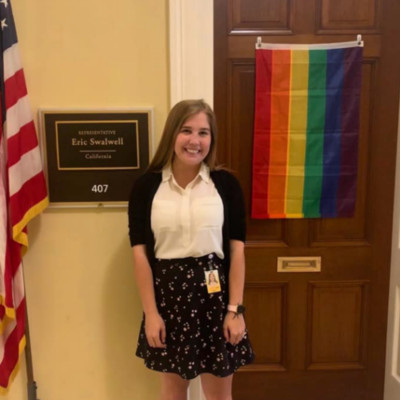
She also was president of Kansas Young Democrats in 2019-2020. She also served as treasurer for Usha’s Reddi’s campaign for the U.S. Senate in 2019 and 2020.
Sullivan is a 2019 graduate of Kansas State University with a degree in social sciences.
“As we look forward into 2021, Katie will be instrumental in our efforts to elect Democrats up and down the ballot across Kansas,” KDP Chairwoman Vicki Hiatt said in a statement.
“The party is confident that Katie’s professional resume and first-hand experience working in Kansas politics will be a valuable asset in electing Democrats across the Sunflower State in 2021 and beyond,” Hiatt said.
***
Kansas Corrections Secretary Jeff Zmuda last week named Jeff Butler as the new warden at the El Dorado Correctional Facility. Butler started March 1.

Butler began his corrections career as an officer with the Federal Bureau of Prisons in 1989 and was promoted through the ranks as a case manager, unit manager and associate warden until he retired from the bureau in 2016.
During his nearly 27-year tenure with the Federal Bureau of Prisons, he worked at eight facilities overseeing specialized services that included Prison Rape Elimination Act compliance and oversight.
He also served as acting warden at the Federal Correction Complex, Allenwood, Pa.
In January 2019, Butler joined El Dorado’s management team as deputy warden with oversight of programs and operations.
Butler earned a bachelor’s degree in criminal justice from Metropolitan State University, in Denver.
In memoriam
Jack Glaves, former state Democratic Party chairman and general counsel for the Kansas Corporation Commission, died March 2. He was 93.
He spent 50 years representing and lobbying for natural gas companies. He served in the Kansas Legislature as the 66th district representative from 1956 to 1960.
Hes is survived by his wife, Connie; son, Chris; daughter, Cathleen Tinker, and their mother Corinne; as well as seven grandchildren and six great-grandchildren..
A memorial service is set for 2 p.m, March 8 at Downing & Lahey East Mortuary in Wichita. The service will be live streamed and available to view at: www.dlwichita.com
Here is the complete obituary.