




(Updated to correct vote count)
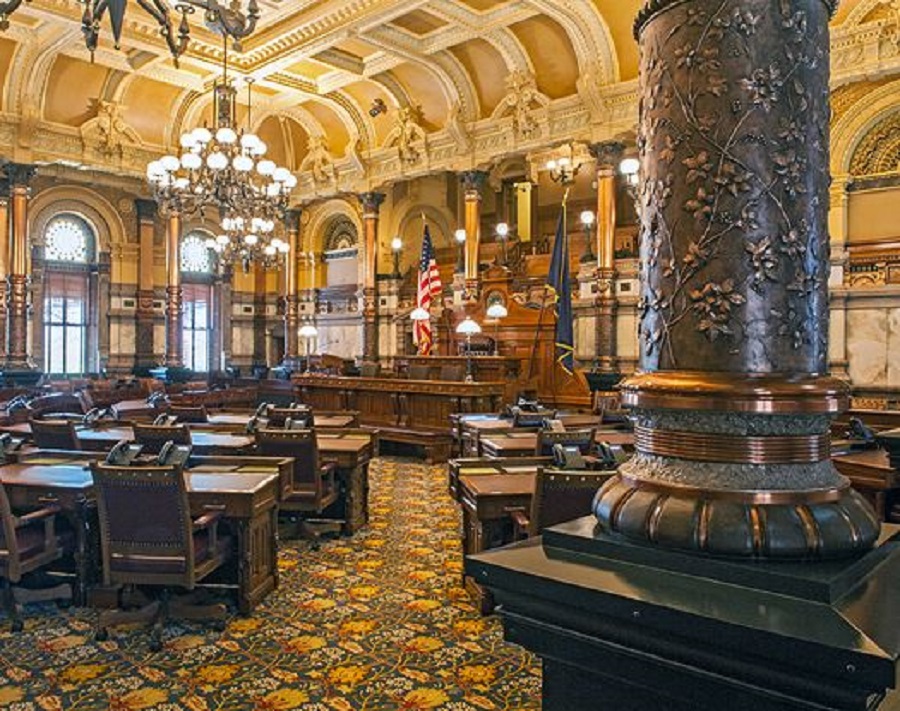
The Senate took another stab at passing a tax bill late Thursday afternoon, but failed after a key senator flipped her vote that was undercut when a colleague changed his vote.
Republican state Sen. Carolyn McGinn of Sedgwick suddenly announced that she changed her mind and would support a bill that would have moved the state to a single tax rate coupled with cuts in property taxes and an increase in the standard deduction.
It had been widely speculated throughout the day Thursday that the Senate would try to reconsider the tax bill and whether McGinn would change her mind.
While McGinn’s support should have given the Senate the 27 votes needed to override the governor’s veto of the bill, Republican Sen. Rob Olson of Olathe revealed to the Senate that he had a change of heart overnight and would oppose the bill.
Olson’s vote coupled with former Republican state Sen. Dennis Pyle’s opposition killed the effort to resurrect the legislation before the Legislature is expected to wrap up its business for the year on Friday.
The bill also was hurt by the fact that Republican Sen. Alicia Straub of Ellinwood passed voting on the bill after supporting it when the Senate came up short on a 25-14 vote Wednesday. The Senate needed 27 votes for an override.
Shortly after the Senate adjourned, Senate President Ty Masterson announced that he was removing Olson as chair of the Senate utilities committee.
“We appreciate Sen. Olson’s service as chair of the Utilities Committee,” Masterson posted on social media.
“However, his services are no longer required,” he said.
Last year, Masterson removed Pyle from his seats on the transportation and utilities committees after he withheld his support for a redistricting plan.
McGinn made the motion to reconsider the tax bill, hinting she would provide the bill with the decisive 27th vote. But moments later, Olson revealed that he didn’t plan to support the tax bill after thinking it over further.
McGinn said she changed her vote because she hadn’t done her due diligence to examine the effect of the tax bill on the state’s budget plan in the out years.
She said her review of fiscal profiles of the state budget with the tax plan didn’t sink the budget financially as the governor’s office had suggested.
McGinn said the state’s healthy rainy-day fund with $1.6 billion along with a projected ending balance of about $2 billion this year and $2.5 billion next year makes the tax plan affordable.
“At what point in time do we keep our piggy bank growing higher and higher and our ending balances grow higher and higher without trying to put forth some type of a plan that gives money back to the people of Kansas and in a responsible way,” she said.
She said it’s impossible to know what the state’s fiscal health will look in years 2026 and 2027, and noted that the Legislature returns every year to pass a budget when correction can be made to adjust for fluctuating revenues.
The state’s budget director did an analysis showing that the state could be running a deficit of $626 million by fiscal year 2027 with the proposed tax cuts under certain circumstances, including approval of a pay raise for state employees this year.
The deficit grows to more than $700 million if a separate tax bill, which includes a hodge-podge of relatively small items such as sales tax break for telecommunications companies, is passed. That bill was sent to the governor on Thursday.
Olson said he thought the tax bill didn’t do enough for less well-off Kansans.
“I struggle with that,” Olson said.
“Today, with inflation that is going on, people are hurting,” Olson said. “I supported this last night and I really wish I wouldn’t have because I think we can do better.”
“I think we’ve got a pretty good tax bill. I like a lot of the things that are in it and how it’s done,” Olson said. “I just don’t think we did enough for the people at the bottom.”
He also would like to remove a provision in the bill that would cut the corporate tax rate, which was originally part of a bill passed last year when a tax incentive package was approved for mega development project such as Panasonic.
This was not the first time Olson has frustrated Senate leadership’s plans.
Two years ago, Olson changed his vote on an education bill that derailed legislation providing tax subsidies for some students to attend a private school either with scholarships backed with tax credits or allowing them to use the state’s base allocation for them to attend private schools.
Republican state Sen. Caryn Tyson, chair of the Senate tax committee, rebutted Olson’s claim that the tax bill didn’t benefit all taxpayers.
Tyson disputed the notion that it was a “corporate bill,” noting that provision was approved as part of the Panasonic incentives last year.
“This bill is about the average low-income taxpayer,” Tyson said. “If you don’t see that, you’re in denial. It lowers income tax for every income taxpayer in Kansas.”
“This is a vote for the people, the people of Kansas,” she said.
Among other things, the bill would have:
- Provided a single individual income tax rate of 5.15%, starting in tax year 2024, for all Kansas taxable income in excess of $12,300 for married individuals filing joint returns and $6,150 for all other individuals.
- Eliminated the state sales tax on groceries on Jan. 1 instead of phasing it out through 2025. Kelly had called for an immediate phaseout of the food tax.
- Raised the standard deduction for all taxpayers to account for cost-of-living adjustments starting in 2024.
- Increased the property tax exemption for the 20-mill levy for public schools from $40,000 of valuation to $60,000 starting in tax year 2023. The bill provided for the amount to increase in future tax years based on the average percentage change in statewide residential real property for the preceding 10 years.
- Cut the corporate income taxes to 3% in 2024, which was part of the bill approved last year authorizing tax incentives for Panasonic and other mega development projects.
- Ended the tax cliff on Social Security taxes. Kansans currently don’t pay taxes on Social Security benefits if they earn $75,000 or less a year in federal adjusted gross income from all sources. But if they earn just $1 more than $75,000, they go over a so-called “cliff” when they are hit with a substantially bigger tax bill. The House bill gradually phased in the tax by increasing the threshold to $100,000.