





(Upated at 9:30 p.m. to reflect latest developments.)
As the legislative session moves into its final hours, House and Senate negotiators are struggling over how to limit rising property values in an effort to keep property taxes in check.
Negotiations between both sides got off to a rocky start Thursday when a House proposal that caps appraised values based on a six-year rolling average or a 7.5% increase, whichever is less, got a tepid greeting from senators.
The House proposal, like a similar one offered by the Senate, is a constitutional amendment that needs support from two-thirds of the Legislature and must be ratified by the voters.
The Senate proposal would have capped the taxable assessed property values at 3% with several limited exceptions, including new construction or improvements.
For tax year 2027, the final taxable assessed value of the property would not increase by more than 3% compared to the assessed value of the property for 2022.
Shortly after 8 p.m., the Senate came back with a counteroffer.
Senate negotiators offered a fixed cap of 4% compared to the 7.5% proposed by House.
They also asked that the rolling average be removed and that the tax plan start in 2027 instead of 2028 in the House plan.
The committee broke around 9 p.m. with hopes of meeting again late Thursday night.
The Senate plan for capping assessed property values stalled in the Senate on March 12 when it was rejected on a voice vote.
The Legislature is under increasing pressure to address property taxes this year, especially since this is an election year and three senators – Senate President Ty Masterson, Ethan Corson of Fairway and Cindy Holscher – are running for governor.
Last year, the Legislature faced similar difficulties approving property tax cuts, only agreeing to eliminate a 1.5-mill state property tax that funded maintenance and renovations of some state buildings.
Time is growing tight with the legislators expected to adjourn their regular session Friday.
Republican state Sen. Caryn Tyson of Parker, chair of the Senate tax committee, greeted the latest House proposal coolly, saying she didn’t believe the House had been negotiating in good faith.

She also said the proposal introduced complexity into the issue, telling tax negotiators that county treasurers didn’t have the necessary software to calculate the six-year rolling average – a point that was challenged by the leading Democratic negotiator on the tax bill.
“I feel like the Senate position was: We the People,” Tyson said.
“It was for the people, for the taxpayers, not for local government. The House is trying to force a position on the Senate that is for local governments. It protects local government,” she said.
“This was about transparency, predictability and protection for the property owners, and that rolling average loses all of that,” Tyson said.
“How would they have predictability? And at 7.5%, I’m just baffled at why you chose that number,” she said.
She pointed to several ways the Senate proposal was better, pointing out that it started with 2022 property values and would be implemented immediately.
The latest House proposal would not start until 2028 and begin with current property values.
The Legislature would need to pass enacting legislation in 2027 before the cap would be in place.
The House plan would include residential property, mobile homes used as residential property, commercial and industrial real estate, and buildings and improvements on agricultural land.
However, the House bill does not include land for agriculture production.
Tyson said during a conference committee Thursday that two anonymous House members told her they had been told not to support Senate measures that would have imposed a 3% cap.
She referenced the House speaker briefly before relating what she was told by the House members.
“So, this is where we’ve landed as a result of that,” Tyson said. “I’m not sure that the negotiations were in good faith, and the taxpayers are the ones that suffer.”
After the meeting, House Speaker Dan Hawkins, along with his staff, was already at the committee room doors when they opened as lawmakers concluded their meeting.
They talked outside of the committee room beyond earshot of the lobbyists, lawmakers and reporters milling outside the committee room.
Hawkins’ office didn’t comment after the meeting.
During the meeting, Republican state Rep. Adam Smith of Weskan, chair of the House tax committee, said he did his best to pass the Senate bill with the 3% cap.
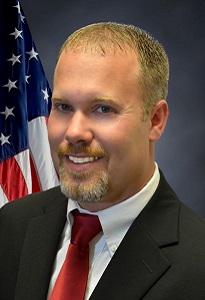
“I worked in absolute good faith,” Smith said.
“I have not been a fan of this, but for the sake of the people of Kansas, I put in my best faith effort,” he said.
“I understand you’re talking about the speaker, but I did everything I could, and I supported this policy,” he said.
“I explained to people that, even if you’re on the fence and if you don’t maybe necessarily agree with a fixed cap, this ultimately goes to the voters,” he said.
“I am not aware of the speaker intervening,” he said.
“I can’t speak for what other discussions have happened, who has visited with you. There’s a lot of rumors that fly around this place. There’s no shortage of rumors,” he said.
Tyson commended Smith.
“You have always negotiated in good faith,” she said. “You’ve been great to work with. I don’t ever back down on that.”
Smith said the House looked at a cap ranging from 3% to 10%.
“I was just trying to find out where most of the members would be,” Smith said.
“We’re trying to get 84 votes on this. It’s a constitutional amendment, and that 7.5% is where we thought we had the numbers,” Smith said.
Tyson was skeptical that the proposal had the support of House members.
“I’m hearing rumblings,” she said. “I’m not sure you do have the numbers.”
Tyson signaled she’s still ready to move on a separate bill allowing voters to reject a budget that spends more in property taxes than it did the year before plus the Midwest consumer price index up to 3% more, whichever is less.
Meanwhile, Republican state Rep. Tom Sawyer, ranking minority member of House tax committee, questioned statements made by Tyson that the proposal would affect country treasurers.
“There is some consequence to the appraisers. It’s not to the treasurers,” Sawyer said.
“The county clerk does the tax rolls, and the treasurer collects the money that’s on the tax rolls from the clerk. So, this really won’t affect the treasurers.
“It does affect the appraisers, and we’ve heard from the appraisers,” he said.
“They can make it work,” he said.
“They came to our hearings, and they can make it work, but it really doesn’t affect the treasurers.
“I did this for six years as Sedgwick County clerk, prepared the Sedgwick County tax rolls for six years, so I know how that process works.”
Tyson said that county treasurers believe it will affect their software.