






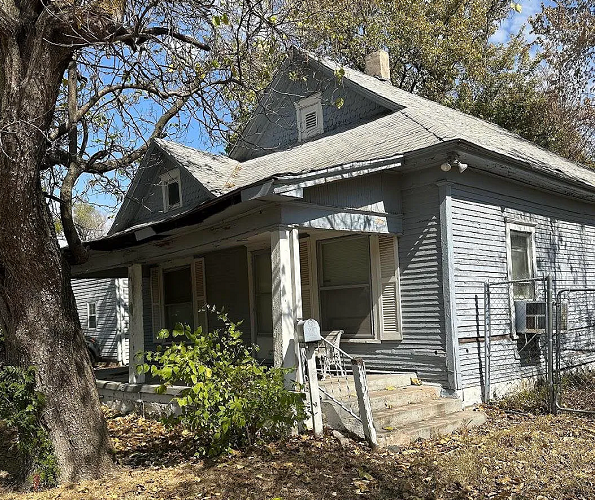
The Kansas House on Wednesday passed a compromise bill that will limit the ability of local governments to regulate vacant residential and commercial property.
The bill – approved 87-36 – would ban local governments from imposing fees or taxes for registering vacant or abandoned properties. It now goes to the Senate.
The House, however, agreed to retain the ability of local governments to impose registration requirements on a vacant residential or commercial property in order to keep it from falling into disrepair and blight.
Local governments still have the ability to levy fines for code violations unrelated to whether or not the property is vacant.
Cities argued the bill as originally proposed — backed by landlords, banks and realtors — would have hindered their efforts to combat blight in their neighborhoods.
They said the registries help them keep an eye on vacant properties so they don’t fall into disrepair and eventually pose a threat to the neighborhood.
“The fact is, many more owners’ property rights are infringed upon by a blighted and deteriorating building, than the property rights of the single owner of the vacant property,” said Greg Talkin, director of the Neighborhood Resource Center for the Unified Government in Kansas City.
“Research by others has confirmed vacant homes, especially those that are left to deteriorate, greatly reduce the value of surrounding properties,” Talkin told lawmakers in written testimony.
Vacant property registries, he said, “are a proven strategy in reducing the number of vacant properties and encourage a healthier real estate market, which benefits everyone.”
Supporters of the legislation – as originally proposed – said local laws requiring registration of vacant property infringe on private property rights.
They said if a property is secured and being maintained, its vacant status should be of no concern to city government.
“Municipalities currently have the power to abate nuisances and if there is a problem with a
property, that is where local governments should focus their attention,” said Mark Tomb, vice president governmental affairs for the Kansas Association of Realtors.
“Simply having a fee for vacant properties is not justified and clearly interferes with a property owner’s ability to use their property as they see fit,” Tomb said in testimony.
But city officials said that vacant buildings can be a threat to a community.
The city of Concordia, for instance, reported that over the last decade it has condemned and demolished more than 100 unsafe and dangerous structures, with 30 of those buldings demolished in 2022.
From 2011 to 2019, the city sent $180,974.99 in unpaid invoices for nuisance abatement and city-initiated demolition to the county clerk to be placed on the property tax rolls.
Of those unpaid special assessments, the city wrote off $20,000 per year due to procedures associated with the property being sold at tax sale, meaning the bill was ultimately paid.
In the last 20 years, Topeka has had 949 fires in vacant buildings resulting in approximately $12.3 million in property loss and 58 firefighter injuries.
In the past 18 months, there have been 97 fires in vacant buildings resulting in one civilian death.