





A proposal asking Congress to call a constitutional convention to place terms limits on members of Congress failed to win approval in the Kansas House Wednesday.
The House voted 69-54 for a resolution seeking to have Congress call a convention of states under Article V of the U.S. Constitution. It fell 15 votes short of the two-thirds majority it needed to pass the House.
The proposal was opposed by a mix of Democrats and Republicans who feared the prospects of calling a constitutional convention.
Critics of the idea of a convention say it would open the door to radical changes in the U.S. Constitution, saying there’s too much uncertainty in passing a resolution.
They say supporters of the proposal are asking lawmakers to take a leap of faith that the constitutional convention will be carried out responsibly.
“I understand and sympathetic to the driving force behind the desire to seek a constitutional convention to impose term limits on members of the United States Congress,” said Republican state Rep. Carl Maughan of Colwich.
“However, in my reading of the United States Constitution, I can find no mechanism to limit the scope of a constitutional convention once it’s called,” he said.
He expressed concerns over who the delegates would be to such a convention and what rules would govern the convention and how would the topics be limited.
“While I trust the instincts of the people and their desire to limit the power of the federal government, I do not trust the politicians in Washington to constrain their own power.”
It was a view shared by Democrats as well, who warned Republicans that a convention could lead to the constitution be amended in a way they might not approve.
Democratic state Rep. John Carmichael of Wichita predicted that the constitutional convention would be dominated by delegates from either coast who will want to amend the constitution to protect the right to an abortion and abolish gun rights.
Supporters of the proposal were confident that the country’s Founding Fathers had provided protections for keeping a constitutional convention from spiraling out of control.
“There is overwhelming support in the United States for term limits and this call to a convention is very specific. It is about term limits,” said Republican state Rep. Susan Humphries of Wichita, one of 36 sponsors of the bill.
Humphries rebutted claims that a so-called Article V convention would veer out of control and lead to rewriting the U.S. Constitution as it’s now known.
She said the country’s Founding Fathers built in safeguards such as requiring two-thirds of the states to call a convention and three-fourths of the states to ratify any amendments coming out of such a convention.
“You might not like it, but the fact is that Article V exists in our constitution,” Humphries said.
“The Founding Fathers did make a way to amend the Constitution by the states, and they didn’t put all the specifics in,” she said.
“If they needed to, I think they would have,” she said. “The document they left us with has proven for over two centuries has to be firm and to be solid and to be helpful to us.”
The vote on Wednesday was at least the fifth time since 2016 that a constitutional convention measure has failed to pass in the Legislature.
There is some question whether the state can require a two-thirds majority as spelled out in the state constitution, and state lawmakers anticipate at some point litigation will be filed challenging the two-thirds threshold.
In 1974, Kansans voted to amend the constitution to require two-thirds of the Legislature to ratify any amendment to the U.S. Constitution or to ask for a constitutional convention.
But a 2019 attorney general’s opinion notes that Article V of the U.S. Constitution does not explicitly authorize or forbid a state from adopting specific requirements for ratifying a constitutional amendment.
The U.S. Supreme Court found in 1922 that because the state’s ratification power comes from the federal Constitution, it “transcends any limitations sought to be imposed by the people of a state including limitations in a state’s constitution.”
The attorney general said that only one court has reviewed a state constitution’s supermajority requirement for ratification of a federal constitutional amendment.
That opinion addressed but did not rule on the constitutionality of the supermajority requirement imposed by the Illinois Constitution, noting only that each chamber of the legislature could decide whether to adopt the three-fifths requirement imposed by that state’s constitution.
Republican state Rep. Michael Houser of Columbus has been a steadfast opponent of calling a constitutional convention under Article V of the Constitution.
He renewed his opposition Tuesday.
“I see a danger,” Houser said. “I’m not saying it can happen. But I don’t want to be up here and the one, saying ‘I told you so.’”
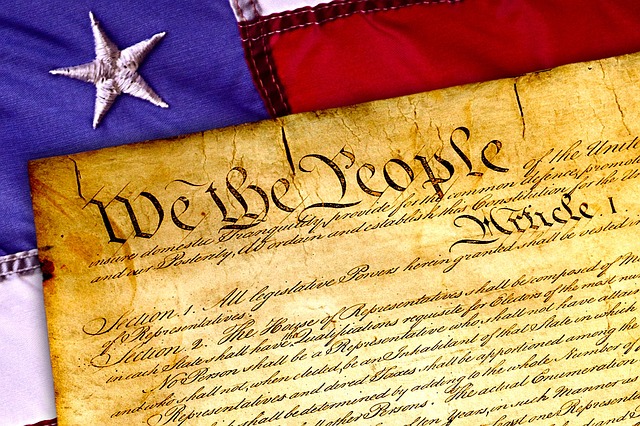
The Constitution gives states a way around Congress by calling a convention to amend the Constitution.
Two-thirds of the states need to agree to force a convention. Any constitutional amendment adopted at the convention would later need ratification from three-fourths, or 38, of the states.
No such convention has ever been assembled, despite more than 700 applications made by the states over the years.
It’s a far different approach from how the Constitution has always been changed, with 27 amendments passed by two-thirds of Congress and then ratified by the states.
From the 1960s through the early 1980s, supporters of Article V conventions mounted unsuccessful campaigns to call conventions for everything from school busing to limits on abortion and a balanced budget.
None ever reached the 34-state threshold for calling a convention.