






(UPDATED to include comment from top Democrats in House and Senate, the governor plus the House speaker and the president of Kansas Family Voice)
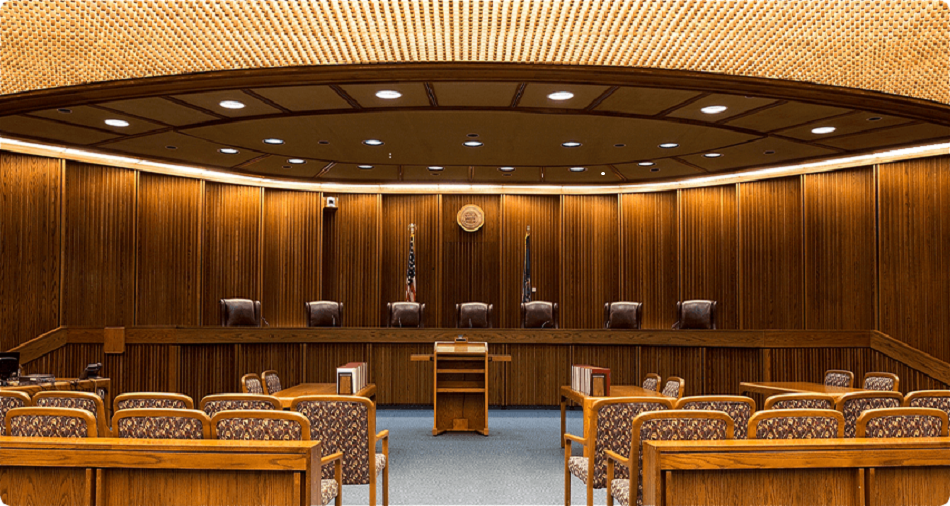
The Kansas Supreme Court has upheld an appeals court decision that allows transgender Kansans to change their gender markers on driver’s licenses while a legal battle plays out in court.
The court has refused to take up an appeals court ruling that reversed a temporary injunction in a legal dispute over a 2023 law that the attorney general said required birth certificates and driver’s licenses to show sex assigned at birth.
The court issued a one-page order Monday denying a request to hear the case.
“I am glad the Kansas Department of Revenue can resume issuing credentials that align with the law,” Gov. Laura Kelly said in a statement .
House Speaker Dan Hawkins criticized the ruling.
“The Kansas Supreme Court decided to to play politics and not take up a position on whether someone’s gender assigned at birth can be be changed on a government document such as a driver’s license and birth certificate, something that’s very important to our state,” Hawkins said in a statement.
“It’s disappointing to say the least, but also highlights how politicized our current judicial system truly is,” he said.
The top Democrats in the House and Senate criticized the attorney general for pursuing the case against the governor’s administration.
“The attorney general continues to waste Kansas tax dollars on losing battles against vulnerable populations solely based on his own prejudices against the transgender community,” said Brandon Woodard of Lenexa, the top Democrat in the House.
Dinah Sykes, the top Democrat in the Senate, sounded a similar theme.
“I cannot help but see a parallel to the political attack the attorney general has waged against Kansas public school districts based on vague, unspecified claims,” Sykes said.
Sykes was referring to the attorney general’s request for a federal investigation of whether four Kansas school districts wre violating federal law with policies that allow them to conceal from parents the “social transitioning” of their children.
“We live in a highly polarized time. This case, the originating bill, and the investigation into our public schools place focus on a highly divisive social issue – displacing focus from the everyday needs of Kansas families,” she said.
“Kansans are concerned about the cost of groceries, access to health care, property taxes, and rising political violence,” she said.
“And they deserve elected officials who are focused on addressing those concerns instead of those who add fuel to a manufactured political crisis that will further and irreparably divide us.”
Last June, a state appeals court overturned Shawnee County District Judge Teresa Watson’s decision to temporarily block Gov. Laura Kelly’s administration from allowing transgender Kansans to change their gender markers on driver’s licenses.
The decision allowed the Department of Revenue to allow gender marker changes while the overall litigation played out. No gender marker changes were immediately allowed while the appeal was underway, but that’s expected to change with the Supreme Court opinion.
The appeals court sent the case back to the district court and ordered that a new judge be appointed since Watson had revealed her opinion on the merits of the case. The appeals court found Watson’s ruling was an “abuse of discretion.”
Watson had granted Attorney General Kris Kobach’s request for the injunction, ruling that the 2023 law called the Women’s Bill of Rights requires the sex designation on driver’s licenses to reflect someone’s biological sex at birth.
Watson found that the threat of injury to the state should take precedence over any harm the injunction would have on the five transgender Kansans who intervened in the case.
The 2023 law – known as SB 180 – required any state agency, school district or local government that collects vital statistics for public health, crime, economics or other topics to identify each individual as either a male or female at birth.
Kobach said the new law required birth certificates and driver’s licenses to show someone’s sex assigned at birth.
Kobach argued in court that a mere violation of the statute presented irreparable harm. He said law enforcement would be hurt if the new law wasn’t enforced.
Kobach said the inability to enforce the new law could create problems for authorities identifying suspects and serving warrants.
He said that because driver’s licenses are in circulation for up to six years, there would be illegally issued documents that could not be recovered.
Watson agreed, saying the threat of irreparable injury to the state outweighs any harm the injunction would cause the plaintiffs who intervened in the lawsuit.
However, the three judges on the Court of Appeals – Karen Arnold-Burger, Sarah Warner and Stephen Hill – disagreed.
The appeals court found that the attorney general failed to establish irreparable harm to support the case for a temporary injunction and failed to show a substantial likelihood that he would prevail on the merits of the case.
Further, the court found that Watson erred in issuing the injunction by concluding, without any support, that the mere fact that Kobach alleged a violation of state law meant he had established irreparable harm to support her decision.
“The problem with the district court’s finding is that the AG presented no evidence to
support this claimed injury beyond unsubstantiated speculation,” the court ruled.
“Because of the district court’s abuse of discretion, the (Department of Revenue) has been unable to issue reclassifications of gender designations on Kansas driver’s licenses for two years while this litigation languished,” Arnold-Burger wrote on behalf of the court.
The court questioned Kobach’s claims about how law enforcement would be impeded if the new law wasn’t enforced.
From 2011 to 2022, the state issued 9.3 million licenses and during that same time frame, roughly 380 drivers – or 0.0004% of driver’s licenses issued – had their sex designation on the front of their licenses changed, according to the court ruling.
“The AG was not able to come up with a single incident in which a person who had the sex designation on their physical driver’s license changed evaded arrest, posed a danger to a law enforcement officer, or was not housed appropriately in jail,” the court ruled.
“In fact, in at least the preceding 16 years, no law enforcement officer complained to the (Department of Revenue) about any problems that have resulted from the changing of the
sex designation,” the court wrote.
Brittany Jones, president of Kansas Family Voice, said the group was disappointed in the court’s decision.
“The Kelly Administration has allowed our most basic documents to be denigrated so that they cannot be relied on for their most basic purpose – identification,” Jones said.
“This needs to be corrected immediately. I agree with the Attorney General and House and Senate leadership’s call for a special session to ensure that women’s and girls’ spaces are protected and ensure that our documents are accurate and useful for their purpose.”