




House budget writers on Tuesday agreed to set aside $1 million for compensating nurses for “nonclinical harms” caused by state regulators.
The House Appropriations Committee agreed to create the Nurse Fair Treatment and Recovery Fund for nurses who file claims against the state believing they were wrongly treated by the nursing board in a way unrelated to treating patients.
Those harms would be related to licensing, professional standing or status and income.

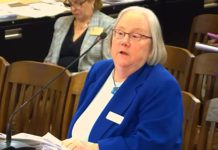
“We don’t want to do anything to put our public in jeopardy,” said Republican state Rep. Kristey Williams of Augusta, chair of the House government oversight committee that held hearings on the nursing board last year.
“We want to maintain the requirements to have the best nurses available, but we also want to ensure that we’re not unintentionally making it more difficult for them to maintain their occupation because of undue regulations,” Williams said in an interview.
Lawmakers have become increasingly alarmed about how the State Board of Nursing is overseeing nurses and what they say is a heavy-handed approach to regulation, a point underscored last summer during a House government oversight committee hearing.
There have been complaints that the agency has pressured nurses into signing consent orders acknowledging they were guilty of unprofessional conduct because of a clerical mistake that didn’t threaten patient health and safety.
Lawmakers have been particularly concerned that those nurses who were found guilty of unprofessional conduct for a clerical error were placed on federal and state databases showing that finding.

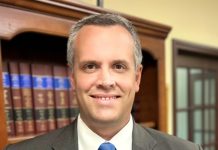
“I would like to see the Board of Nursing do what they’re supposed to do. They need to work for the nurses, not against the nurses,” said Republican state Rep. Sean Tarwater of Stilwell, a member of the House appropriations committee.
Tarwater wants the agency to go back five years and clear consent orders against nurses that result from licenses lapsing because of clerical errors, nursing board website snafus or instances where someone simply forgot to renew.
He also said he expects a shakeup in leadership at the agency and, perhaps, for a couple of board members to resign.
“It seems like the purpose of the consent order was used for things that would have just required a little grace on their part to help these nurses get their licenses squared away,” Tarwater said in an interview.
“They are forced to sign a consent order that admits guilt, and it makes it very difficult to them to acquire jobs,” he said.
Tarwater said he and other lawmakers are getting hundreds of complaints about how the nursing board operates.
The money for the fund will come from a projected $4.8 million ending balance in fees that the agency has remaining after paying its expenses. The fund would start in fiscal year 2027, which begins this July 1.
Initial claims against the nursing board would be submitted to the Joint Committee on Special Claims Against the State.
The committee could recommend an award, which would have to be approved by the House Appropriations Committee.
The budget proviso, which would last one year, would mean that any claims against the nursing board would come from the fees paid by nurses and not from the state general fund.
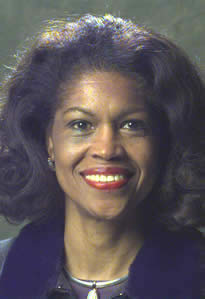
Democratic state Rep. Barbara Ballard of Lawrence is a member of the House appropriations committee and the House oversight committee that heard concerns about the nursing board last summer.
“I understand the scope of the problem, and I think we need to address it,” Ballard said.
“I just want to make sure we’re addressing the problem and we’re not tacking on punitive damages,” Ballard said.
“We can fix the problem, but we shouldn’t be really going after the nursing department,” she said.
“Let’s fix the problem so that the things that happened to the people we heard (from) is being addressed, because some really suffered a lot,” Ballard said.
The agency declined to comment Monday.
However, the agency sent a letter to Kansas nurses earlier this month laying out a plan responding to lawmakers’ concerns.
Among other things, the board said it hired a consultant to audit the agency’s investigative and discipline process.
The agency also said that the National Council of State Boards of Nursing has approved the Kansas board’s request to automatically notify all licensees within the state to enroll or opt out of an e-notify system.
The system offers a free method for nurses to receive automated notifications to remain up to date with their license.
The agency staff also is working on changes to the applicant checklist to provide more transparency for an applicant to identify the location of their application in the approval process.
It is also working to upgrade to the licensing software during the first quarter of 2026 that will include more mobile-friendly features to assist when an application is submitted via smartphones or tablets.
The nursing board said it continues to mail renewal reminder postcards to licensees 90 days before their license renewal date.
Williams didn’t know how extensively the fund might be used.
“If anyone failed to have their license renewed on time, they were subject to being disciplined and noted on a database (for) unprofessional conduct,” Williams said.
“That could be a significant number. I don’t know what that number is. I hope it’s a small number and not hundreds. I hope it’s just dozens,” she said.
Last summer, the House government oversight committee heard testimony from several nurses who voiced their concerns about the agency, which oversees 73,500 nurses.
A national public interest law firm is helping a Kansas nurse clear her name with state regulators in court.
The Pacific Legal Foundation, which defends against government “overreach and abuse,” is helping Amy Siple in her battle against the Kansas State Board of Nursing.
She is challenging an order that concluded she unlawfully practiced nursing based on an investigation that started after she inadvertently let her license lapse.
Siple is now appealing the board’s decision to sanction her for giving public speeches on dementia when her license lapsed from June through October 2024.
The board fined Siple $300 and concluded she committed “unprofessional conduct” because she practiced without a license.
She said it was the first time in her 32-year career that she allowed her license to expire.
At the time, Siple said she took time off from work to help care for her husband was who battling cancer.
Ana Ahrens, a psychiatric nurse practitioner and a licensed clinical addiction counselor in Wichita, also told the committee about problems she had renewing her license when she testified before the committee.
She learned in February 2025 that her licensed has not been renewed when a pharmacist alerted her that he could not fill prescriptions she had written because her license had expired.
Two months earlier, Ahrens said she went to renew her licenses for a registered nurse and an advanced practice registered nurse before the expiration date.
She said the agency told her that she accidentally renewed her registered nurse license twice but not the button for APRNs.
Ahrens said the agency accepted duplicate payments and didn’t inform her of the mistake. She assumed she had fulfilled the requirements to renew both licenses.
She said she stopped practicing when she was told her license had lapsed.
The agency “knew that it was a clerical error but did not inform me. Instead, they investigated me for practicing without a license,” she told the House committee.
She ultimately signed a consent order in which she agreed that she was guilty of “unprofessional conduct” and fined $100.
Ahrens said she signed the agreement because she cares for a husband who suffered a stroke in 2018 and she has patients who count on her.
The agency put her on three databases, including two national nurse databases and the state database, showing the finding of “unprofessional conduct.”
Her malpractice insurance premiums skyrocketed. Kansas Blue Cross and Blue Shield dropped her contract, and she was being investigated by UnitedHealthcare.
She told lawmakers in July that she had not been paid since January. She said she piled up more than $27,000 in credit card debt and withdrew $12,000 from her retirement account to pay bills.